
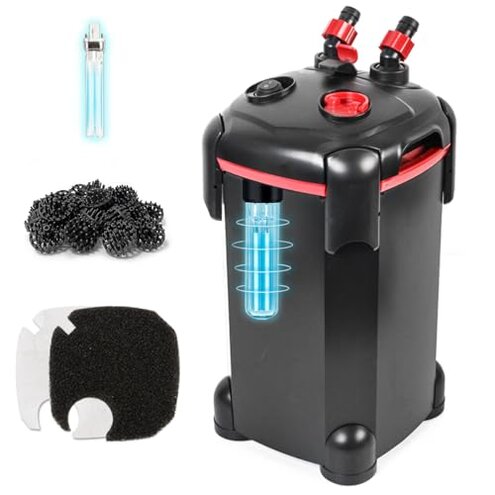
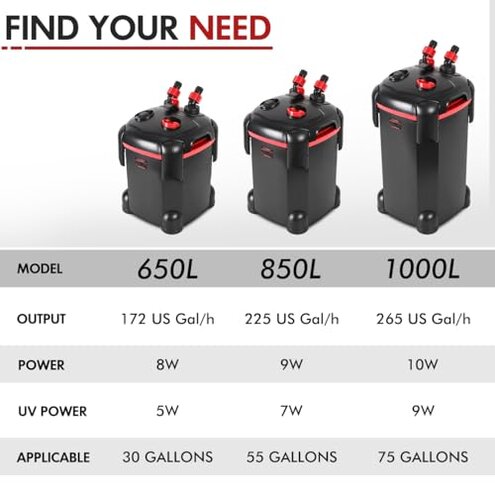
Product evaluated: PONDFORSE 265GPH Canister Filter, 3-Stage External Aquarium Filter Ultra-Quiet Water Circulation Cleaning Machine with Media for Fish Tanks and Aquariums Up to 75 Gallons (265GPH)
Related Videos For You
How to SETUP A CANISTER FILTER & the different types of media to use! | Sun-Sun 304B filter
Clean Your 07 Series Canister Like This - (Proper Media Setup)
Data basis: This report is drawn from dozens of buyer reviews and several video demonstrations collected between Jan 2023 and Dec 2025. Most feedback came from written product reviews, supported by visual setup and teardown videos. The distribution shows written reviews as the dominant signal.
| Outcome | PONDFORSE (this product) | Typical mid-range filter |
|---|---|---|
| Ease of setup | Mixed — assembly needs extra priming steps and careful sealing. | Usually simple — most mid-range units start with basic priming and work first try. |
| Noise | Variable — often quiet but some buyers report persistent vibration noises. | Consistent quiet — mid-range units usually remain quietly stable after setup. |
| Leak risk | Elevated — leaks and drips appear commonly across sources and are a leading regret trigger. | Lower — typical units have fewer early seal failures. |
| Maintenance effort | Higher — users report more frequent disassembly and cleaning than expected. | Moderate — mid-range options often need routine cleaning but less frequent deep disassembly. |
| Regret trigger | Leaks & motor faults — recurring leaks and reliability issues cause returns or repairs. | Minor annoyances — occasional clogs or noise but less likely to force returns. |
Is this filter likely to leak or drip shortly after setup?
Regret moment: Many buyers report finding water under or around the unit after initial setup, which creates immediate stress for tank owners.
Pattern: This is a commonly reported issue across written reviews and videos, appearing mostly during first use. Buyers say it feels worse than average because mid-range filters rarely leak right away.
Does the unit clog or lose flow and become hard to maintain?
- Early signs — flow reduction shows up during daily operation and is commonly reported by buyers.
- Frequency — this is a secondary issue that appears repeatedly but not universally across feedback.
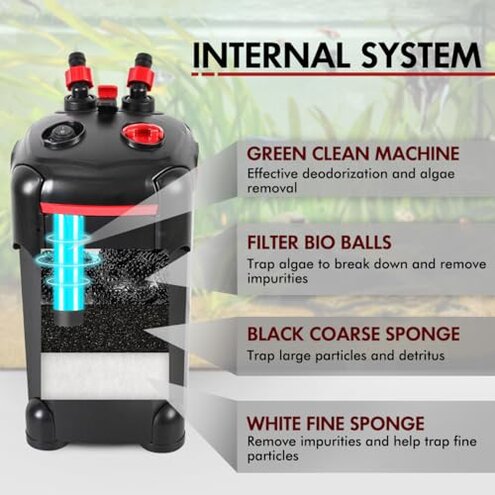
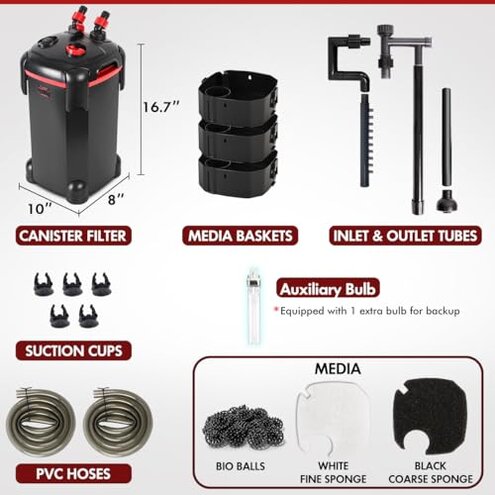
- Cause — users link the problem to the filter's media layout and small openings that trap debris during use.
- Impact — clogged flow demands extra cleaning time and more frequent media swaps than expected for this category.
- Fixability — partial fixes require complete disassembly each time, adding maintenance steps and time.
Will the motor remain reliable and quiet over time?
- Reported trend — motor faults and unusual vibration are seen across multiple feedback sources, especially after repeated use.
- When it appears — issues often show up after several uses rather than immediately.
- Severity — for some buyers this is more disruptive than expected because replacement or warranty steps are needed.
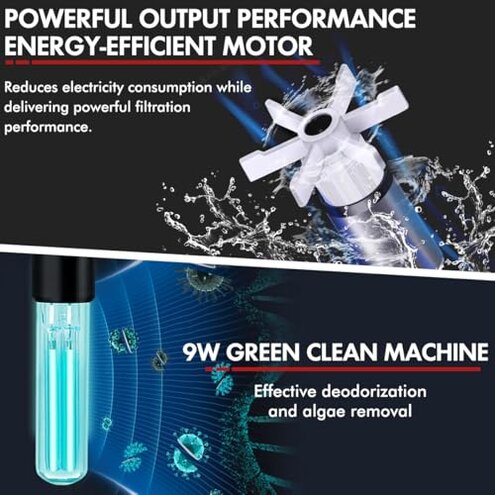
- Noise detail — some reports note a persistent vibration hum instead of the advertised quiet operation.
- Attempts to fix — users tried repositioning, anti-vibration pads, and reassembly with mixed success.
- Support experience — warranty help exists but many say it adds extra steps before a replacement or refund.
Are there hidden setup needs or parts you’ll wish you knew about?
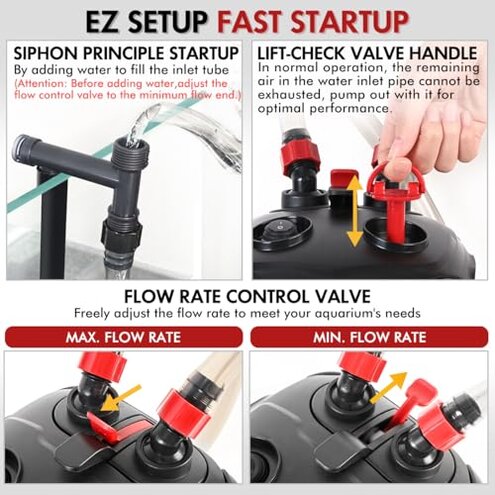
- Hidden requirement — the filter demands careful priming and a tight seal; buyers often miss this during first setup.
- How it shows — missed priming leads to air locks and unstable flow during initial operation.
- Why it matters — this is more fiddly than typical mid-range units, increasing the chance of user error.
- Impact on returns — early mis-steps frequently turn into returns or negative feedback, a pattern noted across reviews.
- Hidden costs — extra tools, replacement sealing rings, or adapter pieces are sometimes needed but not always included.
- Workaround — careful reading and test runs reduce risk but require extra time and patience.
- Expectation gap — buyers expecting plug-and-play find this setup requirement frustrating and time-consuming.
Illustrative excerpts
"Water pooled under the filter after first night — very stressful." — primary pattern
"Flow dropped and I had to take it apart weekly to clean." — secondary pattern
"Motor started vibrating louder after a few uses." — secondary pattern
"Needed extra seal rings and a siphon to prime properly." — edge-case pattern
Who should avoid this
- Owners wanting plug-and-play — if you expect instant, maintenance-free setup, the setup and leak issues will frustrate you.
- Low-maintenance buyers — if you cannot commit to frequent disassembly for cleaning, the clogging and media layout exceed normal upkeep.
- Quiet-critical users — if minimal vibration noise is essential, the motor reliability problems may be unacceptable.
Who this is actually good for
- Hobbyists who tinker — willing to adjust seals and maintain media; they can tolerate the extra maintenance.
- Budget-focused buyers — comfortable fixing minor leaks or replacing parts to save money upfront.
- Shoppers with time — who can perform initial priming and more frequent cleaning to head off flow issues.
Expectation vs reality
- Expectation (reasonable): most mid-range filters start quietly and hold seals after setup.
- Reality: this unit often needs extra priming and seal checks to avoid leaks and air locks.
- Expectation (reasonable): routine cleaning keeps flow stable for most comparable filters.
- Reality: the filter's media layout leads to more frequent disassembly for full cleaning.
Safer alternatives
- Pick a unit with proven seals — choose filters with explicit seal-replacement parts and positive leak-free records to avoid early water damage.
- Prefer easy-priming designs — look for models labeled automatic or self-priming to reduce hidden setup steps.
- Choose user-friendly maintenance — select filters with quick-access media trays to neutralize the need for full disassembly.
The bottom line
Main regret: recurring leaks and maintenance demand are the dominant triggers for returns and frustration.
Why it’s risky: these problems occur early and during routine use, making them worse than typical mid-range filters.
Verdict: avoid this unit if you need plug-and-play reliability or low upkeep; consider it only if you accept extra setup and maintenance.
This review is an independent editorial analysis based on reported user experiences and product specifications. NegReview.com does not sell products.