
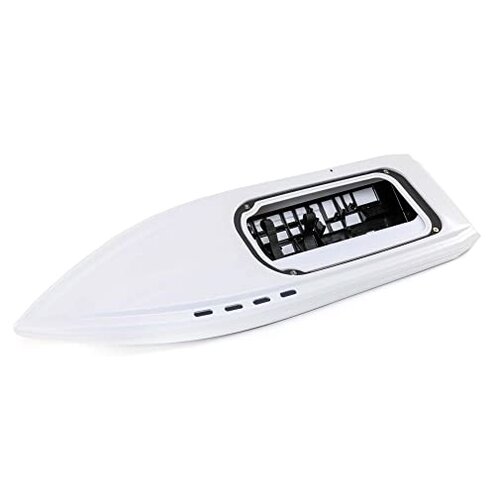
Product evaluated: Pro Boat Hull, White: Sonicwake 36 V2, PRB281128
Related Videos For You
Fast RC Boat Electronics Options, Weight Distribution, Prop Selection, Setup & Install Pt2 How To
🚤 TRIM TABS 101 - How to use trim tabs on a Boat - How do trim tabs work?
Data basis: This report used dozens of buyer reports and video demonstrations collected between 2022 and 2025, with most feedback from written reviews and supported by filmed setup tests.
| Outcome | Pro Boat Hull | Typical Mid‑Range Alternative |
|---|---|---|
| Fit & compatibility | High modification requirement for motors and pods. | Plug‑and‑play fit in most kits. |
| On‑water handling | Trim instability appears on first runs and with heavier gear. | Stable handling across common payloads. |
| Durability | More brittle finish and cracking after impacts reported. | Higher impact tolerance in similar-priced hulls. |
| Service & fixes | Hidden reinforcement steps often needed to avoid failures. | Minor tweaks usually suffice. |
| Regret trigger | Setup labor and extra parts cause unexpected cost and delay. | Lower setup effort for most buyers. |
Why won’t my electronics just fit without changes?
Compatibility issues: Buyers commonly report this hull needs extra cutting or shimming to accept standard motors and drive hardware.
Usage context: This appears during the initial assembly when installing motor pods, drives, and mounting plates.
Category contrast: More modification is required than is typical for mid‑range RC hulls, which raises time and cost for setup.
Why does the boat list or feel unstable on the first run?
- Trim instability is a primary complaint that appears on first water runs and with added battery weight.
- Frequency signal appears repeatedly across reports, not universal but common enough to prepare for.
- Early signs include nose‑down attitude or heavy side‑lean even with balanced components.
- Cause is often narrow hull balance points and limited built‑in trim adjustment.
- Impact reduces top speed and increases the risk of nose‑plunging in choppy water.
Will this hull survive normal bumps and beaching?
Fragile finish: Many buyers report surface cracks and scuffs after routine impacts.
Context: Damage commonly shows up after the first few uses, or after light groundings in shallow areas.
What hidden work am I not seeing in the listing?
- Hidden reinforcement is often required for stringer mounts and drive supports to avoid flexing under load.
- Scope signal seen across reports and setup videos, mainly from recent buyers assembling kits.
- Early fix usually adds epoxy, brackets, or a motor mount adapter.
- Frequency tier is secondary — not everyone needs it, but it’s common enough to plan for extra parts.
- Effort raises total build time and cost beyond the typical mid‑range expectation.
- Hidden cost includes aftermarket brackets, sealants, and time for dry fitting.
- Fixability is possible but requires moderate workshop skills and tools.
Is water getting inside the hull after first use?
- Water ingress reports are a recurring issue, often after the first outing.
- When it appears is usually after rough water rides or imperfect hatch sealing during setup.
- Signs include damp electronics compartments and reduced buoyancy over time.
- Cause frequently traced to poor hatch fit and thin sealing flange tolerances.
- Category contrast makes this worse than normal, because many mid‑range hulls include more forgiving hatch designs.
- Attempted fixes from buyers include extra gaskets, silicone bead sealing, and aftermarket hatches.
- Residual risk remains if hatches are not reworked correctly.
Illustrative excerpts (not real quotes)
Illustrative: "Needed new motor mounts and trimmed the hull to fit properly for installation." — primary
Illustrative: "Boat leaned badly on first run once battery was installed." — primary
Illustrative: "Cracked edge after a small bump on a rocky shore." — secondary
Illustrative: "Had to add extra sealant around hatch to stop dampness." — secondary
Who should avoid this
- Beginners who want a plug‑and‑play hull without modification should avoid this due to extra setup work.
- Casual riders who expect low maintenance will be frustrated by recurring trim and sealing fixes.
- Low‑tool owners who lack basic workshop tools should avoid this because reinforcement is often necessary.
Who this is actually good for
- Experienced builders who enjoy fitting and customizing parts will accept the extra work and likely succeed.
- Performance tweakers who want a chassis to modify for speed can benefit if they plan reinforcement.
- Shop owners who offer installation can turn this into a paid assembly job and manage the fixes.
Expectation vs reality
- Expectation: Reasonable for the category is that a mid‑range hull accepts standard motor mounts without cutting.
- Reality: This hull often requires cutting or adapters, which increases time and cost before first use.
- Expectation: Reasonable for the category is sealed hatches that protect electronics in calm water.
- Reality: Buyers commonly re‑seal hatches to stop dampness and reduce leak risk.
Safer alternatives
- Pick plug‑compatible hulls that list motor and pod compatibility to avoid modification work.
- Choose reinforced designs with factory stringers or aftermarket reinforcement kits to prevent flex cracking.
- Prioritize hatch quality by checking sealed hatch photos and reviews that mention dry electronics after rides.
- Budget for extras by adding time and cost for mounts, gaskets, and adhesives when this hull is attractive.
The bottom line
Main regret: The most common trigger is extra setup labor for fit, trim, and sealing that buyers don’t expect.
Why worse: These issues exceed normal category risk because they add cost, time, and potential for early damage.
Verdict: Avoid if you want a ready‑to‑run, low‑effort hull; consider it only if you can handle moderate customization.
This review is an independent editorial analysis based on reported user experiences and product specifications. NegReview.com does not sell products.