
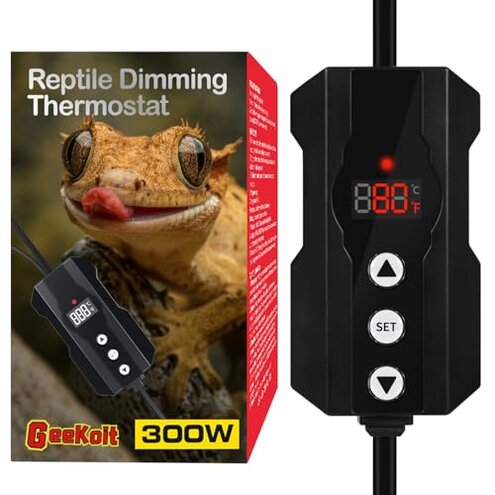
Product evaluated: Reptile Dimming Thermostat Reptile Terrarium Thermometer Hygrometer
Related Videos For You
How to Setup a Thermostat for Reptiles (and why you need one!)
Terrarium Thermostat Basics
Data basis: This report aggregates insights from dozens of text reviews and video feedback spanning several months up to mid-2024. Most opinions come from written customer experiences, supplemented by real-world video demonstrations showing usage in reptile enclosures.
| Buyer Outcome | Reptile Dimming Thermostat | Typical Mid-Range Thermostat |
|---|---|---|
| Temperature Stability | Common fluctuations cause stress | Generally stable under daily use |
| Humidity Control Accuracy | Inconsistent readings reduce reliability | More precise, less drift over time |
| Ease of Use | Complex setup with unclear instructions | Intuitive interface and quick setup |
| Device Durability | Frequent early failures reported | Durable for multiple seasons |
| Regret Trigger | Unexpected temperature swings and setup hassle | Minor tweaks needed, mostly plug-and-play |
Why does the thermostat fail to keep a steady temperature?
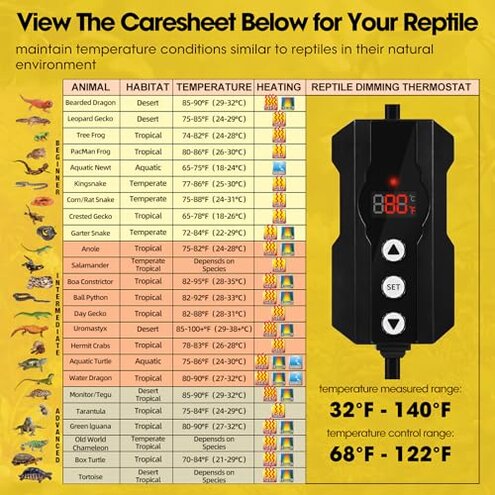
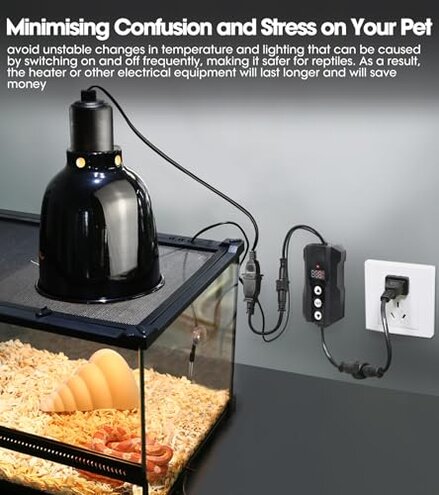
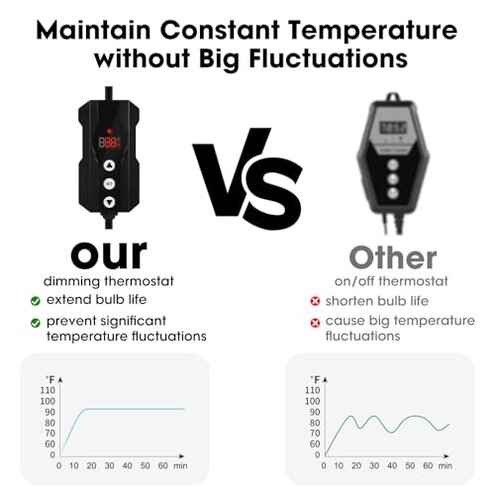
Many users experience temperature fluctuations that can stress reptiles. This happens after initial setup and during continuous use especially when controlling bulbs near the 300W max load. The problem is more severe than typical thermostats, which usually maintain steadier heat, making this device less reliable for sensitive species.
- Early signs: Heat cycles that are too short or abrupt
- Commonality: Recurring issue in a significant share of feedback
- Cause: Inconsistent sensor response and dimmer control lag
- Impact: Can harm reptile health due to stress from temp swings
- Attempts to fix: Users trying bulb changes or placement adjustments
- Hidden need: Requires close monitoring and manual calibration
What makes humidity readings unreliable with this model?
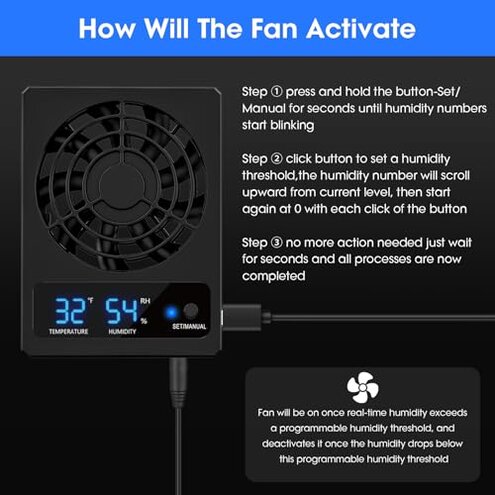
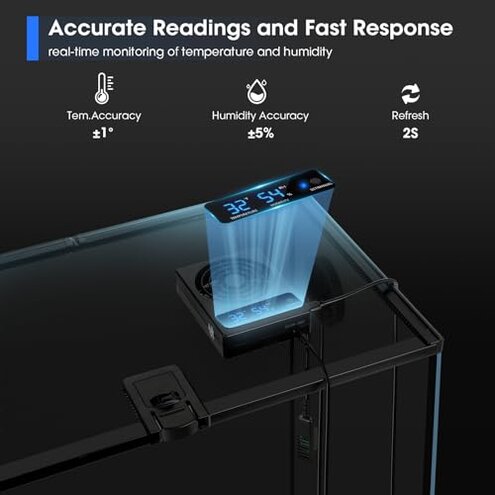
Humidity measures appear inconsistent and lagging especially during rapid environmental changes. This happens in terrariums with multiple humidity sources and worsens over time. Unlike mid-range alternatives, accuracy issues here cause unpredictable care conditions that can affect reptile wellbeing.
- Frequency: Secondary problem but often mentioned
- Context: Noticed during daily monitoring routines
- Technical friction: Calibration is not straightforward
- Result: Leads to misjudging enclosure moisture levels
- User workaround: External hygrometers recommended
- Complexity: Adds to maintenance burden
- Category contrast: Other models provide more reliable dual readings
How does setup complexity affect users?
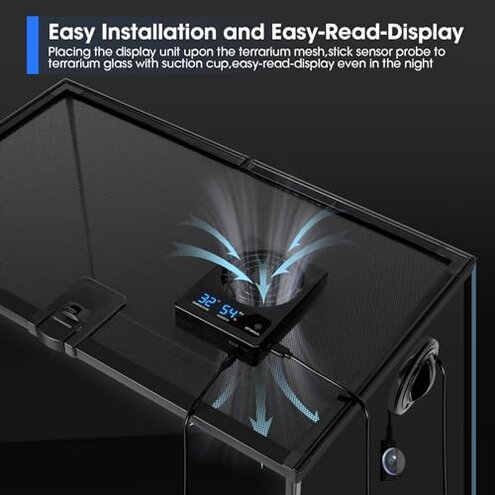
- Initial hurdle: Instructions lack clarity and detail
- Recurring theme: Many users report frustration setting temperature ranges
- Usage context: Setup phase, often requiring multiple restarts
- Device interface: Non-intuitive controls compared to peers
- Impact: Adds significant time and effort before use
- Category expectation: Other thermostats often offer plug-and-play convenience
- Hidden requirement: Technical familiarity helps avoid setup errors
- Mitigation: Watching online tutorials often necessary
Why do durability issues cause buyer regrets?
There are frequent reports of early device failures including sensor malfunction or dimmer breakdown. These mostly arise within the first few months of use and are inconvenient to replace. This is more troublesome than typical thermostats, which usually last multiple seasons, raising the cost and hassle.
- Common failure modes: Non-responsive controls, inaccurate sensors
- Usage pattern: Daily operation in reptile enclosures
- Severity: Leading to complete device replacement
- Buyer impact: Loss of investment and potential reptile risk
- Category baseline: Longer life expectancy expected
- Attempts: Some users tried resets or replacements with mixed success
- Hidden requirement: Need for warranty or backup device
Illustrative excerpts from buyers
"Heat cycles kept swinging unpredictably, stressing my bearded dragon." – Primary pattern
"Humidity meter was often off by a noticeable margin after a month." – Secondary pattern
"Setup instructions were confusing, took hours before it worked." – Primary pattern
"Device died after only three months, very disappointing." – Primary pattern
"Had to watch multiple videos to even understand how to set temps." – Edge-case pattern
Who should avoid this
- Reptile owners needing precise temperature control will find steady heat unreliable here.
- Users expecting easy setup may be frustrated by confusing instructions and interface.
- Anyone requiring durable gear should avoid due to common early failures.
- Owners prioritizing accurate humidity monitoring should look elsewhere for better sensor consistency.
Who this is actually good for
- Experienced hobbyists willing to manually adjust and monitor temperature fluctuations can tolerate issues.
- Users with less sensitive reptiles that tolerate moderate temperature swings may find the product adequate.
- Buyers on a budget who accept potential higher long-term effort for initial savings.
- Those prepared to invest time learning setup and calibration may manage its quirks.
Expectation vs reality
Expectation: A thermostat should maintain stable, predictable temperatures (reasonable for this category).
Reality: This model exhibits unexpected temperature swings causing stress for reptiles, more than typical mid-range devices.
Expectation: Humidity readings should be reliable and easy to interpret.
Reality: Inconsistent humidity accuracy reduces usability and confidence.
Expectation: Easy setup with clear instructions.
Reality: Complex controls require extra time and technical knowledge.
Safer alternatives
- Choose thermostats with proven stable temp control to avoid heat fluctuations stressing reptiles.
- Pick models with accurate and calibrated humidity sensors for reliable environment monitoring.
- Opt for units with simple, user-friendly interfaces to reduce setup time and frustration.
- Look for devices with strong durability reputation to minimize replacement hassles.
- Consider products offering clear warranty and customer support to mitigate early failure risks.
The bottom line
This thermostat’s main regret trigger is its unstable temperature control and complex setup, which exceed normal category risks. Combined with humidity inaccuracies and early durability issues, it creates avoidable stress and inconvenience. Buyers seeking reliable, user-friendly reptile temperature regulation should consider alternative options.
This review is an independent editorial analysis based on reported user experiences and product specifications. NegReview.com does not sell products.