
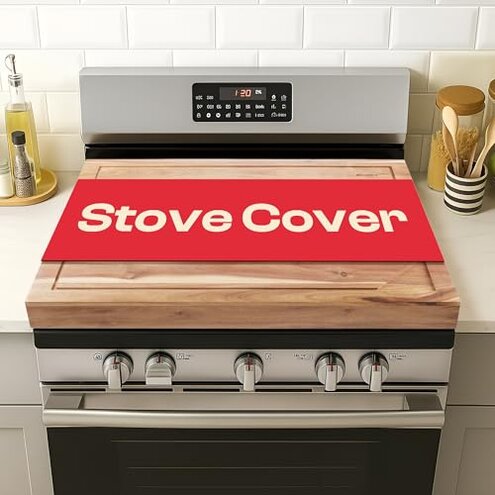
Product evaluated: Riveira 30x22 Acacia Natural Stove Top Covers for Electric Stove & Gas Stove Top Covers for Gas Burners – Large Gas Stove Cover with Handle & Juice Groove – Rustic Stove Covers for Gas Stove Top
Related Videos For You
DIY Stove Top Cover for Electric or Gas Stove | Version 2.0
The Secret To Cleaning Glass Cooktops Like A Pro!
Data basis: This report summarizes patterns from dozens of written reviews and several video demonstrations collected between Oct 2023 and Jan 2026, with most feedback coming from written posts and supported by visual clips and buyer Q&A.
| Outcome | Riveira 30x22 | Typical mid-range cover |
|---|---|---|
| Workspace gain | Expands counter but several buyers reported imperfect fit that reduces usable surface. | Expands counter with more consistent flatness and predictable edge clearance. |
| Fit accuracy | Fit issues are a primary complaint and appear repeatedly for varied stove types. | Better fit is common; mid-range alternatives usually offer trim options or modular sizing. |
| Durability risk | Higher wear than normal for this category, with recurring finish and warping reports. | Lower wear is typical when sealed finishes and heat-tolerant materials are used. |
| Cleaning & upkeep | Maintenance complaints are common because wood surfaces need more care after spills. | Low upkeep alternatives often use composite or coated surfaces that wipe easily. |
| Regret trigger | Mismatched fit combined with finish wear leads to buyer remorse more often than expected. | Predictable fit reduces regret in typical mid-range options. |
Will this actually sit flat and cover my burners without wobble?
Regret moment: Buyers frequently notice an uneven surface the first time they set this on a multi-level stovetop.
Pattern: This is a primary complaint and appears repeatedly across different kitchen setups.
Context: The issue shows up at first use and worsens when users try to move the board during prep or when burners are recessed.
Category contrast: This is worse than the category baseline because mid-range covers usually require minor trim or offer adjustable feet, while Riveira buyers report more disruptive alignment problems.
Does the finish survive heat, spills, and daily wiping?
- Early sign: Buyers commonly reported dull spots or moisture marks after routine spill cleanup.
- Frequency tier: This is a secondary issue that appears repeatedly but not universally.
- Cause: Users note finish wear after exposure to hot pans or steam during cooking sessions.
- Impact: The visible wear reduces the serving-board look and demands more frequent refinishing or careful handling.
- Fix attempts: Owners attempted resealing or limiting heat exposure, which adds time and cost.
Are the handles, weight, and lifting safe for everyday use?
- Early sign: Some buyers found handles feel loose or inadequate the first few times they lift the board.
- Frequency tier: This is a secondary issue that appears repeatedly in hands-on reports.
- Cause: The board’s heft combined with small handles increases strain during two-handed lifts.
- Impact: Heavier-than-expected weight raises the risk of dropping or scraping counters during busy prep.
- Attempts: Users added towels or trays to stabilize the lift, adding extra steps to normal use.
- Fixability: While manageable, improvements require aftermarket grips or a second person for safe handling.
Will owning this add hidden maintenance or storage headaches?
- Hidden need: Several buyers discovered a need to store the board away from heat and humidity to avoid warping.
- Early sign: Warping or edge separation appears after repeated exposure to kitchen humidity in some reports.
- Frequency tier: This is a tertiary but persistent problem that occurs over weeks to months.
- Cause: Natural wood reacts to steam and sink splashes more than synthetic alternatives.
- Impact: Storing the board off the stovetop and resealing periodically adds time and space costs.
- Attempts: Owners moved the cover to cabinets and used cutting mats to protect the surface, which reduces convenience.
- Category contrast: This requires more upkeep than most mid-range covers that use moisture-resistant finishes.
Illustrative excerpts (not real quotes)
Illustrative: "Board sits unevenly, can't rest flat on my recessed burners."
Pattern: Reflects a primary pattern of first-use fit problems.
Illustrative: "Finish dulled after two weeks of normal cleaning."
Pattern: Reflects a secondary wear issue linked to spills and wiping.
Illustrative: "Had to store it elsewhere to stop the edges from warping."
Pattern: Reflects an edge-case long-term moisture sensitivity.
Who should avoid this
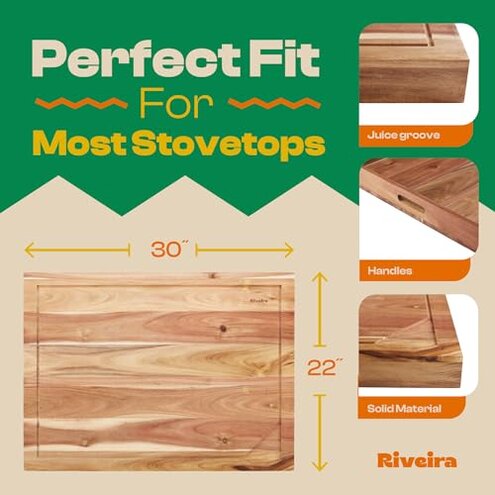
- Owners of recessed burners: If you need a flat, stable cover right away, avoid this product due to recurring fit complaints.
- Low-maintenance buyers: If you want a wipe-and-forget surface, avoid this product because finish wear and upkeep are commonly reported.
- Solo cooks needing light lifts: If you prefer lightweight, easy-to-lift covers, avoid this product because weight and handle issues increase handling effort.
Who this is actually good for

- Decor-focused homeowners: If you tolerate occasional refinishing for a rustic look, this works because aesthetic value can outweigh upkeep.
- Occasional entertainers: If you mainly use it for serving and not daily stove coverage, this mitigates fit and wear concerns.
- Owners with matching storage space: If you can store the board away from steam, this reduces long-term warping risk.
Expectation vs reality
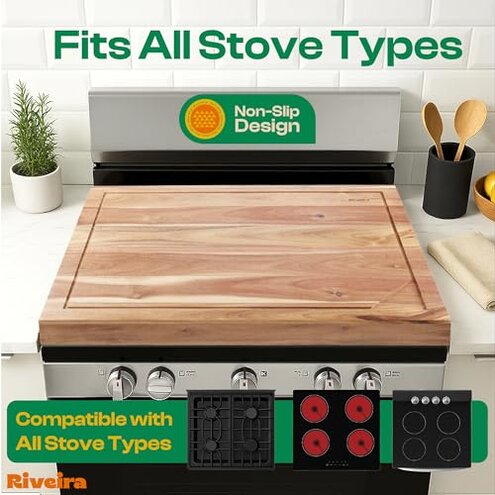
Expectation (reasonable): Buyers expect a stove cover to add flat workspace and protect burners with minimal care.
Reality: Many users found that the Riveira often needs extra handling, storage, or refinishing beyond what similar mid-range covers require.
Safer alternatives

- Choose sealed composites: Pick a coated or composite cover to neutralize the finish-wear problem and reduce upkeep.
- Look for adjustable fit: Select covers with trim options or adjustable feet to avoid the mismatch and wobble problem.
- Prefer lighter models: If lifting is frequent, seek thinner or composite boards with robust, tested handles to eliminate weight strain.
The bottom line
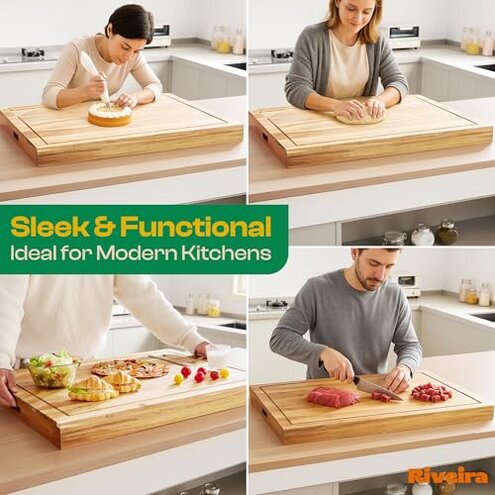
Main regret: The product’s most common trigger is a poor initial fit combined with finish and maintenance issues.
Why worse: These failures are more disruptive than typical mid-range covers because they add time, extra handling, and possible refinishing.
Verdict: Avoid this board if you need a low-care, reliably flat stovetop cover; consider sealed or adjustable alternatives instead.
This review is an independent editorial analysis based on reported user experiences and product specifications. NegReview.com does not sell products.