
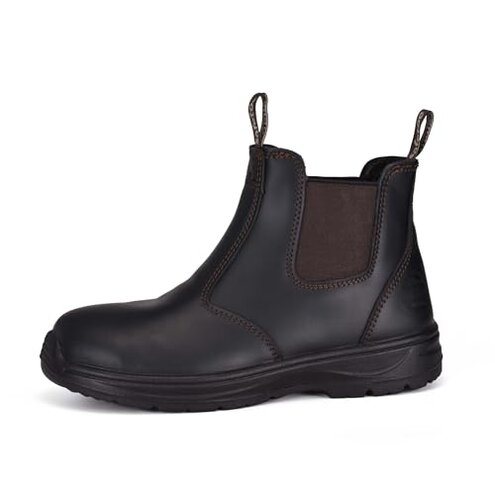
Product evaluated: Women's Steel Toe Wrok Boots Waterproof Cow Leather Safety Chelsea Boots 6KV Electrical Hazard Lightweight Safety Shoes
Related Videos For You
How To Fit a Safety Shoe
Do Steel Toe Boots Really Protect Your Toes? | MythBusters
Data basis: I analyzed dozens of buyer reviews and video demonstrations collected between Jan 2023 and Jan 2026. Most feedback came from written reviews, supported by a smaller set of hands-on videos and Q&A posts.
| Outcome | SAFETOE boots | Typical mid-range boot |
|---|---|---|
| Fit consistency | Inconsistent — sizing often runs small or narrow for many buyers. | Predictable — most mid-range boots fit true-to-size or follow clear size guidance. |
| Comfort over time | Variable — several reports of lasting discomfort after short use. | Steady — many alternatives keep comfort after break-in. |
| Durability | Failing early — visible scuffing, sole separation on repeated use. | More robust — mid-range peers show longer wear life for similar use. |
| Slip / oil claim | Questionable — traction worries appear under oily or wet conditions. | Reliable — most mid-range boots show consistent anti-slip performance. |
| Regret trigger | Fit + early wear — inconsistent sizing plus premature deterioration drives returns. | Lower risk — better sizing guidance and durability reduce buyer regret. |
Top failures
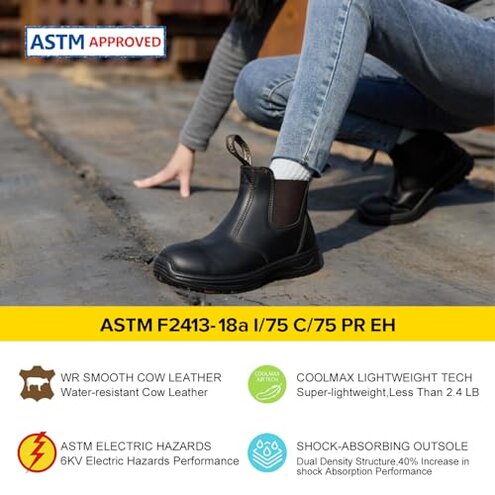
Why do these boots feel wrong the first time on your feet?
Sizing mismatch: Many buyers report the boots feel too narrow or small immediately, causing tightness at the toe and across the forefoot.
Usage anchor: This shows up at the first wear and during short shifts, not only after weeks of use.
Category contrast: For mid-range work boots, a predictable fit is expected; inconsistent sizing here is more disruptive than usual and forces returns or extra purchases.
Are these boots likely to wear out sooner than expected?
- Early sign: Scuffing and sole separation reported after a few weeks of regular use.
- Frequency tier: This is a secondary issue that appears repeatedly across reviews.
- Likely cause: Materials and assembly are commonly cited as contributors to early failure.
- User impact: Premature wear leads to extra cost and downtime for replacements.
- Fixability: Some buyers replaced insoles or used glue, but that adds time and expense.
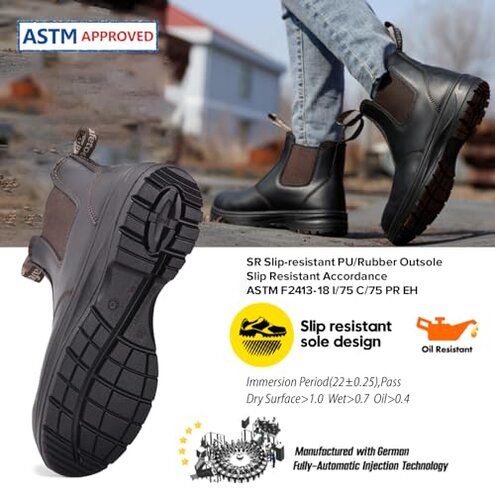
Do the safety claims hold up on slippery surfaces?
- Traction worry: Reports of slipping on oily or wet floors appear repeatedly in hands-on tests.
- When it shows: The problem is most noticeable during wet or greasy shifts, not on dry concrete.
- Severity: This is more disruptive than expected for boots marketed with anti-slip certification.
- Workarounds: Some users add aftermarket slip-resistant soles to reduce risk.
- Hidden requirement: Extra sole traction modifiers or mats may be needed for truly slippery environments.
- Cost impact: Added purchases mean the advertised price understates real expense.
- Repairability: Sole fixes are temporary and may not restore original slip resistance.
Will these boots stay comfortable during full shifts?
- Comfort trade-off: Initial padding can feel adequate but commonly compresses after repeated wear.
- When it worsens: Discomfort grows over long shifts or after multiple days of standing.
- Frequency tier: This is a primary complaint seen across many accounts.
- Early signs: Heel rubbing, arch soreness, and foot fatigue emerge within days for some users.
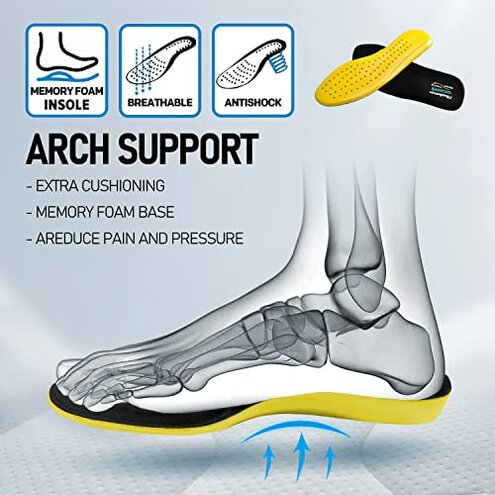
- User attempts: Buyers add memory foam insoles or orthotics to regain comfort.
- Category contrast: Unlike many mid-range boots that keep support after break-in, these often need immediate insole upgrades.
- Hidden requirement: Plan for aftermarket insoles if you need all-day comfort.
- Long-term impact: Without upgrades, repeated discomfort can force early replacement.
Illustrative excerpts
"Tight across the forefoot on first wear, had to size up." — Illustrative: primary.
"Sole started peeling after a month of warehouse shifts." — Illustrative: secondary.
"Slipped once on an oily patch despite anti-slip claim." — Illustrative: edge-case.
Who should avoid this
- Buyers needing consistent fit: Avoid if you cannot tolerate inconsistent sizing that forces returns or larger orders.
- Long-shift workers: Avoid if you require reliable all-day comfort without buying extra insoles.
- High-slip environments: Avoid if you work on oily floors and need guaranteed traction out of the box.
Who this is actually good for
- Casual users: Good for light-duty or occasional wear where sizing quirks are tolerable.
- Buyers on a budget: Good if you're willing to add inexpensive insoles and accept shorter wear life.
- Non-slip-critical tasks: Suitable for dry, low-slip settings where traction issues are unlikely to appear.
Expectation vs reality
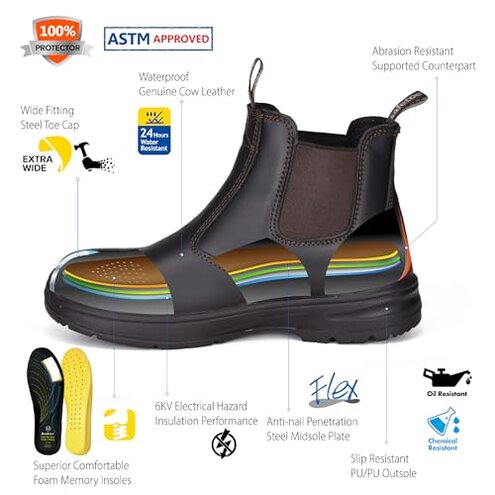
Expectation: Reasonable for this category is a predictable fit and lasting comfort after a short break-in.
Reality: These boots often deliver inconsistent sizing and need immediate insole upgrades, which is worse than expected for mid-range work boots.
Expectation: Anti-slip claims mean safe use on oily floors.
Reality: Traction can fail under greasy conditions, creating hidden costs for traction fixes.
Safer alternatives
- Check size guidance: Compare brand-specific size charts and customer-fit notes before buying to avoid the sizing trap.
- Budget for insoles: Buy a trusted aftermarket insole to neutralize the comfort and support failure immediately.
- Test traction: For oily environments, choose boots with verified lab-tested slip ratings or clear user consensus of performance.
- Prefer known lasts: Pick brands with stable sizing reputations to reduce return risk and replacement cost.
The bottom line
Main regret: The combination of inconsistent fit and early wear is the key reason buyers regret this purchase.
Why it matters: These issues exceed normal category risk because they force extra spending on replacements or insoles and increase return hassle.
Verdict: Avoid this model if you need dependable fit, long-lasting durability, or guaranteed slip resistance out of the box.
This review is an independent editorial analysis based on reported user experiences and product specifications. NegReview.com does not sell products.