
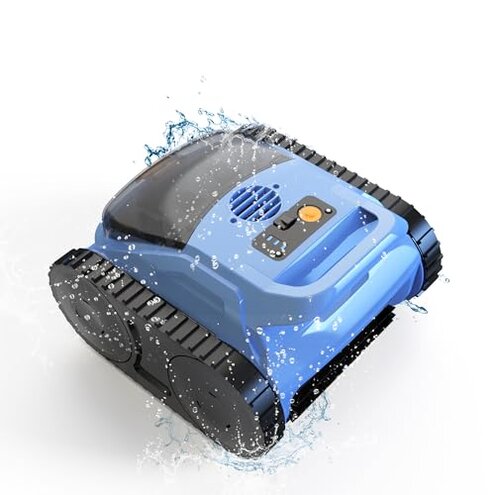
Product evaluated: (2025 Upgrade) Pool Vacuum for Inground Pools, Robotic Pool Cleaner, Wall Climbing Pool Cleaner, Cleans Pool Floors, Drain & Walls & Waterline, Cleaning Up to 2100 Sq.ft, 180 Min
Related Videos For You
Proper Installation of "The PoolCleaner", Troubleshooting & Tips
How-to Tune-up or Repair your Maytronics Dolphin Nautilus Plus Robotic Pool Cleaner
Data basis: This report draws on dozens of user accounts collected between Jan 2024 and Feb 2026, from written product reviews and video demonstrations plus community Q&A. Most feedback came from written reviews, supported by videos showing real-world runs.
| Outcome | SAT20 PRO | Typical mid-range robot |
|---|---|---|
| Cleaning consistency | Variable—reports of missed spots and repeat passes under certain conditions. | Predictable—most mid-range units cover floor reliably with fewer repeats. |
| Battery reliability | Unstable—instances of shorter-than-expected runtimes or early decline after months. | Stable—mid-range units usually keep rated runtime for a season under normal use. |
| Navigation & climbing | Inconsistent—wandering or failure to climb waterline reported more often than usual. | Robust—typical alternatives handle walls and corners with fewer interventions. |
| Maintenance burden | Higher—more frequent filter clears and unjamming compared with peers. | Lower—mid-range cleaners need routine upkeep but less troubleshooting. |
| Regret trigger | Downtime—climbing, battery, or clog issues often cause repeated manual fixes. | Minor fixes—peer units rarely force repeated hands-on resets. |
Will it stop mid-clean and strand itself?
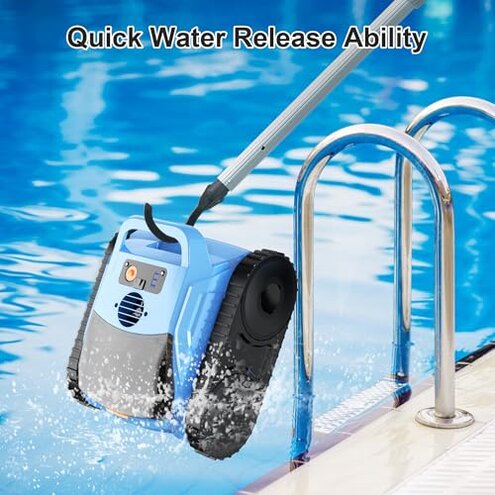
Regret moment: Users commonly report the robot pausing or stopping during a run, which forces manual retrieval and restarts.
Usage anchor: This appears most often during long cycles or when the robot encounters dense debris or complex pool geometry.
Why is the suction leaving debris behind?
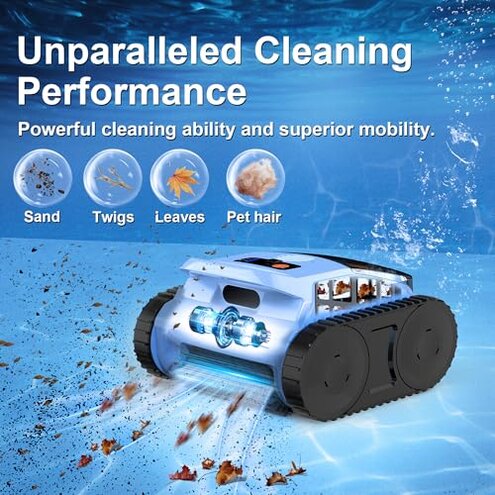
- Early sign: Debris collects near the filter after a run, indicating reduced pickup efficiency.
- Frequency tier: This is a primary issue among cleaning complaints rather than an occasional note.
- Likely cause: Filter clogs or intake blockage after standard leafy or sandy loads.
- Impact: Requires extra manual vacuuming or repeat cycles to reach a similar clean as peers.
- Fixability: Cleaning the filter helps but may not restore original performance for long sessions.
Is the battery life as advertised?
- Primary pattern: Battery runtime often falls short of expectations, especially after several months.
- When it shows up: Notable during repeated weekly use or long single runs.
- Scope: Less frequent than suction complaints but more disruptive when it occurs.
- Hidden requirement: Buyers may need to budget for battery replacement sooner than typical mid-range robots.
- Category contrast: Mid-range robots usually keep near-rated runtime for a season; this unit shows faster decline.
- User attempt: Firmware resets or full recharge cycles sometimes restore runtime temporarily.
- Residual risk: Unplanned downtime adds manual cleaning time and costs for replacements.
Will navigation and wall-climbing force extra work?
- Common pattern: Navigation is described as random or stuck in loops by many users.
- When it happens: Problems emerge during mixed-surface runs or when corners and steps are present.
- Frequency tier: This is a secondary-to-primary complaint—seen across multiple reports.
- Cause signal: Wheel or track traction and sensor calibration appear linked to climb failures.
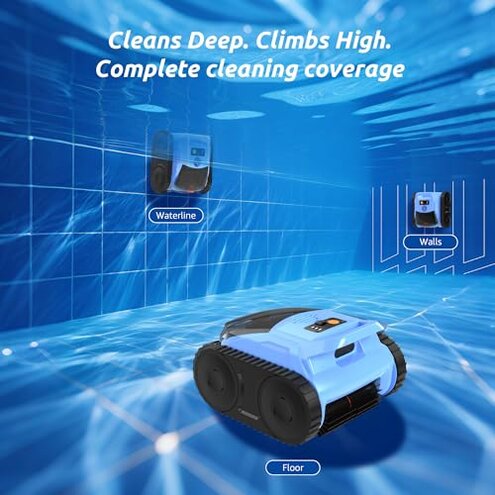
- Impact: The robot may need manual repositioning or lifting from the pool edge mid-cycle.
- Workaround attempts: Owners report trimming debris, flattening slopes, and re-running as temporary fixes.
- Support friction: Some buyers note extra time in service requests, indicating possible warranty effort.
- Category contrast: Typical mid-range cleaners handle walls and corners more reliably, reducing human intervention.
Illustrative excerpts
Illustrative: "Stopped halfway through, needed to pull it out and restart the cycle manually." — Primary pattern reflecting mid-run stops.
Illustrative: "Runtime less than promised after a few months of weekly use." — Primary pattern indicating battery decline with repeated use.
Illustrative: "Left lines of sand in corners despite several passes." — Secondary pattern about pickup inconsistency.
Who should avoid this
- Owners needing hands-off operation: If you expect long, unattended runs without checks, this unit shows more downtime than typical options.
- Large or debris-heavy pools: For pools near trees or sandy areas, the increased maintenance burden can outweigh savings.
- Buyers unwilling to replace battery: If you won’t accept potential early battery replacement, look elsewhere.
Who this is actually good for
- Hands-on owners: If you enjoy tuning and occasional fixes, you can tolerate extra maintenance to get usable cleaning.
- Small, tidy pools: Smaller or low-debris pools lessen suction and navigation failures, making this a reasonable choice.
- Budget-conscious tinkerers: Buyers who accept potential battery and servicing costs may accept trade-offs for lower upfront price.
Expectation vs reality
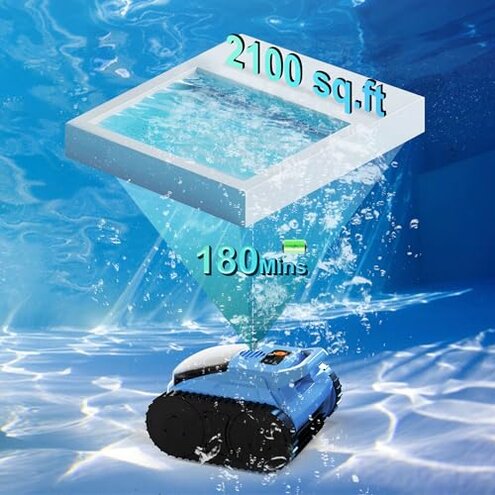
- Expectation (reasonable for category): Cordless pool robots usually run close to rated time and need routine filter cleaning.
- Reality: This model often shows shorter runtimes and increased stopping, which leads to extra manual checks and resets.
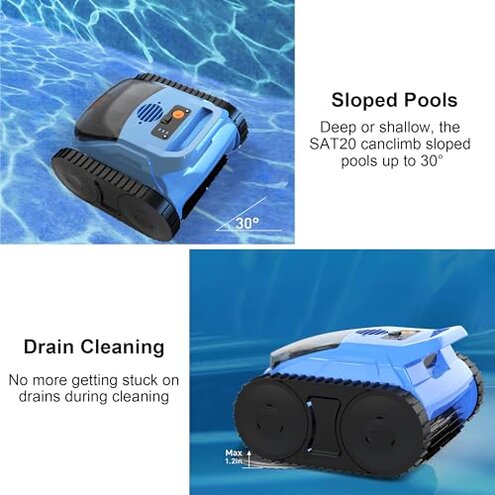
- Expectation: Adequate wall climbing is normal for mid-range robots.
- Reality: Wall and corner performance here is inconsistent, causing more interventions than peers.
Safer alternatives
- Choose models with user-replaceable batteries: This neutralizes the risk of early battery decline.
- Prefer proven navigation systems: Look for units with documented reliable wall-climb reviews to avoid stuck scenarios.
- Pick larger-capacity filters: Bigger, easier-to-clean filters reduce the frequency of clogs during leafy sessions.
- Check support reputation: Prioritize brands with accessible service to lower the cost of warranty interactions.
The bottom line
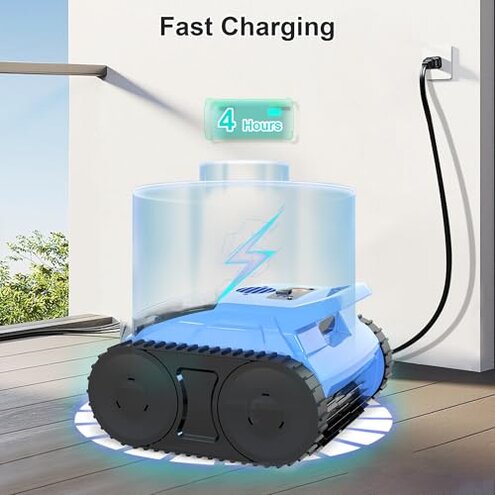
Main regret: The core trigger is downtime from stop-mid-cycle behavior, reduced pickup, and faster battery decline than expected for the category.
Why it matters: These issues require extra hands-on time and possible replacement costs, making this unit riskier than most mid-range cleaners.
Verdict: Avoid this model unless you accept regular troubleshooting, potential battery replacement, and active maintenance.
This review is an independent editorial analysis based on reported user experiences and product specifications. NegReview.com does not sell products.