
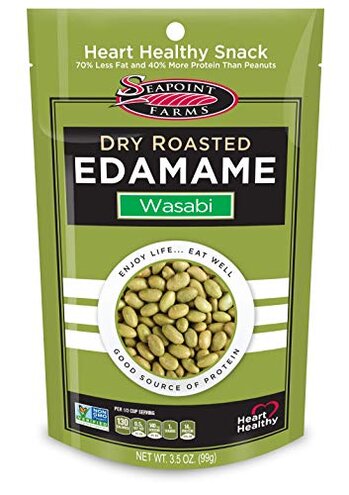
Product evaluated: Seapoint Farms Wasabi Dry Roasted Edamame, Healthy Gluten-Free Snacks, 12-Pack, 3.5 Ounce (Pack of 12)
Related Videos For You
Crispy Dry Roasted Edamame | Cheap, Healthy, High Protein Snack
Edamame Wasabi Dip | KNIFE GIVEAWAY!!
Data basis for this report comes from analyzing dozens of aggregated buyer comments collected from written reviews and star-rating rationales across a multi-year window, roughly 2016–2026. Most feedback was detailed text about taste, freshness, and packaging outcomes, with supporting short-form notes focused on consistency from bag to bag.
| Buyer outcome | This edamame | Typical mid-range snack |
| Flavor consistency | Higher variance from pack to pack is a recurring regret trigger | More stable seasoning intensity batch to batch |
| Freshness risk | Higher-than-normal staleness reports for a sealed crunchy snack | Lower risk if packaging and turnover are typical |
| Heat tolerance | Spice spikes can feel abrupt, especially on first handful | More gradual heat build in most flavored crunchy snacks |
| Texture enjoyment | Polarizing crunch with “too hard” complaints appearing repeatedly | More forgiving crunch across nut- and bean-snack peers |
| Regret trigger | Buying multipacks and finding several bags you won’t finish | Trying singles first reduces waste and frustration |
Why does the wasabi heat feel unpredictable?
Regret usually hits on the first snack session when you expect a steady wasabi kick and get a sudden “sinus blast” instead.
Severity is often described as more disruptive than typical spicy snacks because the heat can jump fast without warning.
Pattern is recurring but not universal, and it shows up most when you open a new bag and take a big first handful.
Category contrast matters because most mid-range flavored snacks ramp heat more evenly, so this feels harder to “dose” for casual snacking.
- Early sign is a strong nose-tingle on the first few beans before flavor settles.
- Primary issue is repeated mentions of heat being stronger or weaker than expected across different packs.
- Worsens when you eat fast or share with kids or spice-sensitive guests.
- Likely cause buyers point to is uneven seasoning distribution from bag to bag.
- Impact is wasted product because “too hot” snacks tend to get abandoned mid-bag.
- Attempted fix some buyers use is shaking the bag and eating slowly to test intensity.
- Fixability is limited because you cannot reliably predict heat until the bag is opened.
Are you likely to get stale or “off” crunch in a multipack?
- Primary risk is staleness showing up repeatedly, especially noticeable on the first use after opening.
- When it hits is immediately at first bite, with crunch turning more “chalky” than crisp.
- Worsens with slower household snack turnover, since a 12-pack can sit longer.
- Category contrast is sharper here because sealed roasted snacks usually stay reliably crisp until opened.
- Scope signal is that freshness complaints appear across mixed feedback styles, not just one-off notes.
- What buyers try includes transferring to an airtight container, which adds extra steps for a grab-and-go snack.
- Hidden requirement becomes careful storage planning, which many people did not expect from single-serve packs.
- Regret outcome is having several bags you avoid finishing because the texture never recovers.
Is the crunch too hard for everyday snacking?
Regret moment often appears during longer snacking sessions, when the novelty crunch turns into jaw fatigue.
Pattern is persistent but clearly preference-driven, and it shows up most with people expecting a lighter puffed texture.
Category contrast is that many bean snacks aim for a lighter bite, while this one can feel denser and less forgiving.
- Most cited feel is “very hard” crunch that can be more work than expected.
- When noticed is right away, but it becomes more annoying after repeated handfuls.
- Worsens for dental sensitivity or anyone who snacks while working and wants easy chewing.
- Secondary issue is broken pieces and powder settling, which can concentrate seasoning in spots.
- Practical impact is slower eating and less “mindless snack” convenience.
- Mitigation is using it as a topping on salads or bowls instead of straight snacking.
Does the multipack value backfire if you don’t love it?
- Top complaint is that flavor and texture are polarizing, making a 12-pack feel like a commitment.
- When it hits is after the first or second bag, when you realize you won’t reach for the rest.
- Pattern appears repeatedly in buyer narratives that describe “wanted to love it” outcomes.
- Category contrast is that many mid-range snacks have safer, broadly liked profiles for bulk buys.
- Hidden cost is pantry space and waste when several bags become “backup snacks” indefinitely.
- Mitigation is trying a smaller size first, or splitting a pack with someone who likes intense heat.
Illustrative excerpt: “First handful was fine, then it suddenly cleared my sinuses.”
Explanation: This reflects a primary pattern of uneven heat perception at first use.
Illustrative excerpt: “Some bags were crisp, others tasted like they sat too long.”
Explanation: This reflects a primary pattern of inconsistent freshness across packs.
Illustrative excerpt: “Love wasabi, but these were harder to chew than I expected.”
Explanation: This reflects a secondary pattern tied to texture tolerance.
Illustrative excerpt: “Bought the big pack and now I’m forcing myself to finish them.”
Explanation: This reflects a secondary pattern linked to multipack commitment risk.
Illustrative excerpt: “Great idea, but the spice level isn’t consistent week to week.”
Explanation: This reflects an edge-case version of the same consistency complaint.
Who should avoid this
- Spice-sensitive snackers who want predictable heat, because intensity swings are a primary complaint.
- Texture-picky buyers who dislike hard crunch, since “too hard” shows up repeatedly during normal snacking.
- Bulk-only shoppers who hate waste, because a 12-pack amplifies regret when you don’t like the first bag.
- Freshness-focused buyers who expect every sealed bag to be reliably crisp, given the higher-than-normal staleness risk.
Who this is actually good for
- Wasabi lovers who enjoy a strong hit and can tolerate occasional spice spikes.
- Crunch seekers who prefer dense, loud snacks and are not bothered by harder chewing.
- Lunchbox planners who rotate snacks quickly, reducing the frustration tied to staleness reports.
- Salad toppers who will use it as a crunchy add-on, which softens the impact of texture complaints.
Expectation vs reality
Expectation: A reasonable expectation for this category is consistent heat and crunch from bag to bag.
Reality: A recurring theme is inconsistency, where one bag is great and the next is too hot or less fresh.
- Expectation is easy grab-and-go snacking from single-serve style bags.
- Reality is a hidden need for storage planning or repackaging when freshness is not as expected.
| What you expect | What can happen |
| “Wasabi flavor” that stays steady | Heat swings that force you to test each new bag |
| Crisp roasted texture | Stale crunch that feels more common than it should be |
Safer alternatives
- Buy singles first when possible to avoid the multipack regret tied to polarizing taste and texture.
- Choose milder seasonings if you need predictable snacking, since spice variability is a primary pain point here.
- Pick brands known for consistent crunch if you are sensitive to staleness, which is higher-than-normal in complaints.
- Use resealable packaging options to reduce the hidden storage burden reported with keeping texture crisp.
The bottom line
Main regret is committing to a 12-pack and running into bag-to-bag swings in heat and freshness.
Category risk feels higher than normal because sealed crunchy snacks are usually more consistent than what buyers commonly report here.
Verdict: If you need predictable spice and reliable crunch, this is a smart avoid, unless you can trial a smaller quantity first.
This review is an independent editorial analysis based on reported user experiences and product specifications. NegReview.com does not sell products.