
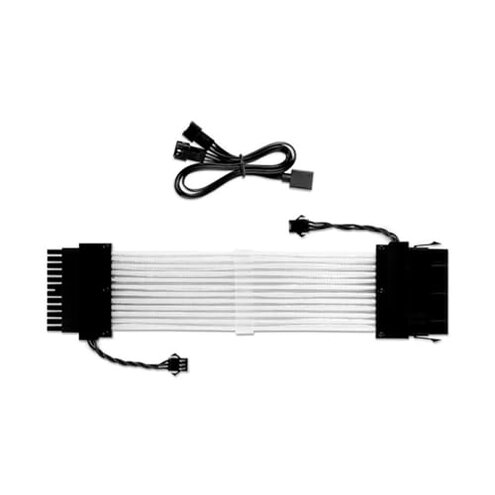
Product evaluated: Sharkoon Shark xtend 24
Related Videos For You
How To Install Lian Li Strimer Plus RGB Cables + Review & How To Use
Data basis: This report is based on dozens of aggregated buyer feedback items collected from written reviews and star ratings, supported by a smaller set of photo posts describing real installs. The collection spans a multi-year range from 2019 through early 2026. Most signals came from written experiences, with occasional visuals used to confirm setup outcomes.
| Buyer outcome | Sharkoon Shark XTend 24 | Typical mid-range alternative |
|---|---|---|
| Install effort | More fiddly if your case is tight, due to extra cable bulk. | Moderate, usually more forgiving to route. |
| Lighting compatibility | Higher risk of controller mismatch or needing extra parts. | Lower risk, often includes clearer controller guidance. |
| Daily reliability | Less predictable if connectors aren’t seated perfectly. | More stable once connected. |
| Value per dollar | Harder to justify at $93.89 for a cosmetic add-on. | Better value, often similar effect for less. |
| Regret trigger | Paying premium and still needing extra steps to make RGB work. | Works sooner with fewer surprises. |
Why doesn’t the lighting work the way you expected?
Regret moment: You finish the build, power on, and the lighting doesn’t turn on or won’t sync. That’s more disruptive than it sounds, because this product’s whole job is the visual effect.
Pattern: This shows up as a primary issue in feedback patterns, and it’s recurring rather than a one-off. It tends to appear after setup, when buyers try to control effects through their existing lighting app or hub.
Category contrast: Most mid-range RGB extensions are “plug it in and at least it lights,” even if syncing is imperfect. Here, the hidden requirements make the experience feel less forgiving than typical.
- Hidden need: The listing states you need a compatible RGB controller, and this becomes a problem when buyers assume the motherboard alone is enough.
- Early sign: If you cannot detect the strip in your lighting software, that mismatch can show up on first boot.
- When it hits: Issues often appear during initial configuration when trying to set colors or effects, not while simply powering the PC.
- Worse conditions: The risk rises when you mix brands or use older hubs, because compatibility expectations are less clear than buyers assume.
- Buyer impact: You spend extra time testing headers, flipping connectors, or re-routing, which adds more steps than this category usually requires.
- Mitigation: Plan for a controller check before purchase, and budget time for a trial-and-error setup.
- Fixability: Many cases are fixable with the right controller and correct header, but it can still feel like paying for a project.
Did the cable make your build harder to close up?
- Install pinch: A recurring secondary issue is the extra bulk making routing harder during installation.
- Real moment: It shows up when you try to put the side panel back on, especially in compact cases with limited cable channels.
- Worse conditions: Tight bends and forcing the panel can increase stress and make the run look less clean than expected.
- Category contrast: Extensions usually add some thickness, but buyers often report this one is more finicky than the mid-range baseline.
- Impact: You may end up redoing cable ties, changing routing paths, or accepting a bulge, which is a time sink for a cosmetic upgrade.
- Attempted fixes: People commonly try different routes and tie points, and results vary based on case layout.
- Mitigation: If your case has little space behind the motherboard tray, treat this as a high-risk fit accessory.
Is the price hard to justify once you see what it really is?
Regret moment: You realize you spent $93.89 on an extension that doesn’t add performance, only looks. If the lighting setup isn’t effortless, the value frustration becomes sharper.
Pattern: Value complaints are a secondary issue and show up persistently when buyers compare against simpler mid-range RGB add-ons. It tends to hit after the install, when the “wow” factor doesn’t match the spend.
Category contrast: In this category, buyers usually tolerate some cable-management annoyance because the cost is modest. At this price point, the same hassles feel more disruptive than expected.
- Sticker shock: The high price raises expectations for plug-and-play success.
- Trade-off: You are paying for 24 addressable LEDs and the look, not any system improvement.
- Worse conditions: If you need an extra controller or adapter, the total project cost feels even steeper.
- Outcome: Buyers more often describe “not worth it” when they also hit compatibility friction.
- Mitigation: This makes more sense only if you already own a compatible controller and you value the aesthetic enough to accept extra effort.
Do small connection issues turn into random lighting glitches?
- Primary annoyance: A less frequent but more frustrating pattern is intermittent behavior when connections are not perfectly seated.
- When it shows: It tends to appear after setup, when you bump cables during upgrades or move the PC.
- Worse conditions: Frequent hardware changes and tight cable tension can make the system less stable.
- Category contrast: Most mid-range extensions tolerate normal handling without drama, so this feels higher maintenance than expected.
- Impact: You end up opening the case again to reseat connectors, which is annoying for something meant to be a “set-and-forget” visual.
- Attempts: Buyers commonly try re-seating and re-routing to remove tension points.
- Mitigation: Leave slack, avoid sharp bends, and don’t clamp it under a panel edge, because that can create repeat issues.
- Fixability: Usually fixable, but it adds repeated troubleshooting time.
Illustrative: “It lights up, but won’t sync with my motherboard settings.” Primary pattern reflecting controller or header mismatch.
Illustrative: “Had to reopen the case three times to route it cleanly.” Secondary pattern tied to tight-case cable bulk.
Illustrative: “For the price, I expected plug-and-play with no extra parts.” Secondary pattern tied to value disappointment.
Illustrative: “It worked until I moved the PC, then the lighting acted weird.” Edge-case pattern tied to connector seating and cable tension.
Who should avoid this
Small-case builders should avoid it if your side panel already barely closes, because bulk-related routing friction is a recurring install regret.
Anyone without a known compatible controller should skip it, because the hidden requirement often appears only after the build is done.
Value shoppers should avoid it at $93.89, because cosmetic-only upgrades feel worse when setup takes extra time.
Frequent upgraders should think twice, because repeated opening and moving can surface intermittent glitches more than the category baseline.
Who this is actually good for
Showcase builders with a roomy case may like it, because they can tolerate extra routing work to get a specific lighting look.
People with a confirmed compatible RGB controller can accept the setup steps, since the main risk is compatibility, not basic function.
Set-and-leave users who rarely move the PC can live with the connector sensitivity, because it is less likely to show up without handling.
Aesthetic-first buyers who want 24 addressable LEDs may accept the price if the lighting effect is the priority.
Expectation vs reality
- Reasonable for this category: “It should light up with my current RGB setup.” Reality: Compatibility can require extra checking and adds more steps than expected.
- Expectation: “An extension cable should be easy to route.” Reality: Cable bulk can make closure and routing more fiddly in tight builds.
- Expectation: “At this price, it should feel effortless.” Reality: Buyers report value regret when setup friction or extra parts turn it into a mini project.
Safer alternatives
- Compatibility first: Choose an RGB extension that lists your controller standard clearly to reduce the hidden-controller mismatch risk.
- Simpler routing: Look for thinner, more flexible extensions if your case has limited rear clearance, to avoid panel-close frustration.
- Buy bundles: Prefer kits that include a controller or explicit header guidance, which directly reduces after-install troubleshooting.
- Lower-cost test: If you mainly want “some glow,” start with a less expensive mid-range option to avoid high-price regret if the effect is subtle.
The bottom line
Main regret is paying $93.89 and still hitting controller compatibility and routing friction that appear repeatedly after setup. Category risk is higher than normal because the product’s only benefit is lighting, yet it often demands extra checking and time. Verdict: avoid unless you have a roomy case and confirmed RGB control compatibility.
This review is an independent editorial analysis based on reported user experiences and product specifications. NegReview.com does not sell products.