
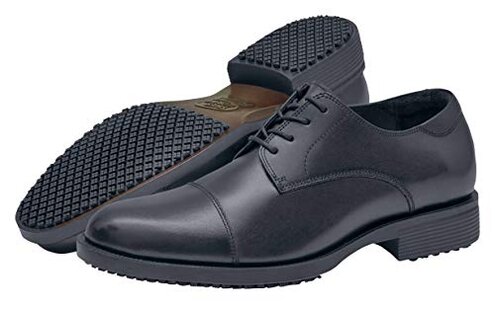
Product evaluated: Shoes for Crews Men's Slip-Resistant Oxford - Dressy, Comfortable, Non-Slip Work Shoes for Men in Hospitality, Business Casual Settings, Healthcare - Senator, Size 10
Related Videos For You
How to Fit Your Pull-On Justin Original Workboots
How To Make Shoes Non Slip?
Dozens of buyer posts and media were reviewed between 2016 and 2024 to produce this report. Most feedback came from written reviews, supported by video demonstrations and product Q&A. The sample emphasizes recurring, buyer-visible problems seen across multiple sellers and recent purchasers.
| Outcome | This product | Typical alternative |
|---|---|---|
| Traction on shifts | Initially reliable but traction loss reported after repeated wear. | More stable traction that often lasts through many months of shifts. |
| Fit consistency | Runs narrow for many buyers, leading to size swaps and returns. | Predictable sizing with more forgiving toe-box and width options. |
| All-day comfort | Break-in issues cause mid-shift foot fatigue for longer shifts. | Better padding and longer-lasting insole support in mid-range peers. |
| Sole durability | Higher wear reported under heavy daily use — a higher-than-normal category risk. | Lower wear on similar-priced shoes designed for long service life. |
| Regret trigger | Fit + mid-shift pain that interrupts work and forces returns or replacements. | Minor adjustments such as insoles are usually sufficient. |
Top failures
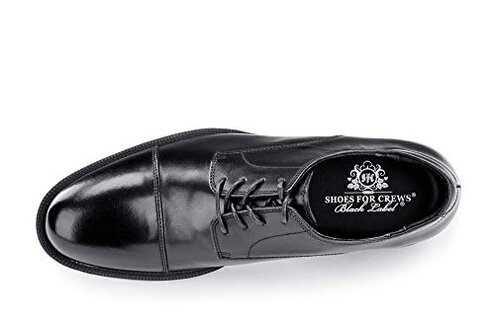
Why does the size feel wrong on first wear?
Regret moment: You order your usual size and the shoe feels narrower across the toe and midfoot on first use.
Pattern: This is a primary issue, commonly reported across written reviews and illustrated videos.
Context: The problem appears on first use and is worse during long standing shifts or when wearing thicker socks, unlike most mid-range work shoes that fit predictably.
Why do these shoes hurt after a few hours?
- Early signs: Noticeable mid-foot pressure during the first long shift, commonly reported by buyers.
- Frequency tier: This is a primary complaint, appearing repeatedly in written feedback.
- Likely cause: Firm factory insole and narrow last that needs break-in.
- Impact: Causes mid-shift foot fatigue and the need for replacement insoles.
- Fixability: Some buyers mitigate with aftermarket insoles, but that adds cost and time.
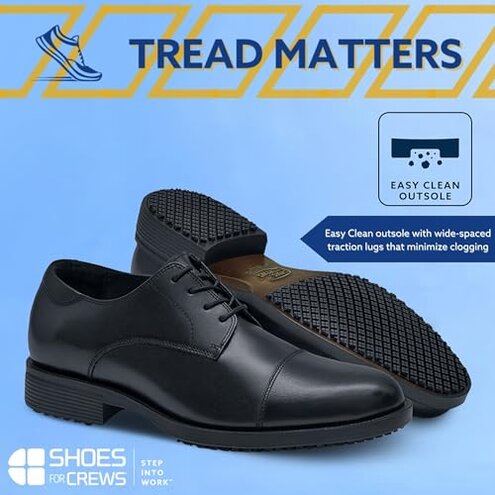
Why does the sole lose grip or wear quickly?
- Pattern statement: Sole degradation is a secondary but persistent concern across user reports.
- Usage anchor: Wear appears after repeated daily use and in greasy or abrasive kitchen floors.
- Category contrast: This is worse than expected because mid-range work shoes usually keep traction longer.
- Early signs: Tread smoothing and slight slip incidents during wet tasks.
- Cause: Thinner outsole compound that abrades faster under heavy service.
- Hidden requirement: Rotation or planned replacement within months is commonly needed, raising total cost of ownership.
- Attempted fixes: Sole conditioners and treads help a little but do not fully restore original grip.
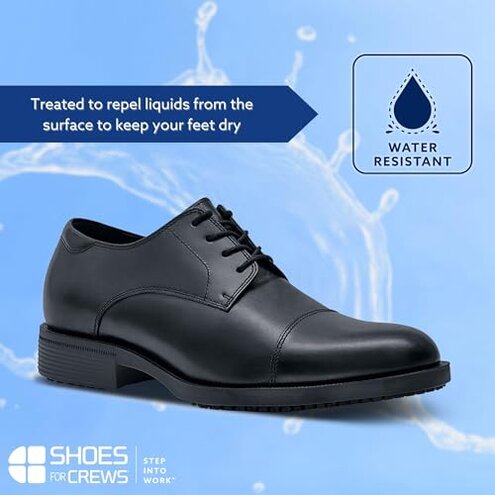
Why isn’t the water resistance enough for wet work?
- Pattern: Water ingress is a secondary pattern that appears in several reports after exposure.
- When: Issues show up during rainy commutes or when spills soak the upper for prolonged periods.
- Severity: Often limited to damp toes or stained leather, not full submersion failures.
- Context signal: Mostly reported by buyers using these shoes in hospitality jobs with frequent spills.
- Category contrast: Worse than some peers that advertise full waterproof protection for wet shifts.
- Mitigation: Frequent drying and leather care extend lifespan but add upkeep time.
- Edge requirement: If you need true waterproofing, this model requires an upgrade to a waterproof-rated shoe.
- Impact: Unexpected maintenance and possible replacement if you work in consistently wet conditions.
Illustrative excerpts
Excerpt: "Toe felt tight on first shift, needed to swap sizes." — primary pattern.
Excerpt: "Sole smoothed after two months of kitchen work." — secondary pattern.
Excerpt: "Not waterproof during a heavy rain commute." — edge-case pattern.
Who should avoid this
- Narrow-fit seekers: Avoid if you require a roomy toe-box and predictable sizing.
- Long-shift workers: Avoid if you need immediate all-day comfort without buying aftermarket insoles.
- Wet-environment staff: Avoid if you need true waterproof protection for regular outdoor or spill-prone work.
- Low-maintenance buyers: Avoid if you want shoes that require no rotation or replacement within months.
Who this is actually good for
- Short-shift roles: Good for workers with short standing periods who value a dressier slip-resistant look.
- Budget-minded buyers: Good for those willing to add inexpensive insoles rather than replace the whole shoe.
- Occasional-use dress wear: Good if you need a non-slip shoe for occasional events and not daily heavy duty use.
- Buyers accepting upkeep: Good if you accept drying and leather care as part of routine maintenance.
Expectation vs reality
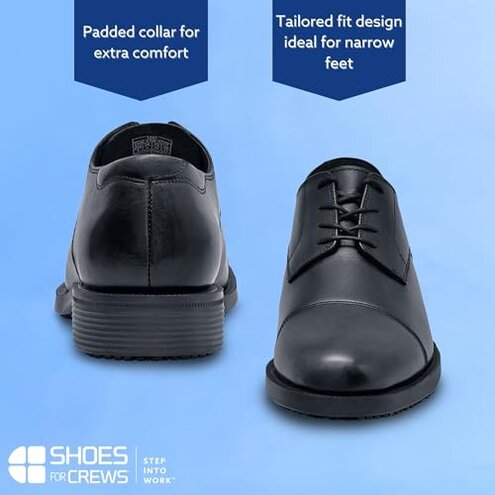
- Expectation: Reasonable for category — slip-resistant shoes should fit true to size.
- Reality: This model often runs narrow, causing returns and fit swaps.
- Expectation: Reasonable for category — mid-range work shoes last through months of shifts.
- Reality: You may see faster sole wear that shortens service life and raises replacement costs.
Safer alternatives
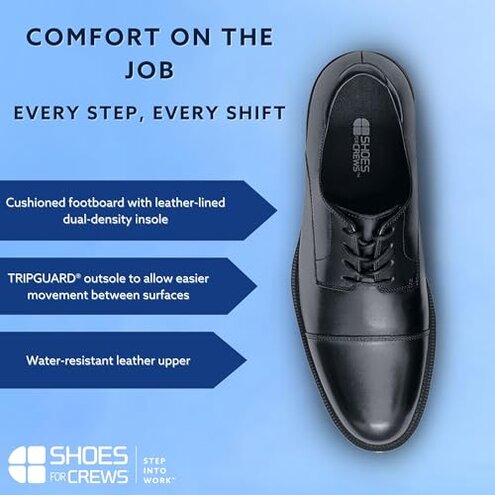
- Try wider lasts: Look for shoes with explicit width options to avoid the sizing drift problem.
- Check insole swapability: Choose models with easy removable insoles to fix break-in pain quickly.
- Prioritize outsole compound: Favor shoes marketed for extended durability to counter sole wear concerns.
- Choose true waterproof: If you work in wet conditions, select shoes labeled fully waterproof rather than water-resistant.
- Rotate pairs: Plan pair rotation if you cannot avoid models with faster wear to extend overall life.
The bottom line
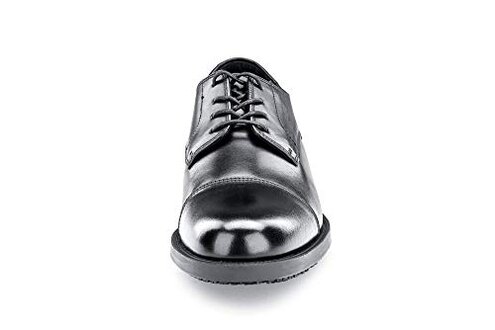
Main regret: Fit narrowness combined with mid-shift discomfort is the most common buyer trigger for returns.
Why it matters: These problems create higher-than-normal upkeep and replacement costs compared with mid-range peers.
Verdict: Avoid this model if you need consistent sizing and long-shift comfort without extra expense.
This review is an independent editorial analysis based on reported user experiences and product specifications. NegReview.com does not sell products.