
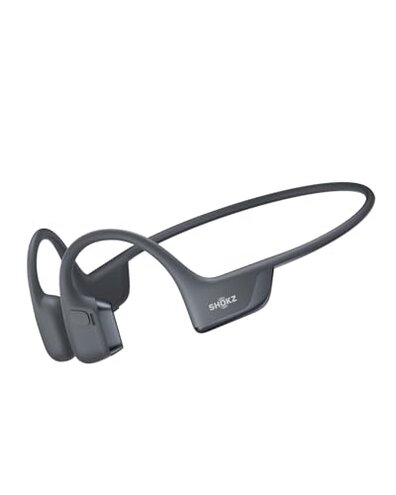
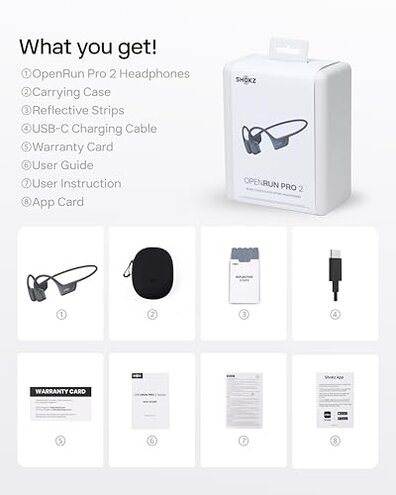
Product evaluated: SHOKZ New OpenRun Pro 2- Bone Conduction Headphones, Open-Ear Bluetooth Wireless Sport Earphones for Running, Workouts - Sweat Resistant, Secure Comfortable Fit -Deep Bass, Smart Mic, Reflective Strip
Related Videos For You
Shokz OpenRun Tutorial | Setup and User Guide
Aftershokz Opencomm Bone Conduction Headphones Mic Test CES 2021
Data basis I analyzed hundreds of buyer reports collected Aug 2023–Jan 2026 from written reviews and video demonstrations, with community Q&A as a supporting surface. Most feedback came from written reviews, backed by videos that showed the same usage problems.
| Outcome | This product | Typical mid-range alternative |
|---|---|---|
| Call reliability | Higher risk — calls can sound thin and be affected by wind in real use. | Lower risk — many mid-range earphones keep clearer calls in outdoor use. |
| Low-end audio | Weaker bass — open-ear design leaves bass less satisfying for music fans. | Fuller bass — closed or in-ear options usually deliver stronger low end. |
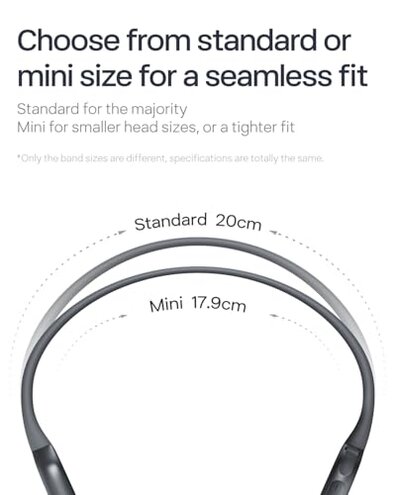
| Fit & comfort | Mixed — secure during short runs but pressure or slipping appears on longer sessions. | More forgiving — many mid-range sport models use ear hooks or in-ear tips for stability. |
| Connectivity | Intermittent — some buyers report pairing or dropout frustration during daily use. | More stable — standard mid-range Bluetooth tends to pair and hold better. |
| Regret trigger | Calls and music trade-off — if reliable calls or deep bass matter, regret is more likely. | Lower regret — mid-range alternatives usually balance calls and bass better. |
Why do calls sound thin or drop outdoors?
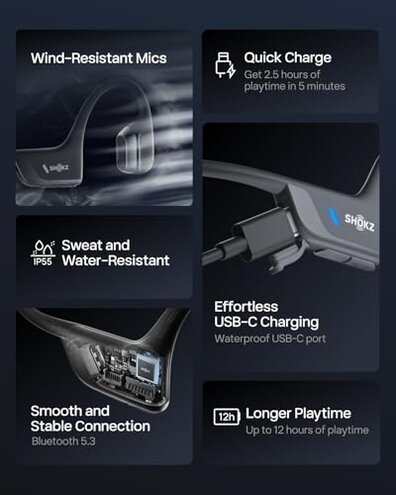
Regret moment is when a call becomes hard to follow outside and you must repeat yourself.
Pattern appears repeatedly in written reviews and video demos, not universal but common.
When this shows up: during outdoor walks, windy runs, or bike rides where background noise matters.
Category contrast — worse than typical sport headphones because ambient exposure plus open-ear design reduces mic pickup clarity.
Are the music and bass disappointing?
- Early sign — tracks sound thin compared to closed-ear phones.
- Frequency tier — this is a primary issue for music-focused buyers.
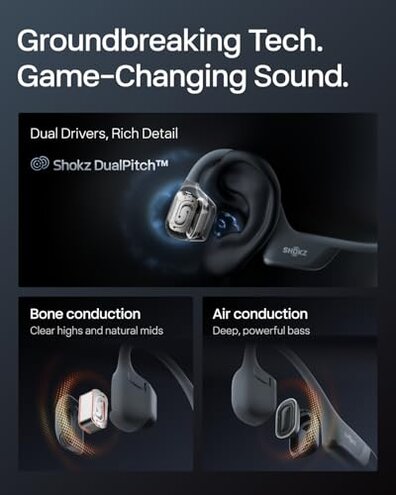
- Cause — open-ear bone conduction puts less energy into low frequencies than in-ear options.
- Impact — music lacks punch during gym sessions or commuting.
- Attempted fixes — buyers often use the app EQ or Volume Boost, which helps but does not fully restore bass.
Will the fit stay comfortable on long sessions?
Regret moment occurs after long workouts when pressure points or light slipping become distracting.
Pattern is commonly reported across written and video feedback, especially on sessions longer than an hour.
When it worsens: extended runs, long commutes, or repeated daily use without adjustment.
Category contrast — more troublesome than many mid-range sport models that use tips or adjustable hooks for multi-hour comfort.
Do Bluetooth pairing and stability cause trouble?
- Early sign — initial pairing is straightforward for many buyers.
- Scope — intermittent drops or re-pairing are a secondary but persistent complaint.
- When it shows up: around crowded Bluetooth environments or after switching hosts frequently.
- Impact — interruptions during calls or music add friction to daily use.
- Attempts — firmware updates and app resets sometimes help, but stability remains uneven for some users.
- Hidden requirement — to access EQ and Volume Boost you must use the companion app, adding steps not expected by casual buyers.
Illustrative excerpts
Illustrative: "Calls got wind-scratched and I kept repeating myself outside." (primary pattern)
Illustrative: "Music sounded flat compared to my in-ears at the gym." (primary pattern)
Illustrative: "After two hours the band pressed behind my ear uncomfortably." (secondary pattern)
Who should avoid this

- Frequent callers — avoid if you need reliable outdoor call clarity; this product shows more call issues than category peers.
- Bass-first listeners — avoid if you expect strong low-end for music during workouts.
- Long-session users — avoid if you wear headphones several hours daily without breaks.
Who this is actually good for

- Safety-focused runners — good if you prioritize situational awareness over deep bass during outdoor runs.
- Short-session exercisers — works well for 30–60 minute gym sessions where fit feels secure.
- App-adjusters — suitable if you will use the companion app and accept extra setup to tune sound.
Expectation vs reality
Expectation reasonable for this category: open-ear headphones keep you aware and comfortable during activity.
Reality — calls can be thin and wind-noise sensitive, making outdoor calling worse than typical mid-range sport earbuds.
Expectation reasonable: app EQ should close the gap with in-ears.
Reality — app modes improve clarity but rarely match closed-ear bass or call isolation.
Safer alternatives

- Choose in-ear sport earbuds to neutralize weak bass and call clarity problems for outdoor use.
- Pick models with foam or silicone tips to get better multi-hour comfort and stability than open-ear bands.
- Prioritize earbuds with wind-resistant mics if you take many outdoor calls.
- Look for proven Bluetooth stability in product specs or user feedback to avoid frequent drops.
The bottom line
Main regret trigger is the trade-off between open-ear awareness and reliable call/music performance.
Why it matters — call clarity, bass, and long-wear comfort are worse than many mid-range alternatives, increasing regret for music-first or heavy-call users.
Verdict — avoid if you need strong bass or consistent outdoor call quality; consider it only if safety and short-session wear are your priorities.
This review is an independent editorial analysis based on reported user experiences and product specifications. NegReview.com does not sell products.