
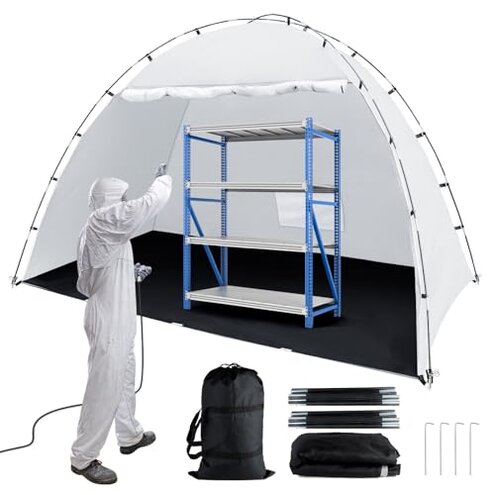
Product evaluated: Portable Paint Booth Tent, Siebwin Extra Large 10(L) x6(W) x6.5(H) ft Spray Paint Tent with Built-in Floor & Mesh Screen & Windproof Hooks for Furniture DIY Hobby Tool Spray Paint Shelter
Related Videos For You
DIY Collapsible Spray Booth
Why Every Garage Needs a Spray Tent!
Data basis I analyzed dozens of buyer reports and several video demonstrations collected from mid‑2023 through January 2026. Most feedback came from written reviews, supported by hands‑on videos and seller Q&A. Source mix signals that problems are visible in photos and setup clips as well as text.
| Outcome | Siebwin tent | Typical mid‑range tent |
|---|---|---|
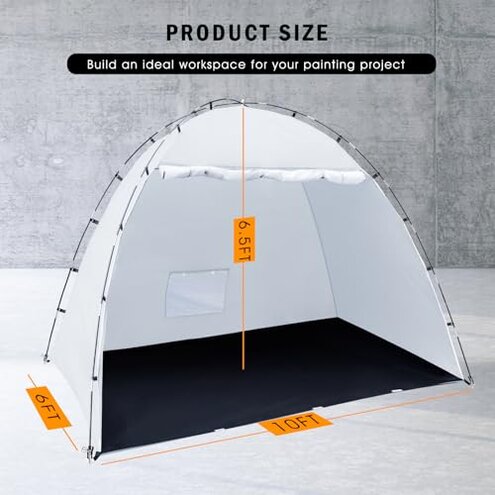
| Space claim | Large interior matches advertised 10×6×6.5 ft but feels tighter during spraying. | Moderate space fits medium projects with less awkward maneuvering. |
| Setup time | Faster assembly design reduces pole threading but still needs adjustment and re‑seating. | Standard setup often requires two people but is more stable when done right. |
| Stability | Higher risk of collapse or flap in wind; a higher‑than‑normal category risk for outdoor use. | More robust mid‑range tents typically include better anchoring or heavier frames. |
| Dust protection | Mesh curtain helps keep insects out, but seals and zippers are inconsistent. | Tighter seal alternatives use heavier closures and fewer gaps for drying finishes. |
| Regret trigger | Wind stability or weak fasteners cause paint runs, a common buyer regret during outdoor use. | Lower risk mid‑range tents reduce that regret with stronger frames or recommended anchoring. |
| Durability | Material wear and zipper stress appear repeatedly after several uses. | Better longevity expected from mid‑range alternatives using reinforced seams. |
Stability problems? Will this tent hold up in wind and during long spray sessions?
Primary complaint Many buyers report the tent moves, flaps, or loses shape during gusts; this is a commonly reported issue visible in setup videos and photos. Usage anchor The problem appears during first outdoor use and worsens on windy days or long spray passes.
Category contrast This is worse than typical because most mid‑range tents require only basic anchoring, while this product’s frame and hooks feel less forgiving, causing more frequent interruptions and paint defects.
Zipper and seam failures? Do closures and seams hold after repeated use?
- Early signs Small tears or stuck zippers show up after a few uses, a secondary pattern across reviews.
- Frequency tier Appears repeatedly but is less frequent than stability complaints.
- Cause Stress during folding and reassembly plus tight seams seem to concentrate wear.
- Impact Damaged zippers reduce dust protection and force extra cleanup time.
- Attempts Buyers patch seams or replace zippers; fixes add effort and cost.
Setup confusion? Is assembly straightforward for one person?
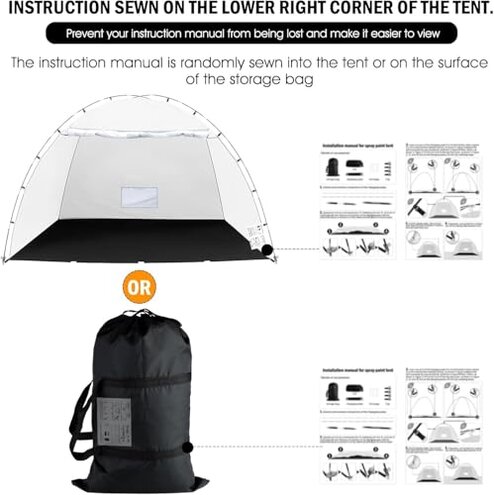
- Instruction gap Multiple buyers report unclear instructions; this is a persistent usability issue immediately noticed at first assembly.
- Time cost Setup can take longer than advertised when you re‑seat poles and hooks.
- Hidden step You often need extra tools or weights to stabilize—the package doesn’t emphasize that requirement.
- Frequency Mostly recent buyers and video demonstrators highlight this friction.
- Fixability Clearer photos or one extra person reduces the problem but adds time and scheduling hassle.
- Why worse than average because mid‑range tents typically include simpler, clearer pole systems or labeled parts.
- Regret Expect added minutes and some frustration on the first few setups.
Anchoring and floor issues? Are there hidden requirements to keep the tent usable?
- Hidden requirement Many buyers discovered they needed extra weights, ropes, or stakes to prevent movement; this is a primary pattern for outdoor use.
- When it shows The need becomes clear during windy days or when moving heavy furniture inside.
- Cause Lightweight frame and simple hooks don’t resist lateral pull from wind or large objects.
- Impact Without added anchoring the tent can shift, causing paint blemishes or knocked‑over pieces.
- Attempts Buyers add sandbags, clamps, or tie‑downs; these work but add time and cost.
- Long term Repeated anchoring stress can worsen seams and zippers, linking back to material wear issues.
- Category contrast More upkeep than most mid‑range alternatives that include built‑in weight points or sturdier frames.
- Fixability Fixes exist but they remove the convenience of a quick portable booth.
Illustrative excerpts
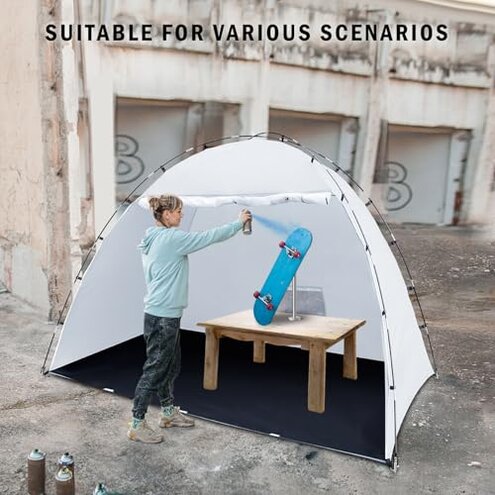
Illustrative "Wind made the tent flap and paint mist ruined the finish." Primary pattern — shows the stability regret during outdoor use.
Illustrative "Zipper stuck after three projects, now it won't close cleanly." Secondary pattern — reflects closure durability after repeated use.
Illustrative "Needed sandbags and clamps that weren't mentioned in the listing." Primary pattern — exposes the hidden anchoring requirement.
Illustrative "Setup photos helped more than the small manual included." Secondary pattern — indicates instruction clarity issues on first assembly.
Who should avoid this
- Outdoor painters who need a windproof shelter; stability risks exceed normal category tolerance.
- Users expecting plug‑and‑play one‑person setups without extra tools or weights.
- Frequent users who need strong zippers and reinforced seams for repeated assembly and storage.
Who this is actually good for
- Indoor DIYers who will use the tent inside and can avoid wind-related movement; they tolerate lighter frame tradeoffs.
- One-off projects where short-term convenience and extra interior space matter more than long-term durability.
- Budget buyers willing to add sandbags or clamps to stabilize the tent and accept occasional repairs.
Expectation vs reality
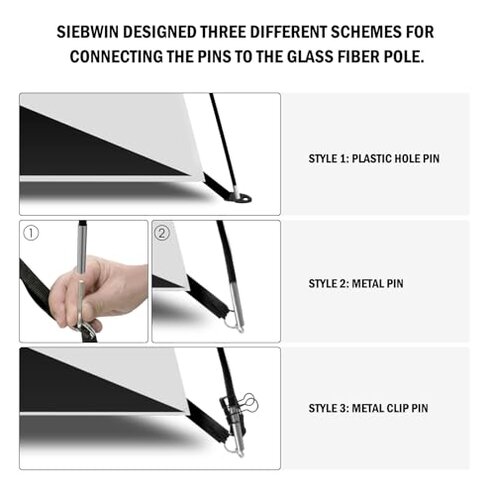
Expectation Reasonable for this category: a portable booth that stays put with simple anchoring. Reality It often requires added weights or tie‑downs, making it less convenient than similar mid‑range options.
Expectation Quick single‑person setup. Reality Setup is faster than pole threading but still needs adjustments, clearer steps, and sometimes a helper.
Expectation Durable zippers and seams for repeated use. Reality Zipper stress and seam wear appear sooner than expected, increasing upkeep.
Safer alternatives
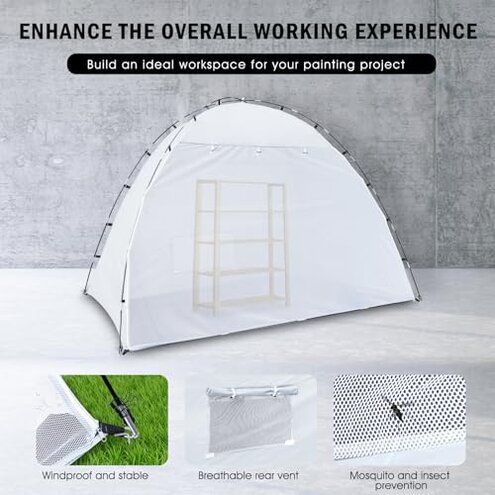
- Choose tents with documented anchoring points or weighted bases to neutralize the stability complaint.
- Prefer models with reinforced zippers and taped seams to avoid closure and wear issues.
- Look for kits that include stakes, sandbags, or tie‑downs to avoid the hidden anchoring requirement.
- Pick options with clearer instructions or labeled parts to reduce setup friction for solo users.
The bottom line
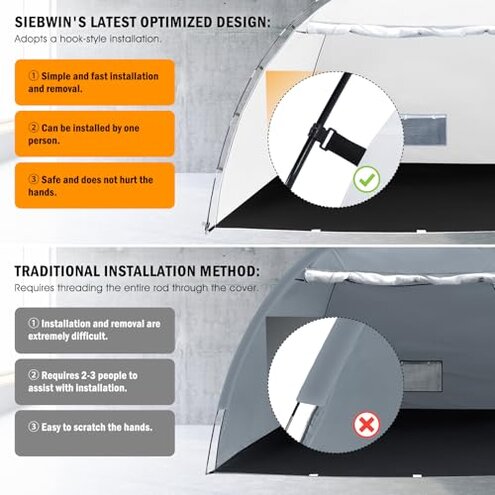
Main regret The dominant issue is wind stability and the related need for extra anchoring, which causes interrupted jobs and paint defects. Severity This exceeds normal category risk because fixes require added items and time.
Verdict Avoid if you need a reliable, windproof spray shelter out of the box; consider it only if you accept extra anchoring, repair, and setup work to save on purchase price.
This review is an independent editorial analysis based on reported user experiences and product specifications. NegReview.com does not sell products.