
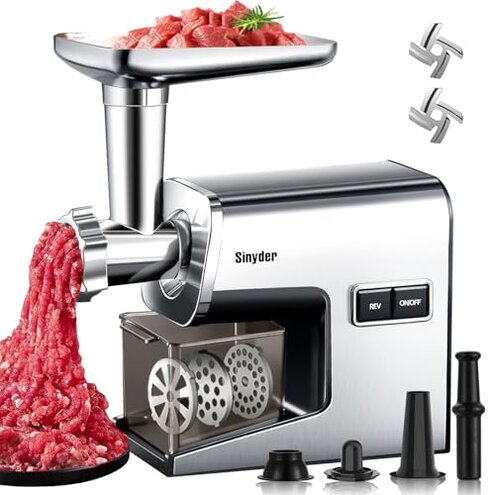
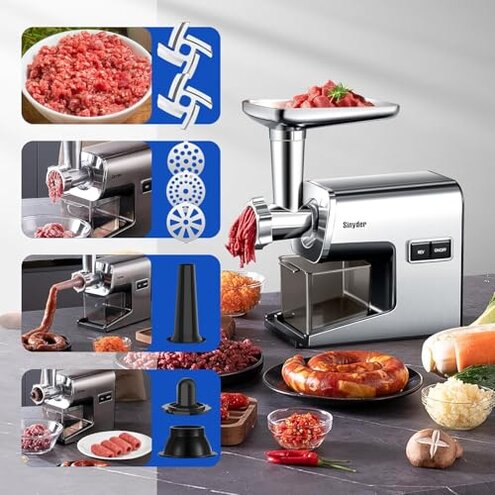
Product evaluated: Sinyder Electric Meat Grinder,3000 Max Heavy Duty Stainless Steel Meat Mincer with 2 Blades,3 Grinding Plates,3 Sausage Stuffer Tubes & Kubbe Kit for Home & Kitchen Using
Related Videos For You
HOW TO ASSEMBLE AN ELECTRIC MEAT GRINDER FAST | BEST MEAT GRINDER SETUP TUTORIAL 2026
How to Clean and Store a Meat Grinder | Sears
Data basis: This report is based on dozens of buyer comments gathered from written ratings and short video-style demonstrations collected from late 2024 to early 2026. Most feedback came from written reviews, with smaller support from hands-on clips and photo-backed comments, which helps show both first-use impressions and daily-use problems.
Comparative risk snapshot
| Buyer outcome | Sinyder | Typical mid-range alternative |
|---|---|---|
| Grinding pace | Strong on paper, but performance depends more on prep and batch size than many expect. | Usually steadier in normal home batches with less babysitting. |
| Cleanup effort | Higher burden, because key body parts still need hand washing and full take-apart cleaning. | Moderate upkeep, with fewer awkward parts or simpler rinsing. |
| Jam tolerance | Higher-than-normal risk of stop-and-reverse interruptions during tougher or larger batches. | More forgiving with normal trimming and shorter pauses. |
| Noise and feel | More disruptive for buyers expecting smooth kitchen use from the heavy-duty claim. | Usually acceptable for occasional home grinding. |
| Regret trigger | Best for light use only if you want speed without extra cleanup and batch management. | Safer pick for routine home use with fewer extra steps. |
Top failures
Does it feel powerful until real grinding starts?
Primary issue: The biggest frustration is that the strong wattage claim can create a bigger expectation than the day-to-day experience delivers. This becomes more noticeable during actual batches, especially when meat is not trimmed small or the session runs longer.
Recurring pattern: This is among the most common complaints because buyers expect a “heavy duty” machine to be less fussy. Compared with a typical mid-range home grinder, it seems less forgiving when feed size, fat level, or batch length are not ideal.
- Early sign: Slower feed and more pressure on the pusher show up soon after setup when pieces are larger than expected.
- Frequency tier: This appears repeatedly, though not every buyer runs into it under lighter use.
- When it worsens: Problems become more obvious in long sessions or when grinding tougher cuts instead of small, chilled pieces.
- Buyer impact: The stop-start rhythm adds time and breaks the “quick homemade grind” promise.
- Workaround: Smaller pieces and slower feeding can help, but that adds prep work beyond what many expect.
- Why it stings: That extra prep is more annoying than normal because the product is marketed for stronger home grinding.
Is cleanup easier than it sounds?
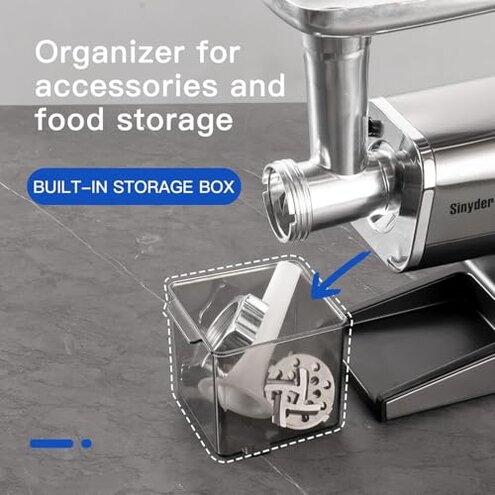
Secondary issue: Cleanup regret tends to hit right after the first successful use, when buyers realize the machine needs more careful disassembly and hand washing than expected. The product page itself signals this tension by saying some parts are dishwasher-safe while also warning that major grinder parts cannot enter the dishwasher.
Persistent pattern: This is less dramatic than jamming, but it is more likely to wear on owners over time because it happens every use. Against a reasonable category baseline, the burden feels higher than expected for people who bought it to save kitchen time.
- Hidden requirement: You need to be comfortable with full teardown and careful drying after each batch.
- Real moment: The annoyance shows up after grinding, when greasy residue reaches multiple parts.
- Pattern strength: This appears commonly reported among buyers who expected easier care from the stainless look.
- Time cost: Hand washing adds enough extra steps that small batches may not feel worthwhile.
- Fixability: Better cleaning habits reduce residue problems, but they do not remove the ongoing labor.
- Why worse here: Many mid-range grinders still need hand washing, but fewer create the same mismatch between convenience expectations and actual cleanup effort.
- Long-term effect: Owners who grind only occasionally may start avoiding the machine because setup and cleanup feel like too much hassle.
What happens when it starts to jam or needs reverse?
Primary failure: Reverse is helpful, but buyers usually do not want to use it often. The frustration is not just the jam itself. It is the extra interruption during food prep, when dinner is already in progress.
Not universal: This does not happen to every owner, but it is a persistent complaint pattern under less-than-perfect prep. In this category, some clogging is normal, yet the regret here comes from how quickly the machine can demand more careful trimming and feeding than many home users expect.
Category contrast: A reasonable mid-range grinder should still ask for chilled meat and sensible portions. It should not feel like every bigger batch needs constant management.
Trade-off: If you are patient and methodical, this can be managed. If you wanted a more carefree “load and go” experience, this issue feels more frustrating than expected.
- Trigger: Jams show up more often with fatty sections, sinewy cuts, or overfeeding.
- Sequence: Buyers often notice slowing first, then pressure, then a need to stop and reverse.
- Practical cost: Each interruption adds mess, resets your rhythm, and stretches total prep time.
- Frequency tier: This is a primary complaint, especially in bigger batches rather than tiny test runs.
- Best-case fix: Better trimming and partial freezing reduce trouble, but they also create extra handling steps.
- Why regret happens: The machine starts to feel less like a helper and more like a tool that needs supervision.
- Baseline comparison: That is a worse trade-off than most buyers expect at this price range.
Does the heavy-duty pitch set the wrong expectation?
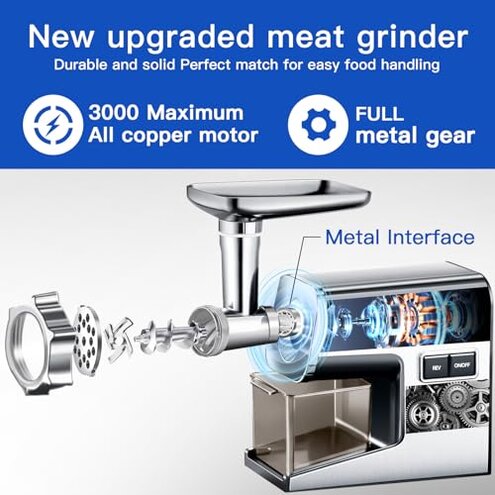
- Expectation gap: The 3000 max wording can make shoppers expect near-commercial ease from a compact home machine.
- Pattern type: This is a recurring disappointment rather than a single defect complaint.
- When it hits: It shows up after the first few uses, once buyers compare the sales pitch with actual batch handling.
- User-visible effect: The grinder may still work, but not with the confidence people imagine from “heavy duty.”
- Why stronger than normal: Many home grinders use optimistic power language, but this one appears to create a sharper mismatch in buyer expectations.
- Decision risk: If your main reason for buying is the promise of effortless speed, this mismatch is among the most common regret triggers.
- Mitigation: It fits better when used as an occasional home grinder, not as a frequent bulk-processing tool.
Illustrative excerpts
- Illustrative: “It works, but I had to cut everything much smaller than planned.” — Primary pattern tied to feed sensitivity during use.
- Illustrative: “Cleanup took long enough that I skipped using it again for weeks.” — Secondary pattern tied to ongoing upkeep burden.
- Illustrative: “Reverse helped, but I did not expect to need it this often.” — Primary pattern tied to jam interruptions.
- Illustrative: “The heavy-duty label made me expect less babysitting.” — Primary pattern tied to expectation mismatch.
Who should avoid this
- Avoid it if you want bulk grinding for freezer batches, because jam management becomes more frustrating in longer sessions.
- Avoid it if you hate hand washing and full disassembly after every use.
- Avoid it if you are buying mainly for the heavy-duty promise and expect near-effortless feeding.
- Avoid it if you want a grinder that is forgiving when prep is rushed or meat pieces are uneven.
Who this is actually good for
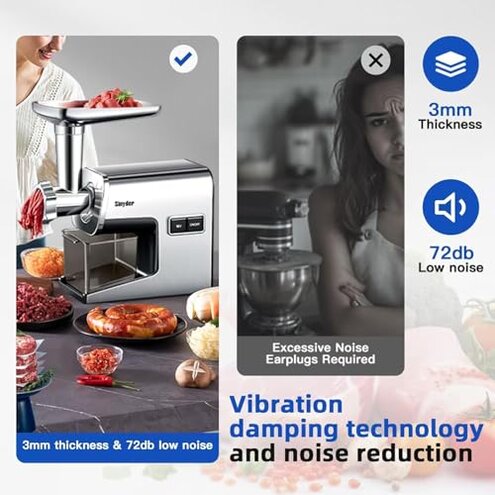
- Good fit for buyers doing small batches who do not mind trimming and chilling meat carefully first.
- Good fit for occasional use where the cleanup burden feels acceptable because homemade sausage or burgers are only made now and then.
- Good fit for patient users willing to treat reverse and stop-start feeding as a normal part of home grinding.
- Good fit for shoppers who value the included accessories more than smooth everyday convenience.
Expectation vs reality
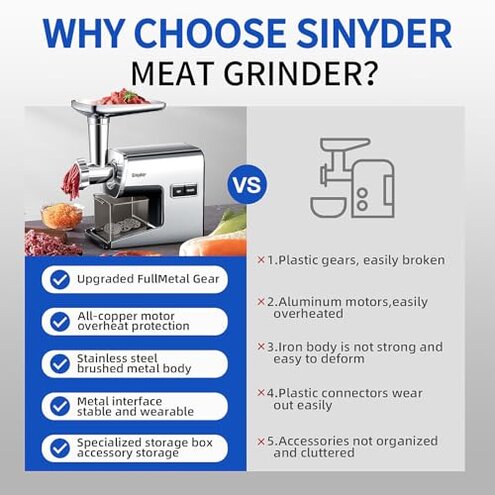
- Expectation: A “heavy duty” grinder should handle normal home batches with limited fuss.
- Reality: Worse than expected, this one appears to ask for more trimming, pacing, and monitoring than many mid-range alternatives.
- Expectation: Cleanup in this category is never effortless, but a reasonable category baseline is manageable hand washing.
- Reality: Here the upkeep burden can feel high enough that buyers use it less often than planned.
- Expectation: Reverse is a backup feature.
- Reality: For some owners, reverse use becomes part of routine grinding rather than an occasional save.
Safer alternatives

- Choose simpler if cleanup is your biggest concern, and look for grinders with fewer attachments and fewer awkward crevices to wash.
- Choose steadier if you process larger batches, and prioritize models known for consistent feeding over headline power claims.
- Choose transparent if marketing language worries you, and compare rated use expectations instead of focusing on maximum wattage wording.
- Choose forgiving if you are new to grinding, and look for models buyers describe as handling ordinary trimming mistakes without frequent reversing.
The bottom line
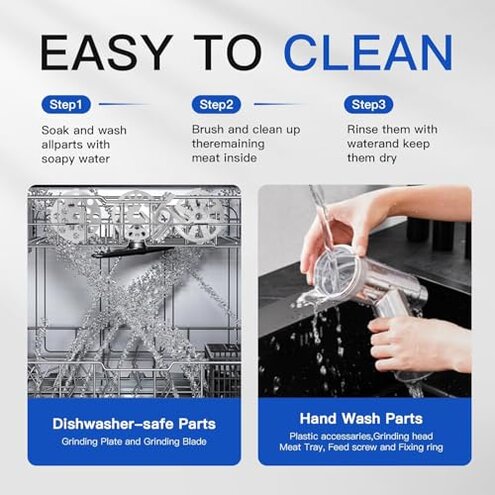
Main regret: The biggest risk is not that the grinder never works. It is that it can demand more prep, monitoring, and cleanup than shoppers expect from the heavy-duty pitch.
Why avoid: That makes the ownership burden feel higher than normal for a mid-range home grinder, especially in longer sessions. If you want low-fuss home grinding, this is a caution buy rather than a safe pick.
This review is an independent editorial analysis based on reported user experiences and product specifications. NegReview.com does not sell products.