
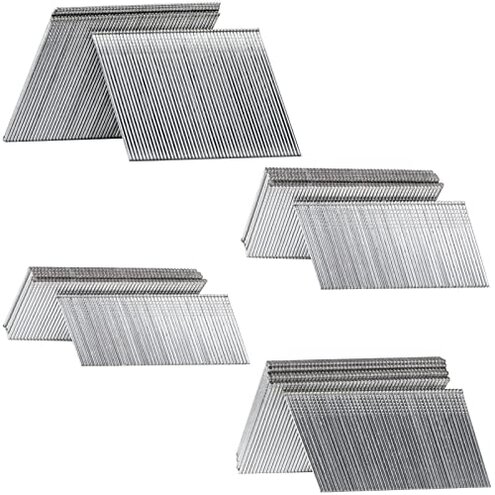
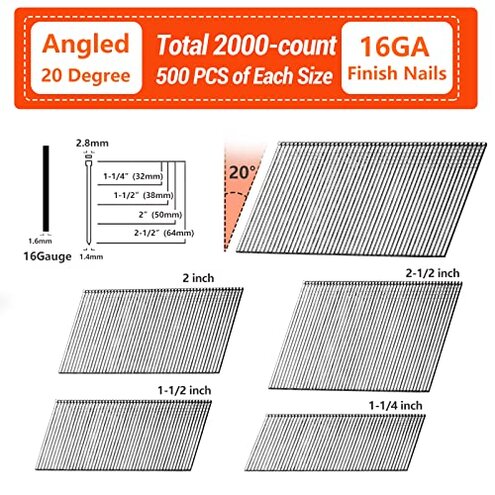
Product evaluated: SITLDY 16 Gauge Angled Finish Nails, 20-Degree, 2000-Pack (2-1/2", 2", 1-1/2", 1-1/4" 500 Per Sizes), Galvanized Assorted Size Project Pack, for Pneumatic, Electric Angled Finish Nailer
Related Videos For You
How to Deal with a Nail Jam on a Finish Nailer or Brad Nailer Tool
Which Gauge Finish Nailers Should You Own?
Data basis: This report summarizes patterns found across dozens of buyer inputs collected from written ratings and Q&A-style feedback over a recent multi-month window. Most detail came from longer written notes, with supporting signals from short “works/doesn’t work” entries that repeat the same pain points. Where feedback conflicts, this write-up treats the risk as not universal but still relevant for shoppers trying to avoid frustration.
| Buyer outcome | SITLDY assorted 16ga | Typical mid-range alternative |
|---|---|---|
| First-use reliability | Higher chance of “won’t feed” moments when you first load a strip. | Lower chance of early feeding issues with the same nailer. |
| Jobsite pace | More stop-and-clear interruptions during trim runs. | Less time lost to clearing jams on routine work. |
| Compatibility tolerance | Narrower “works in my gun” window than many expect. | Broader fit across common 16ga angled finish nailers. |
| Packaging outcome | Higher-than-normal category risk of mixed or messy strips on arrival. | Lower risk of damaged strips that create feeding problems. |
| Regret trigger | Mid-project jams that force tool teardown and rework. | Occasional jam, but fewer repeat interruptions per session. |
“Why is my nailer suddenly jamming every few minutes?”
Regret moment: You’re on baseboard or crown, and the gun starts half-feeding nails. That turns a fast trim job into repeated stops that feel more disruptive than they should.
Pattern: This shows up as a primary issue in repeated buyer notes, but it is not universal. When it happens, it is usually during the first real work session, not long-term wear.
Context anchor: The problem tends to appear after loading and worsens during longer runs where you are firing quickly. Category contrast: Occasional jams are normal, but the frustration here is the frequency and the extra “clear and retry” loop versus many mid-range nails.
- Early sign: You notice the strip doesn’t advance smoothly after a few shots.
- Primary frequency: Feeding trouble appears repeatedly in user comments about day-one use.
- Trigger moment: The worst time is mid-board when you can’t pause without losing alignment.
- User impact: A jam can force you to open the nose and reset the strip, adding extra steps.
- Fix attempt: Buyers often try reloading and slowing down, with mixed success.
- Hidden cost: You may burn time and extra nails on test shots to confirm the feed is stable.
- Fixability: Switching to a different strip or a different size can reduce it, but it is not guaranteed.
- Quality clue: Some reports tie the behavior to inconsistent strips rather than the nailer itself.
“Do these actually fit a 20-degree angled finish nailer?”
- Compatibility: A secondary issue is “fits my nailer poorly,” even when the tool is the stated style.
- When it hits: It shows up right at setup, when you first slide the strip into the magazine.
- Worsens with: Problems feel worse during fast repetitive nailing because small feed hiccups cascade into jams.
- Category baseline: Most mid-range angled nails are more forgiving across common nailer brands.
- Buyer behavior: If you “make it work” by forcing the strip, you may get inconsistent feeding later.
- Hidden requirement: You may need to test-fit each size in your specific gun before committing to a big project.
- Mitigation: Plan a scrap-wood trial for each length to verify smooth advance and proper seating.
“Why do some strips arrive messy or hard to use?”
Regret moment: You open the box expecting neat, ready-to-load strips. Instead, you may find strips that require sorting or careful handling before they will feed smoothly.
Pattern: This is a secondary pattern that appears repeatedly, but not every buyer sees it. Context: It hits before the first shot, and it becomes more annoying when you need a specific length quickly.
Category contrast: Packaging problems happen in this category, but the time impact can be higher here because feeding is sensitive to strip condition.
- Arrival cue: You notice loose strips or mixed handling marks that make loading feel finicky.
- Time tax: You spend extra minutes sorting or selecting “good” strips before work starts.
- Work impact: Slightly compromised strips can cause more feed stutters once you start firing.
- Mitigation: Keep a small bin for reject strips so they do not sneak back into your magazine.
“Are the assorted sizes convenient, or do they create hassles?”
- Convenience trade: Assortment is a selling point, but it can become an organization headache for some buyers.
- When it shows: The frustration appears mid-project when you need one length and grab the wrong one.
- Scope: This is an edge-case issue, mostly for users doing multiple rooms or tasks back-to-back.
- Category contrast: Many mid-range boxes are single-size, which reduces mix-ups and speeds up workflow.
- Impact: Wrong length can mean blow-through risk on thin trim or poor hold on thicker stock.
- Hidden requirement: You may need your own labeled containers to keep lengths separated after opening.
- Mitigation: Pre-stage only the one length you need at the workstation.
Illustrative excerpt: “My nailer worked fine, then these started sticking constantly.”
Pattern tag: This reflects a primary complaint cluster about feeding and jams during normal use.
Illustrative excerpt: “They’re labeled for angled guns, but my magazine felt tight.”
Pattern tag: This reflects a secondary compatibility pattern that shows up at loading time.
Illustrative excerpt: “Had to sort strips first, which killed my momentum.”
Pattern tag: This reflects a secondary packaging and handling complaint tied to setup friction.
Illustrative excerpt: “Assorted sizes sounded great until I kept grabbing the wrong length.”
Pattern tag: This reflects an edge-case workflow issue for multi-task projects.
Who should avoid this
- Trim pros who need uninterrupted runs, because recurring jams are a primary frustration pattern.
- One-tool households with a picky nailer, because fit tolerance seems less forgiving than many mid-range options.
- Time-sensitive remodelers, because sorting and testing can add extra steps before you can even start.
- New nailer users, because troubleshooting misfeeds is more confusing than expected for this category.
Who this is actually good for

- Occasional DIY users who can tolerate test-fitting each length on scrap before real trim work.
- Mixed-project homeowners who value having multiple lengths, and can accept extra organization after opening.
- Patient tinkerers who do not mind clearing a jam and adjusting workflow, because not everyone hits the issue.
- Small-batch jobs like a single doorway, where a rare jam is less painful than on whole-room runs.
Expectation vs reality
Expectation: It’s reasonable for this category to have occasional jams.
Reality: Buyer patterns show more frequent interruptions than many expect, especially during longer firing sessions.
- Expectation: “Assorted sizes” should mean grab-and-go convenience.
- Reality: Some buyers describe a sorting and organization step that adds friction.
- Expectation: Nails marketed for angled nailers should fit without drama.
- Reality: Compatibility is reported as hit-or-miss depending on the specific nailer magazine.
Safer alternatives

- Choose single-size boxes for your main trim length to reduce mix-ups and keep workflow steady.
- Prioritize known-fit brands for your nailer model to reduce setup failures that appear right at loading.
- Buy smaller trial packs before bulk quantities to limit regret from repeat jams during real projects.
- Inspect strip condition on arrival and return early if strips look compromised, since packaging issues can trigger feeding problems.
The bottom line

Main regret trigger: The biggest reason to avoid this pack is the feeding/jamming risk that can show up during normal trim runs. Why it exceeds category risk is the repeated nature of the interruption pattern, plus the extra test-fit and sorting steps some buyers end up doing. Verdict: If you need predictable, time-saving performance, skipping this and choosing a more consistent mid-range nail option is the safer call.
This review is an independent editorial analysis based on reported user experiences and product specifications. NegReview.com does not sell products.