
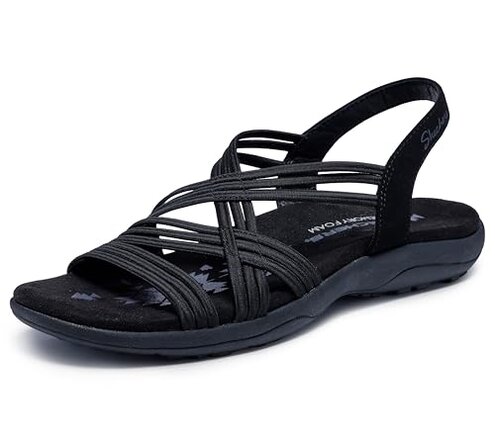
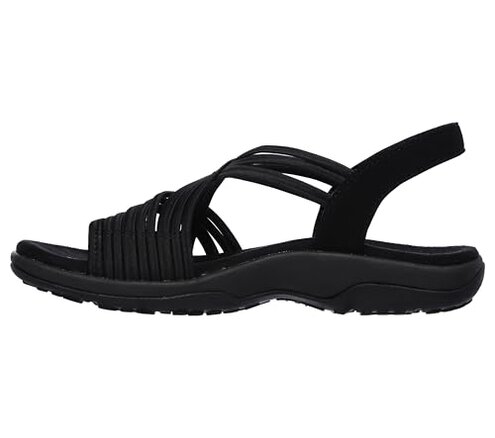
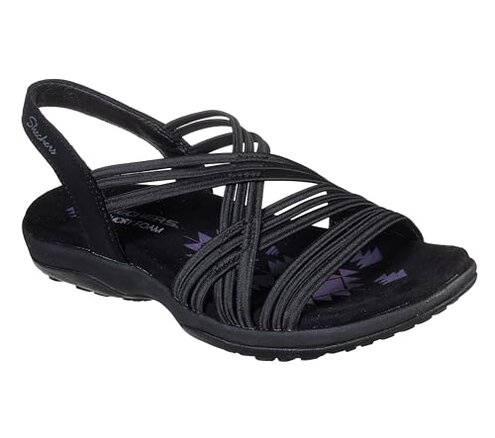
Product evaluated: Skechers Women's Reggae Slim-Simply Stretch Sport Sandal, Black, 8
Related Videos For You
How to get the perfect fit for Xero Shoes Barefoot and Minimalist Sandals
OluKai Answers | How to Clean your Sandals
Data basis: This report aggregates feedback from dozens of buyer posts and a mix of written reviews plus video demonstrations collected between 2019 and 2021. Most feedback came from written reviews, supported by a smaller set of video clips and customer photos.
| Outcome | This product | Typical mid-range sandal |
|---|---|---|
| Fit accuracy | Inconsistent — sizing problems appear repeatedly when first tried on. | Generally true-to-size with fewer initial fit surprises. |
| Initial comfort | Plush at first but cushioning often flattens after regular use. | Stable comfort that holds up through normal wear in this price range. |
| Durability risk | Higher-than-normal strap stretch and shape loss reported after washing. | Lower risk — most competitors keep shape after cleaning. |
| Appearance accuracy | Photo mismatch and color/shape shifts after washing are commonly reported. | Closer to photos and retains shape after care. |
| Regret trigger | Fit + comfort drop that makes them unusable for long walks. | Occasional discomfort but fewer failures that force return. |
Why do they feel good at first but fail later?
Cushioning loss: Many buyers report this as among the most common complaints, with comfort degrading after a few weeks of daily wear.
Usage anchor: The issue appears during daily walking and longer standing sessions, not always on first wear.
Category contrast: That feels worse than normal because mid-range sandals typically keep support for months under similar use.
Are these hard to size or pick correctly?
- Early sign: Sizing feels tight on first try-on, commonly reported across feedback.
- Frequency tier: This is a primary issue for many buyers and appears repeatedly.
- Cause clue: The stretch upper can be inconsistent between pairs, so initial fit varies.
- Impact: A tight fit forces exchanges or returns, adding extra time and cost.
- Fixability: Some buyers treat them as a break-in item, but results are mixed.
Will the straps and shape survive washing or heavy use?
- Strap durability: Strap stretch or loosening shows up after washing or repeated wear.
- Hidden requirement: Machine washability often needs reshaping/drying care to avoid deformation.
- Frequency tier: This is a secondary issue but persistent when buyers use the advertised machine-wash feature.
- Cause: Fabric upper and slingback tension change with moisture and heat.
- Impact: Looser straps reduce stability and can make the sandal feel unsafe on long walks.
- Attempts: Re-shaping and air drying help sometimes, but not reliably across all pairs.
- Category contrast: Many mid-range sandals that claim machine washability retain shape better when cared for.
Do pictures match the real shoe and color long-term?
- Photo mismatch: Several buyers flagged that the product looks different in hand than online images.
- Early sign: Differences are visible immediately on unboxing for some buyers.
- Frequency tier: This is a secondary issue seen across multiple posts and images.
- Cause: Shape and tone shift after the first wash or a few wears, changing expected appearance.
- Impact: Expect extra returns or disappointment if exact color/shape matters for outfits.
- Fixability: Limited — cosmetic changes often remain even after attempts to restore shape.
- Category contrast: Other mid-range options tend to preserve the advertised look better after wear.
- Decision point: If appearance is important, plan for a conservative return window and careful care.
Illustrative excerpts
Excerpt: "They felt tight and sore on my first long walk, never fully loosened." — primary pattern.
Excerpt: "After a machine wash the strap stretched and the footbed flattened noticeably." — secondary pattern.
Excerpt: "Color looked different than photos and the sling slipped after two weeks." — secondary pattern.
Who should avoid this
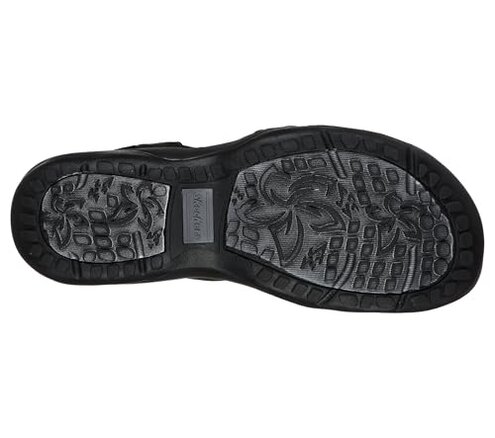
- Buyers needing consistent fit: Avoid if you require true-to-size footwear without extra exchanges.
- Long-distance walkers: Avoid if you plan long sessions on foot due to cushioning loss risk.
- Low-hassle cleaners: Avoid if you want a truly machine-friendly shoe without reshaping steps.
Who this is actually good for
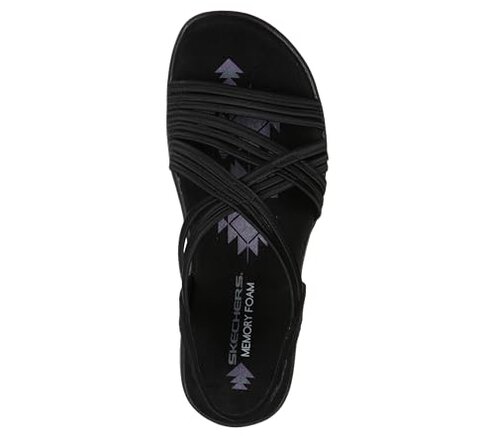
- Short-trip wearers: Good for buyers who use them for brief errands and accept break-in variability.
- Style-first buyers: Fine if initial look matters more than long-term shape retention.
- Budget casual users: Works for people who want an inexpensive, lightweight slip-on and won’t depend on long-term cushioning.
Expectation vs reality
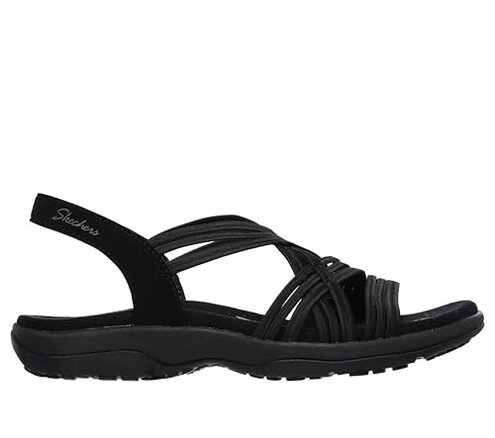
Expectation (reasonable): Mid-range sandals typically offer stable cushioning for months under normal wear.
Reality: This model often shows a faster drop-off in support and strap tension after repeated use or washing.
Safer alternatives
- Shop for fit-tested brands: Choose brands with consistent sizing to avoid early exchange steps.
- Prioritize durable straps: Look for sandals with reinforced slingbacks if you walk long distances.
- Avoid reliance on machine wash: Prefer shoes labeled with shape-retaining care if you need easy maintenance.
- Check long-term cushioning tests: Seek models with verified wear reports instead of only initial comfort claims.
The bottom line
Main regret trigger: Sizing inconsistency plus noticeable comfort loss after regular use causes returns and disappointment.
Why it exceeds risk: These failures are more frequent and disruptive than typical mid-range sandals, especially when you rely on the advertised cushioned support.
Verdict: Skip this if you need reliable fit and lasting comfort; consider it only for short-term or casual wear.
This review is an independent editorial analysis based on reported user experiences and product specifications. NegReview.com does not sell products.