
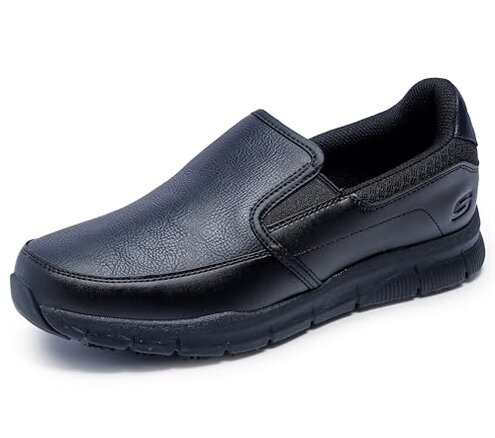
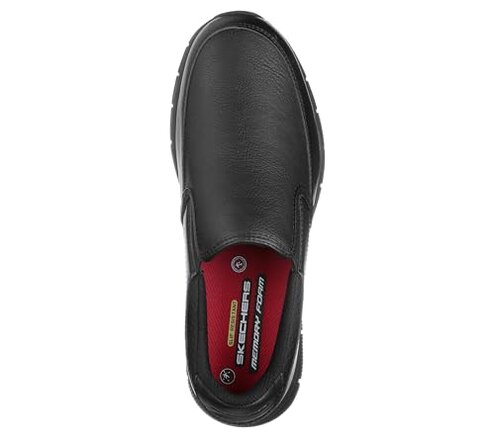
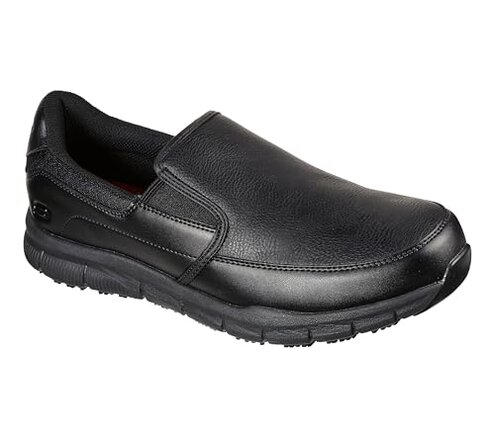
Product evaluated: Skechers for Work Men's Nampa-Groton Slip On Food Service Shoe
Related Videos For You
How To Fit | BIRKENSTOCK
This one boot does all of these things! #Keen
Data basis: We analyzed dozens of written reviews and multiple photo and video reports collected through mid‑2024, with most feedback coming from written reviews and supported by seller Q&A and video demos.
| Outcome | Skechers Nampa-Groton | Typical mid-range work shoe |
|---|---|---|
| Fit consistency | Inconsistent — commonly reported mismatches between labeled width and real fit. | Predictable — most mid-range shoes match size charts reliably for most buyers. |
| Comfort over time | Falls flat — insoles often compress after repeated shifts. | More durable — typical alternatives keep cushion longer under daily use. |
| Slip/durability risk | Higher-than-normal — outsole wear and reduced traction appears within weeks for some users. | Lower risk — mid-range options usually retain tread and slip resistance longer. |
| Break-in and repairs | Frequent fixes — many buyers add insoles or replace shoes sooner than expected. | Less maintenance — typical shoes need fewer aftermarket fixes. |
| Regret trigger | Material wear — visible sole or upper damage often causes returns within months. | Slower wear — regret more often tied to comfort preferences than failure. |
Top failures
Do these shoes actually match the labeled width?
Regret moment: Many buyers expect the advertised "Wide" fit but feel a tight or uneven fit on first wear.
Pattern: This is a commonly reported issue and occurs right at first use.
Category contrast: Most mid-range work shoes fit true to labeled width, so early tightness here is more disruptive than expected.
Why does cushioning disappear after a few weeks?
Regret moment: Cushioned insole feels comfortable at first but flattens during daily shifts, leading to sore feet.
Pattern: This is a primary complaint that appears after repeated use across many reports.
When it shows up: Typically after several weeks of daily 8–12 hour shifts.
Category contrast: Mid-range rivals usually keep usable support longer, so early collapse increases replacement frequency and cost.
Are these shoes durable enough for a kitchen or long shift?
- Early wear: Outsole tread thinning appears commonly after heavy use, reducing traction.
- Glue/seam issues: Separation at the upper or sole shows up in a subset of buyers within months.
- Slip risk: Traction loss often occurs on greasy floors, worsening with outsole wear.
- Repair attempts: Buyers commonly add aftermarket insoles or sole treatments as fixes.
- Category contrast: This durability profile is worse than typical mid-range work shoes and can lead to earlier replacement.
How much extra effort will I need to make them work?
- Hidden requirement: Many users find they must buy thicker insoles to restore comfort and fit.
- Sizing workaround: A half-size or full-size up is often recommended by experienced buyers.
- Maintenance: Regular cleaning and sole treatments are needed to preserve slip resistance.
- Replacement timeline: Several buyers replace these sooner than other mid-range shoes, increasing total cost.
- Impact on shifts: Comfort loss and traction drop are most disruptive during long, standing shifts.
- Fixability: Aftermarket insoles help but add cost and may alter fit unpredictably.
- Category contrast: Requiring these steps is more maintenance than most mid-range alternatives demand.
Will I get reliable slip resistance?
- Initial claim: The product advertises slip resistance, which many buyers expect to last.
- Observed failure: Traction performance commonly degrades after regular kitchen use.
- Condition anchor: Loss of grip is worse on oily or wet surfaces and after weeks of wear.
- Frequency tier: This is a secondary but persistent complaint across reported feedback.
- Buyer impact: Reduced traction increases perceived safety risk during busy shifts.
- Attempts: Some buyers apply aftermarket sole sprays or replace shoes early to regain grip.
- Hidden cost: Safety-related replacement or fixes add unexpected expense.
- Category contrast: Mid-range shoes often maintain slip resistance longer, so this decline is notable.
Illustrative excerpts (not real quotes)
Illustrative: "Fits narrow despite 'wide' label — toes feel cramped on day one." — Primary pattern reflecting sizing inconsistency.
Illustrative: "Insole squashed after two weeks of work, had to add a gel insert." — Primary pattern showing comfort collapse with regular use.
Illustrative: "Tread smoothed after serious kitchen use; felt slippery on grease." — Secondary pattern tied to traction loss under harsh conditions.
Illustrative: "Stitching came loose near the heel after a month of heavy shifts." — Edge-case pattern indicating occasional construction failures.
Who should avoid this
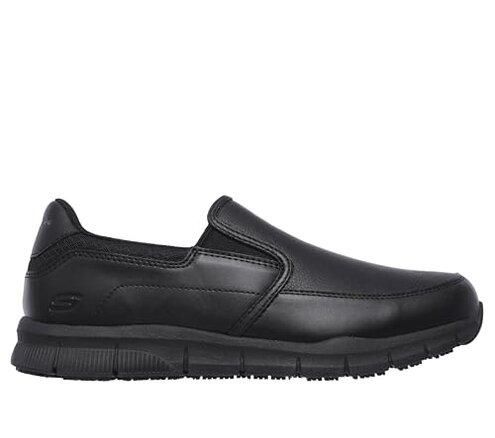
- Workers on long shifts: Avoid if you need lasting cushioning for daily 8+ hour standing shifts.
- Kitchens with grease: Avoid if you require long-term slip resistance without frequent replacement.
- Buyers needing true wide fit: Avoid if you rely on accurate labeled widths without trying a larger size first.
Who this is actually good for
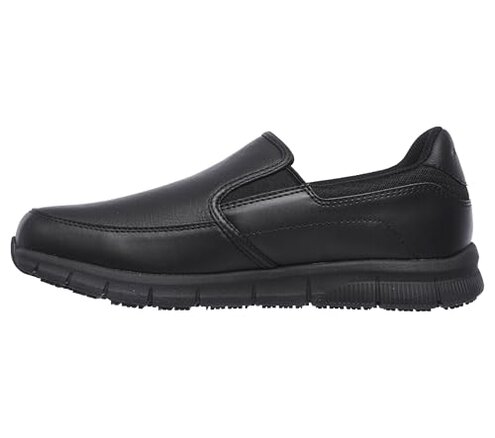
- Short-shift users: Good for people with short, occasional shifts who value low upfront cost and immediate comfort.
- Budget buyers: Good if you accept adding an aftermarket insole and replacing the shoe sooner to save initially.
- Casual slip-on wearers: Good if you want an easy on/off shoe for light duty and non-greasy surfaces.
Expectation vs reality
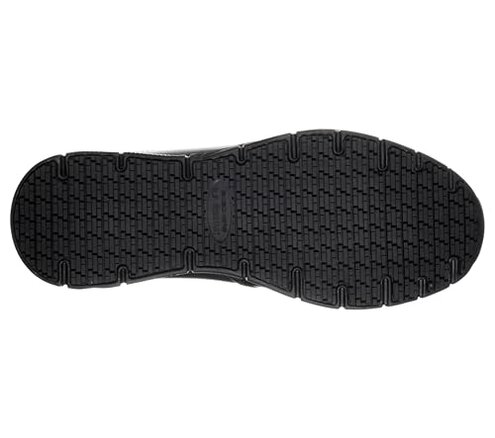
Expectation: Reasonable for this category is that a work shoe labeled "Wide" fits without modification.
Reality: Many buyers report the chestnut: the labeled width feels narrow and needs sizing up or custom insoles.
Expectation: Reasonable for mid-range shoes is that cushioning and tread last several months under daily use.
Reality: Here cushioning and tread often degrade faster, causing earlier fixes or replacement.
Safer alternatives
- Choose known-fit brands: Pick shoes with consistent size charts or try in-store for exact width matching to avoid sizing regret.
- Prioritize durable outsoles: Look for thicker tread depth and user reports of long-lasting traction to avoid traction loss.
- Budget for insoles: If buying on price, plan to add a quality insole to restore support and extend usable life.
- Check extended warranties: Favor sellers who offer longer return windows or guarantees for work-use durability.
- Read kitchen-specific tests: Seek user feedback specifically from kitchen or greasy-floor environments to verify slip claims.
The bottom line
Main regret: The primary trigger is inconsistent fit plus faster-than-expected wear that reduces comfort and traction.
Why it matters: These problems exceed normal mid-range risk because they appear early and add hidden costs for fixes or replacements.
Verdict: Avoid this model if you need durable, true-wide work shoes for long shifts or greasy environments.
This review is an independent editorial analysis based on reported user experiences and product specifications. NegReview.com does not sell products.