
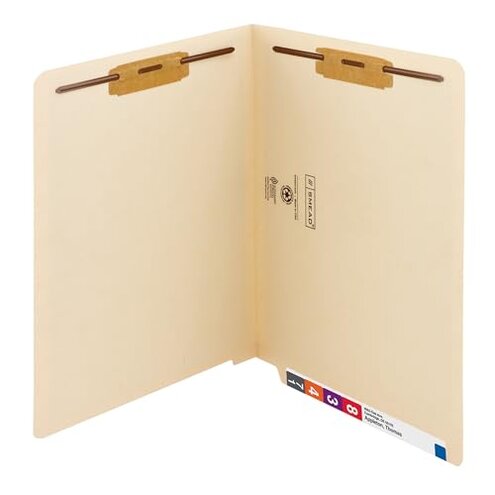
Product evaluated: Smead Heavyweight End Tab Fastener File Folder, Shelf-Master® Reinforced Straight-Cut Tab, 2 Fasteners, Letter Size, Manila, 50 per Box (34215)
Related Videos For You
This Simple File Management System Changed My Life!
File Maintenance and Care
Data basis: This report draws on dozens of written reviews and several video demonstrations collected between Jan 2021 and Jan 2026. Most feedback came from written buyer reviews, supported by Q&A notes and short demo clips. The distribution is weighted toward recent purchasers reporting day-to-day use.
| Outcome | Smead 34215 | Typical Mid-Range Folder |
|---|---|---|
| Fastener reliability | Inconsistent — fasteners misalign with paper stacks more often than expected. | Reliable — mid-range folders usually align with common punched paper. |
| Shelf handling | Higher risk — added bulk and stiff tabs cause catching when sliding on shelves. | Smoother — thinner designs glide more easily on open shelves. |
| Durability | Mixed — reinforced tabs hold longer but tear after repeated heavy handling for some buyers. | Consistent — similar mid-range options balance weight and flexibility better. |
| Price–value | Pricier — perceived cost is higher given the handling trade-offs. | Better value — mid-range folders often cost less with comparable day-to-day performance. |
| Regret trigger | Fastener jams — a single misaligned fastener can cause wasted time and rework. | Fewer jams — typical alternatives present fewer filing interruptions. |
Top failures
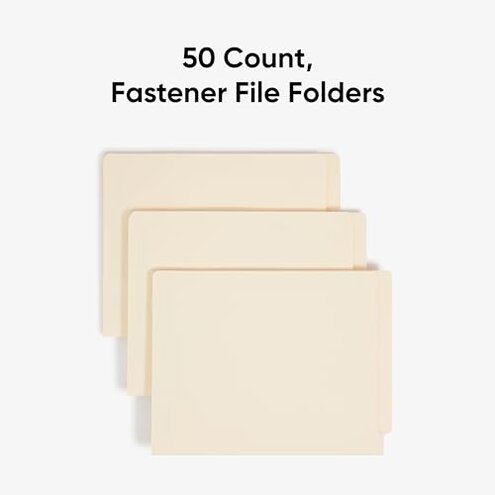
Why do the fasteners misalign and jam papers?
Regret moment: Buyers commonly report a fastener misalignment that scrapes or tears holes during everyday filing.
Pattern: This appears repeatedly in recent buyer feedback and is most noticeable when users add or remove sheets quickly.
Usage anchor: The issue shows up at first daily use and worsens after frequent handling or when packing folders full.
Category contrast: This is more disruptive than most mid-range folders, which usually accept standard punched stacks without re-threading.
Are the reinforced tabs actually durable enough?
- Early sign: Tabs feel stiff at first touch and may peel with heavy handling.
- Frequency tier: The tearing complaint is a secondary issue but appears across multiple recent buyers.
- Cause: Reinforcement helps but does not eliminate edge wear from repeated filing pulls.
- Impact: Torn tabs reduce label visibility and slow down retrieval time.
- Fix attempts: Buyers report temporary fixes like tape, which add extra steps and time.
Will bulk and price affect daily filing?
- Perception: Many buyers call the pack expensive given the handling trade-offs for heavy use.
- Daily impact: Bulkier folders cause shelf crowding and make sliding stacks harder.
- Frequency tier: This is a primary issue for offices with frequent access to shelf files.
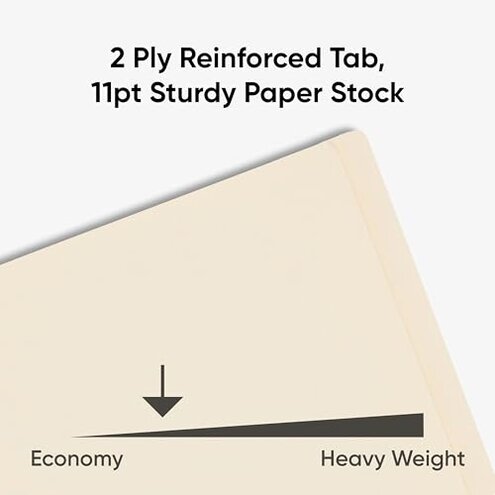
- Cause: Heavier 14-point stock and embedded metal fasteners add rigidity.
- Consequence: Reorganization and thinner replacements become common to regain space.
- Workaround cost: Switching costs time and money because buyers must buy alternate folders.
- Category contrast: More upkeep than most mid-range alternatives that balance flexibility and durability.
Do these folders need special compatibility or hidden steps?
- Hidden requirement: Some buyers find the fastener positions need specific punched holes or manual bending to seat papers properly.
- When it appears: This shows up during initial setup when transferring existing binders or loose stacks.
- Scope signal: The compatibility note is a persistent pattern across Q&A posts and demos.
- Why worse: Most mid-range folders accept standard two- or three-hole punches without prep, but this model can require extra alignment.
- Impact: Users spend extra minutes per file and sometimes re-punch papers, increasing labor time.
- Fixability: Manual re-bending or hole re-punching solves the problem but adds hidden steps.
- Edge-case: Heavier document stacks amplify misalignment and make the extra steps recurring.
- Cost trade-off: Those extra minutes add up in busy offices and reduce the cost-effectiveness of the pack.
ILLUSTRATIVE EXCERPTS (NOT REAL QUOTES)
Excerpt: "Fastener tears holes when I flip through files quickly." (primary pattern)
Excerpt: "Tabs peeled after a few months of daily use." (secondary pattern)
Excerpt: "Needed to re-punch paper to line up with fasteners." (secondary pattern)
Excerpt: "Worthless for crowded shelves — folders stick and jam." (primary pattern)
Who should avoid this
- High-volume offices: Avoid if you need fast, uninterrupted shelf filing every day.
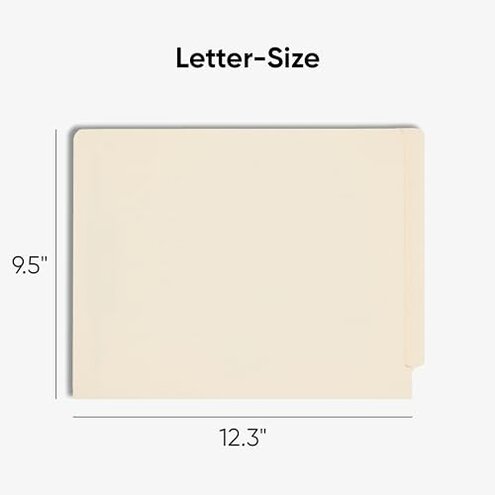
- Space-limited teams: Avoid if shelf space is tight and bulk causes crowding.
- Non-technical staff: Avoid if your team cannot spare time for re-punching or fixes.
Who this is actually good for
- Low-traffic storage: Fits buyers who file rarely and accept stiffer folders for long-term storage.
- Durability-first users: Works if you value reinforced tabs over sliding ease and tolerate occasional fixes.
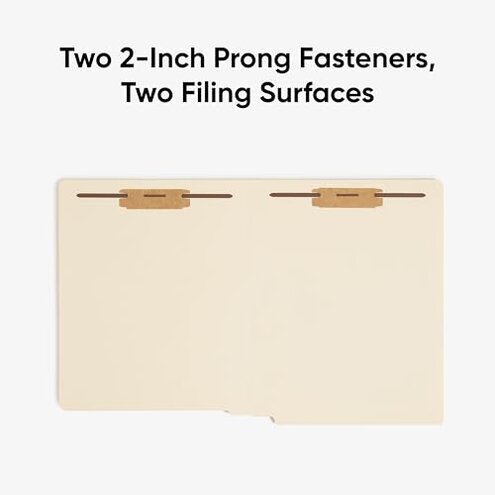
- Specific systems: Suitable when your filing system matches the folder's fastener positions exactly.
Expectation vs reality
Expectation: Reasonable for this category is that a shelf folder accepts standard punched paper and slides easily.
Reality: This model sometimes requires re-punching or bending, which is worse than typical mid-range alternatives.
Expectation: Buyers expect reinforced tabs to outlast heavy use.
Reality: Tabs hold initially but can peel after repeated daily handling, increasing upkeep.
Safer alternatives

- Choose flexible stock: Pick folders marketed as flexible or mid-weight to reduce shelf catching and slide smoothly.
- Match fastener spacing: Verify your paper punch or binder aligns with the folder's fastener positions before buying.
- Consider lower-cost packs: For heavy daily use, cheaper mid-range folders may offer better value due to fewer handling interruptions.
- Test one box first: Buy a single box to confirm compatibility with your filing workflow before replacing an entire system.
The bottom line

Main regret: The pack's fastener misalignment and added bulk are the primary sources of user frustration.
Why worse: These issues create more interruptions and hidden labor than typical mid-range folders.
Verdict: Avoid this product if you need smooth, high-volume shelf filing; consider alternatives that trade a bit of rigidity for everyday ease.
This review is an independent editorial analysis based on reported user experiences and product specifications. NegReview.com does not sell products.