
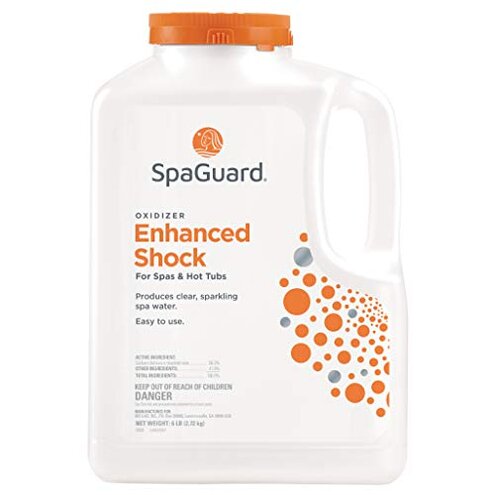
Product evaluated: SpaGuard Enhanced Spa Shock 6lbs
Related Videos For You
Chemicals for Hot Tub Start Up - Step-by-Step Instructions
How To SHOCK Your HOT TUB
Data basis: This report is based on dozens of customer reviews and several video demonstrations collected from public feedback between 2021–2026. Most feedback came from written buyer reviews, supported by a minority of demonstration videos and Q&A posts.
| Outcome | SpaGuard 6 lb | Typical mid-range alternative |
|---|---|---|
| Odor control | Patchy — frequently reported lingering chemical smell after treatment | Consistent — most mid-range shocks neutralize odor on first treatment |
| Post-treatment clarity | Higher risk — cloudiness or residue appears more often than category norm | Lower risk — clearer water after recommended dosing |
| Dosing effort | Labor-intensive — users often report extra pre-dissolving or repeat dosing | Simpler — fewer re-treatments usually needed |
| pH / water balance | Variable — some buyers report noticeable pH swings after use | Stable — typical products require less corrective balancing |
| Regret trigger | Cloudiness + lingering smell — more disruptive than expected for this category | Minor — usually a single quick adjustment fixes problems |
Why does the smell linger after treatment?
Regret moment: Many buyers notice a chemical or medicated odor that remains after the first soak rather than disappearing.
Pattern: This is a commonly reported primary issue across feedback, not universal but frequent enough to affect purchase decisions.
Usage anchor: The scent usually shows up after initial treatment or after heavy spa use when shock is applied.
Category contrast: This feels worse than normal because typical mid-range shocks neutralize odors at first dosing, while SpaGuard often requires repeats.
Why does my water turn cloudy after using it?
Regret moment: Buyers report cloudy water for hours to days after treatment, sometimes needing filter cleaning or clarifier.
Pattern: This is a primary failure seen repeatedly across product feedback.
Usage anchor: Cloudiness appears within hours of shocking and can spike after long soak sessions or heavy bather loads.
Category contrast: Cloudiness is a higher-than-normal risk because most competing shocks clear water faster with standard circulation and filtration.
Does this product require extra steps or special handling?
- Hidden requirement: Several buyers report needing to pre-dissolve or run the filter longer, which adds time and steps.
- Early sign: You may notice white residue on the waterline or floats soon after adding the product.
- Frequency tier: This is a secondary issue — less common than odor or cloudiness but persistent when it occurs.
- Cause cue: Problems often happen when the product is added directly to hot water without dissolving.
- Impact: Extra filter maintenance and time spent re-treating the spa are commonly needed.
Is the cost and dosing frustrating?
- Regret moment: Buyers describe frequent repeat dosing leading to higher ongoing cost than expected.
- Pattern: This appears as a secondary complaint across many recent purchasers.
- When it happens: Typically noticed after several uses when odor or cloudiness returns sooner than expected.
- Category contrast: More costly and time-consuming than most mid-range shocks that need fewer re-treatments.
- Attempted fixes: Users try extra filtration, clarifiers, and pre-dissolving with mixed success.
- Fixability: Often fixable but adds recurring effort and expense.
- Hidden cost: The effective price per use rises when re-dosing is needed.
Does the product affect water balance or cause irritation?
- Early sign: Some buyers notice sudden pH swings or mild skin/eye sensitivity after treatment.
- Frequency tier: This is an edge-case but reported often enough to mention.
- Usage anchor: Issues appear right after shocking or when doses are higher than recommended.
- Cause cue: Extra chemical adjustments are often required to restore balance.
- Impact: Additional testing and chemicals increase upkeep time.
- Category contrast: More maintenance than usual mid-range shocks that leave balance more stable.
- Attempted fixes: Buyers used pH decreasers or added fresh water to recover clarity and comfort.
- Preventive step: Test water before and after shocking and plan for a follow-up balancing step.
Illustrative excerpts
Illustrative: "Chemical smell stayed two days after the first dose — embarrassing for guests." — primary pattern.
Illustrative: "Water turned cloudy and needed clarifier plus filter cleaning." — primary pattern.
Illustrative: "Had to pre-dissolve and still saw residue on spa walls." — secondary pattern.
Illustrative: "Needed to rebalance pH after use; more upkeep than expected." — edge-case pattern.
Who should avoid this
- Hosts: Avoid if you need reliable odor control for guest use without extra treatments.
- Low-maintenance owners: Avoid if you want minimal maintenance and one-shot clarity after shocking.
- Budget buyers: Avoid if you cannot absorb repeat dosing costs or extra filter expenses.
Who this is actually good for
- Experienced hobbyists: OK if you accept extra balancing steps and have time for filter maintenance.
- Users with heavy sanitizer systems: Works if you already run extended filtration and habitually pre-dissolve products.
- Large-volume owners: Acceptable if you plan for regular re-dosing and professional water care.
Expectation vs reality
Expectation: Reasonable for this category to expect a shock to clear odor and restore clarity in one treatment.
Reality: SpaGuard often requires repeat treatments and extra filtering, which increases time and cost.
Expectation: Shocks should be easy to add with minimal handling.
Reality: Many buyers report a hidden pre-dissolve need and extra cleanup that typical alternatives avoid.
Safer alternatives
- Choose stabilized shocks: Look for products that advertise fast dissolution to reduce cloudiness and residue.
- Compare odor claims: Prefer products with clear buyer feedback on first-dose odor removal.
- Plan for filtration: Buy products that work with standard circulation rather than requiring extended runs.
- Check dosing per use: Compare effective price per treatment to avoid repeat dosing surprises.
- Pre-test in small batch: If unsure, try a small quantity and monitor clarity before committing to large tubs.
The bottom line
Main regret: The product's lingering odor and cloudiness are the core triggers driving buyer dissatisfaction.
Why it matters: These failures demand extra treatments and maintenance, making it more troublesome than typical mid-range shocks.
Verdict: Avoid this product if you value one-step clarity and low upkeep; consider it only if you accept added handling and cost.
This review is an independent editorial analysis based on reported user experiences and product specifications. NegReview.com does not sell products.