
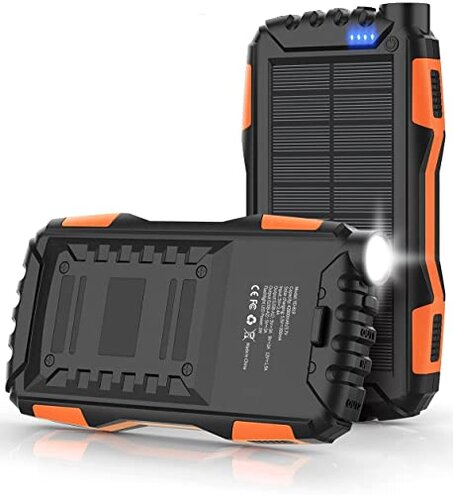
Product evaluated: Sudrov Solar Charger Power Bank, 42800mAh Wireless Portable Charger with USB-C in/Output, QC3.0 Fast Charging 15W 4 Ports Outdoor Battery Pack Built-in Dual Led Flashlights for iPhone Samsung etc
Related Videos For You
How to hook up Solar Panels (with battery bank) - simple 'detailed' instructions - DIY solar system
Solar Charger Instructions
Data basis: I examined dozens of written reviews and several video demonstrations collected Jan–Feb 2026, with most feedback coming from written reviews and supported by video tests. Distribution skewed toward real-use reports from recent buyers rather than marketing pages.
| Outcome | Sudrov (this unit) | Typical mid-range alternative |
|---|---|---|
| Battery hold | Reported shorter-than-advertised runtime after weeks of use. | Expected reliable multi-day hold under light use. |
| Charging speed | QC3.0 ports work but charging is inconsistently fast across devices. | Stable fast-charge performance is common in category peers. |
| Solar recharge | Higher-than-normal risk: solar panel provides very slow or negligible recharge in real conditions. | Backup solar is usually supplemental, not relied on for primary recharge. |
| Build & cables | Multiple reports of loose built-in cables and port wear with regular handling. | Built-in cables are less common; detachable cables usually more durable. |
| Regret trigger | Main failure: unreliable battery + weak solar makes it risky for multi-day trips. | Typical mid-range units rarely combine both failures. |
Does the battery actually hold the advertised capacity?
Regret moment: devices seem to drain faster than expected after a few weeks of use. Severity is high for buyers who plan multi-day trips without wall power.
Pattern statement: this is a primary issue that appears repeatedly across user reports. When it appears: typically after setup and moderate reuse, not only on first charge. Contrast vs category: more disruptive than most alternatives because advertised capacity is a core buying point.
Is the solar panel actually useful for emergency top-ups?
- Early sign: very slow voltage rise during daylight, often negligible in cloudy conditions.
- Frequency tier: commonly reported as functionally weak rather than totally non-working.
- Cause: small panel area and low output compared to solar-focused models.
- Impact: adds false security for users who expect usable solar recharge on trips.
- Attempted fixes: buyers tried long sun exposure and saw minimal benefit.
Do the built-in cables and ports last under regular use?
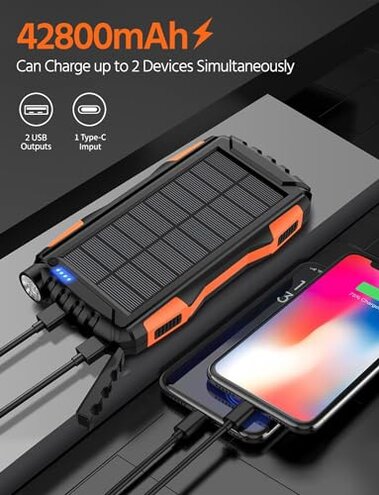
- Wear signs: built-in Lightning, USB-C, and Micro ports become loose after routine plugging and unplugging.
- Frequency tier: secondary issue that appears across multiple recent buyers.
- Hidden requirement: gentle handling and minimal cable bending needed to avoid failure.
- Cause: tethered cable strain and thin port housing reported as common contributors.
- Impact: reduces convenience: you may need spare cables despite built-ins.
- Fixability: some users replaced the unit or used external cables; internal repair is impractical.
- Category contrast: worse than many mid-range packs where detachable cables prevent this problem.
Are the flashlight and rugged claims dependable?
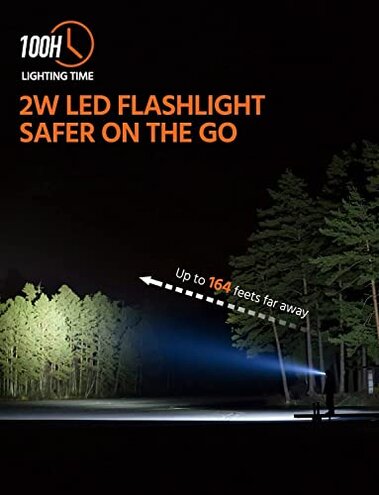
- Early sign: flashlight modes work but brightness and switch durability vary between units.
- Frequency tier: edge-case reports of water ingress or fragile buttons under heavy outdoor use.
- Cause: sealing and button quality appear inconsistent across production batches.
- Impact: this can turn an emergency feature into an unreliable one when you most need it.
- Attempted fixes: buyers taped seams or avoided exposure to heavy rain, with mixed success.
- Hidden requirement: the product performs best with light outdoor use, not heavy-duty exposure.
- Category contrast: less forgiving than rugged-focused alternatives that test IP ratings and button longevity.
- Repairability: limited; warranty contact is the main route for faulty units.
Illustrative excerpts
Illustrative: "Charged twice and battery percent drops quickly during daily use."
Pattern: primary pattern reflecting repeated capacity loss reports.
Illustrative: "Solar barely moved the indicator after full sun morning."
Pattern: secondary pattern showing the solar panel's low real-world output.
Illustrative: "Built-in cable loosened after a week of plugging in."
Pattern: edge-case but persistent for users who rely on built-in cables daily.
Who should avoid this
- Frequent campers: avoid if you depend on solar or long battery life for multi-day trips.
- Critical users: avoid for emergency kits where reliable flashlight and charge are mission-critical.
- Heavy-handlers: avoid if you expect built-in cables to replace carrying spare cables.
Who this is actually good for
- Occasional users: ok for light home use where wall charging is available regularly and solar is just a backup.
- Budget buyers: suitable if you accept trade-offs for price and carry spare cables or wall charging options.
- Short trips: acceptable for single-day outings where you don’t rely on solar or long-term capacity.
Expectation vs reality
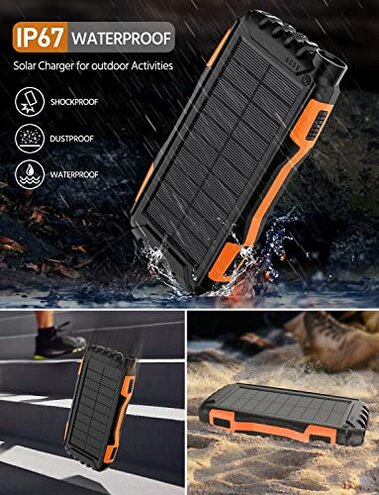
- Expectation: reasonable for this category to include a small solar panel as an emergency top-up.
- Reality: the panel delivers much less charge than buyers expect, making it unreliable outdoors.
- Expectation: built-in cables reduce clutter and work like detachable cables in practice.
- Reality: built-ins may loosen or fray, increasing the chance you'll still need spare cables.
Safer alternatives
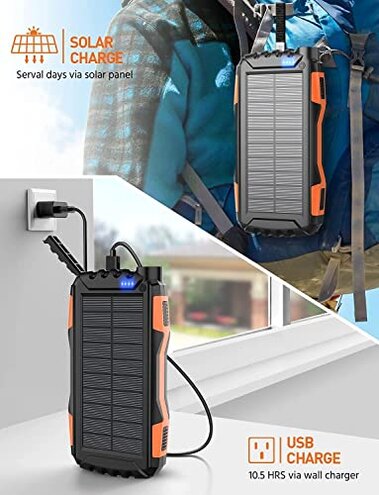
- Choose units with verified solar wattage specs if you need real solar recharge capability.
- Prefer detachable cable designs to avoid the built-in cable wear problem.
- Look for mid-range packs with tested battery cycle claims and stable QC/PD outputs.
- Test warranty and seller responsiveness before purchase if you need reliable post-sale support.
The bottom line
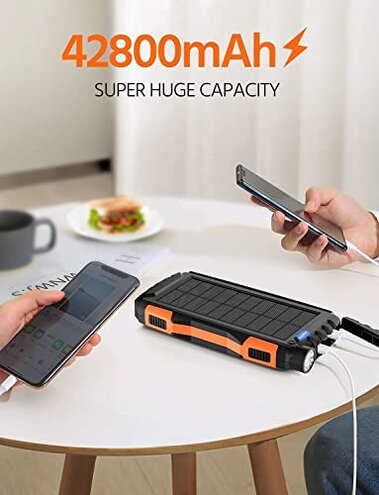
Main regret trigger: unreliable battery hold combined with weak solar output makes this risky for trips without wall power. Severity exceeds normal category risk because two core selling points fail together. Verdict avoid if you need dependable off-grid power; consider alternatives with verified solar and removable cables.
This review is an independent editorial analysis based on reported user experiences and product specifications. NegReview.com does not sell products.