
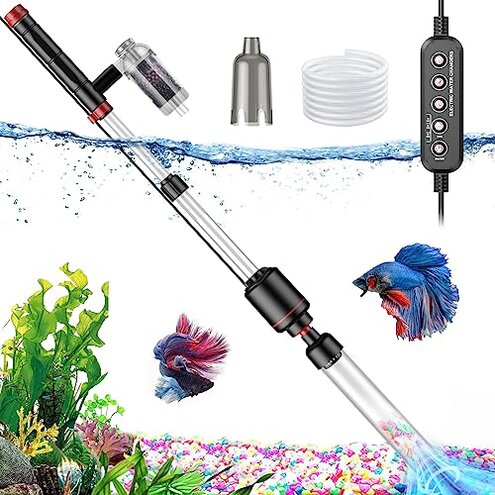
Product evaluated: Suness Electric Aquarium Vacuum Gravel Cleaner: 24W Fish Tank Vacuum Gravel Cleaner with Strong Suction for Automatic Water Change Algae Remover Sand Wash Water Shower and Water Circulation, Timed Off
Related Videos For You
How to Properly Gravel Vacuum a Fish Tank (Detailed Version) #aquariumcoop
Data basis: This report used dozens of customer-written reviews, Q&A entries and video demonstrations collected between Jan 2023 and Jan 2026. Most feedback came from written reviews, supported by video demos, with a smaller share from Q&A and follow-up replies.
| Outcome | Suness (this product) | Typical mid-range cleaner |
|---|---|---|
| Suction reliability | Variable — suction drops reported commonly after short use or clogging. | Stable — most mid-range units keep steady suction during normal sessions. |
| Noise & vibration | Louder — several reports flag high vibration and humming during operation. | Quieter — similar-priced models usually have lower vibration and steadier mounts. |
| Maintenance | Higher — filter cleaning and clog fixes are commonly needed during repeated use. | Moderate — mid-range alternatives have easier-to-access filters and fewer clogs. |
| Safety / waterproofing | Risk — external switch is not waterproof and needs careful placement. | Safer — many competitors use sealed switches or inline designs. |
| Regret trigger | Repeated service — pump/suction failures and safety workarounds drive returns. | Occasional tweak — minor upkeep but less likely to cause early replacement. |
Top failures
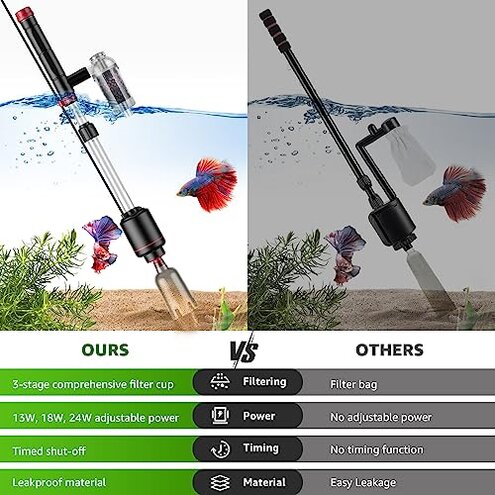
Why does suction weaken or stop during cleaning?
Regret moment: Buyers notice suction loss mid-clean, which interrupts water changes and forces extra steps.
Pattern: This is a commonly reported problem that appears during first few uses or after short sessions as debris clogs the intake.
Usage anchor: The issue shows up when you run the unit for 5–20 minutes or on tanks with fine sand and heavy debris.
Category contrast: More disruptive than the average mid-range cleaner because it often requires stopping, disassembling and re-priming the pump.
Is the unit noisy or shaky while running?
- Noise level: Many buyers report a louder humming and noticeable vibration during operation.
- Mounting: Vibration becomes obvious when the unit sits on glass or uneven surfaces.
- Short sessions: Noise appears from first use and often persists with extended runs.
- Impact: The sound is more intrusive than expected for a mid-range aquarium vacuum.
- Fix attempts: Users try padding or re-positioning, which reduces but does not eliminate vibration.
Why does the filter cup clog or return dirty water?
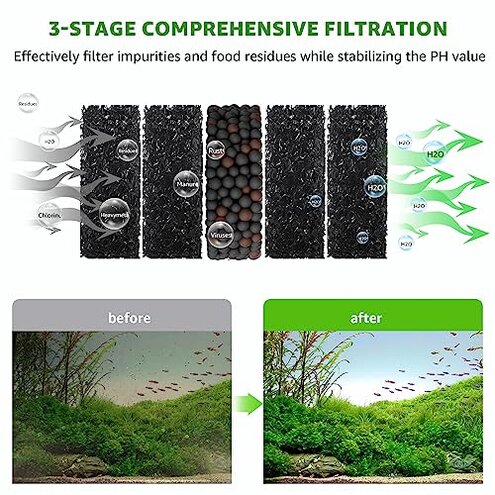
- Primary sign: Filter media traps debris quickly and needs frequent rinsing during a single session.
- Frequency: This is a secondary but persistent pattern on tanks with fine sand or heavy waste.
- Early warning: Suction weakens and water clarity drops while you still have more tank to clean.
- Cause: Small intake and tight filter assembly make the unit sensitive to solids and roots.
- Impact: You end up hand-cleaning or pausing to clean the cup, adding time to the chore.
- Attempted fixes: Users report multiple rinses of the sponge and media during one cleaning, which increases wear.
- Hidden requirement: Regular access to a sink and spare filter media is needed for efficient use.
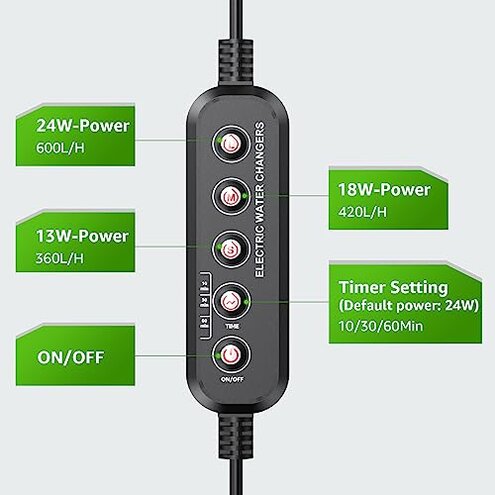
How risky is the external switch and power placement?
- Design note: The product warns the external independent switch is not waterproof.
- Usage context: This becomes a problem when you place the handle or switch near the tank edge during water changes.
- Safety signal: Several buyers report needing to keep the switch dry or rig protective covers to avoid shocks.
- Frequency: Less frequent than suction loss but more serious when it occurs.
- Hidden step: You must plan a dry, raised spot for the switch or buy extra waterproofing supplies.
- Workaround effort: Buyers often add tape, zip ties or a temporary drip loop, which adds setup time.
- Category contrast: Mid-range alternatives often use sealed controllers or fully submerged-safe designs, meaning this product is less forgiving.
- Fixability: The issue is workable but increases overall hassle and safety precautions.
Illustrative excerpts (not real quotes)
"Suction died after ten minutes, I had to stop and re-prime the pump." — reflects a primary pattern.
"Vibration shakes the tank stand; padding only helped a little." — reflects a secondary pattern.
"Filter cup filled fast and returned cloudy water mid-clean." — reflects a primary pattern.
"External switch got damp; I had to rig a cover to feel safe." — reflects an edge-case but safety-relevant pattern.
Who should avoid this
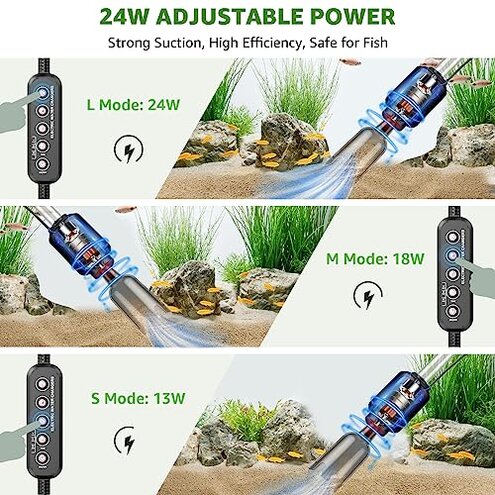
- High-dependability users: If you need uninterrupted suction for large tanks, avoid this unit due to frequent stops.
- Quiet-operation seekers: If low noise matters, skip this model because vibration and humming are common.
- Minimal-upkeep buyers: If you cannot or will not rinse filters mid-clean, choose a simpler manual or higher-end option.
Who this is actually good for
- Budget tinkers: Buyers who accept extra setup and regular filter rinsing can save money and still use the unit.
- Small-tank owners: For small, low-debris tanks the suction and filter limits may be tolerable.
- DIY improvers: If you plan to add padding and waterproofing, you can work around the main issues.
Expectation vs reality
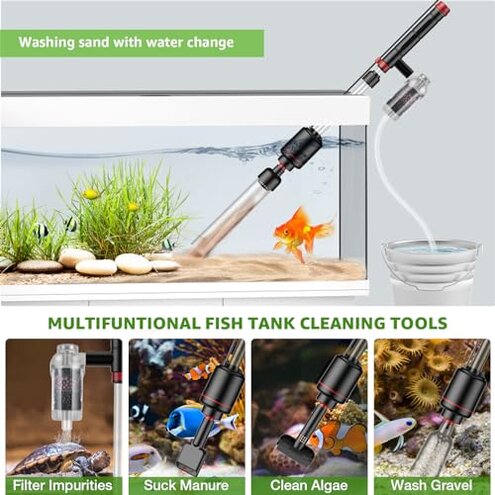
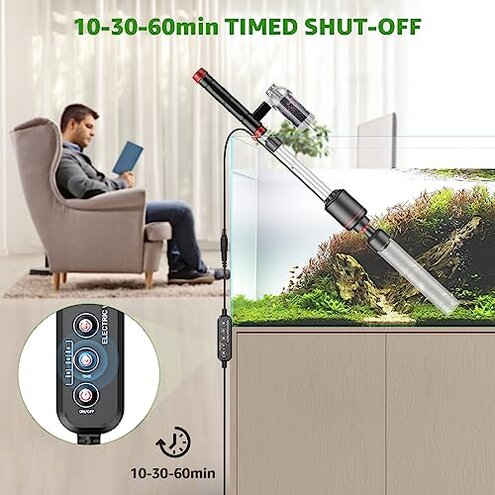
Expectation (reasonable for this category): Buyers expect a mid-range aquarium vacuum to keep steady suction through a 10–30 minute session.
Reality: Suness often needs stops to clear clogs or re-prime the pump, which increases task time and frustration.
Safer alternatives
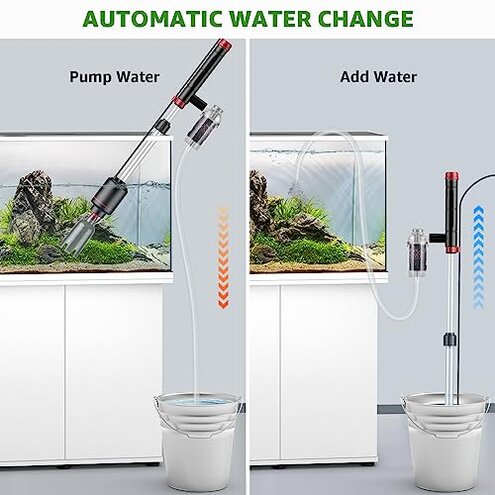
- Choose sealed controllers: Look for models with sealed or inline switches to avoid waterproofing workarounds.
- Prefer larger intakes: Pick units with wider inlets if you have sand or heavy debris to reduce clogging.
- Check user videos: Watch setup and long-run demos to confirm noise and suction behavior before buying.
- Buy spare media: If you keep this unit, buy extra filter sponges and media to avoid session breaks.
The bottom line
Main regret: The biggest trigger is inconsistent suction that interrupts cleaning and demands frequent filter handling.
Why worse: Combined with a non-waterproof external switch and above-average noise, these faults exceed typical mid-range risks.
Verdict: Avoid this model if you want dependable, low-fuss aquarium maintenance; consider quieter, sealed-controller alternatives.
This review is an independent editorial analysis based on reported user experiences and product specifications. NegReview.com does not sell products.