
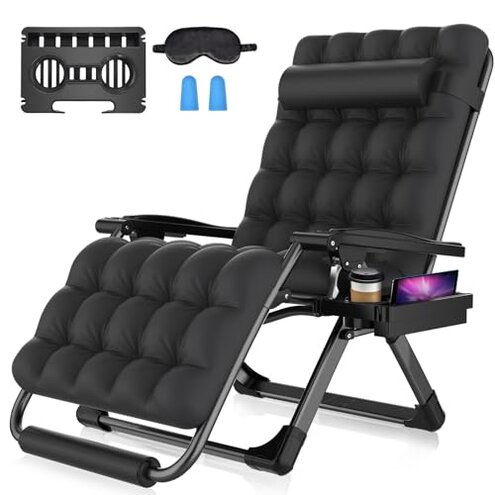
Product evaluated: Suteck Oversized Zero Gravity Chair,33In XXL Lounge Chair w/Removable Cushion&Headrest, Reclining Camping Chair w/Upgraded Lock and Footrest, Reclining Patio Chairs Recliner for Indoor Outdoor,500LBS
Related Videos For You
DIY How To fix / Repair a Zero Gravity Chair
Product Review: Amazon Basics Zero Gravity Lounge Chair
Data basis: This report is based on dozens of consumer reviews collected from written ratings and photo/video review posts spanning 2023–2026. Most feedback came from written descriptions of day-to-day use, supported by a smaller set of visual demonstrations showing recline behavior, fabric tension, and accessory fit.
| Buyer outcome | This chair | Typical mid-range |
|---|---|---|
| Recline stability | Higher risk of lock slip or uneven hold in real use | Moderate risk, usually consistent once set |
| Comfort over time | Mixed, cushion can shift and hot spots show up | Steadier, fewer position adjustments needed |
| Portability | Heavier feel in daily carry and storage moves | Easier to haul and reposition |
| Fit and finish | Less consistent, accessories and stitching alignment vary | More consistent out of the box |
| Regret trigger | Lock trust breaks during a recline change | Annoyances tend to be minor squeaks or sag later |
Top failures
“Why does the recline feel like it won’t stay put?”
Regret moment: You lean back expecting a stable “zero gravity” hold, and the angle shifts more than you planned.
Severity: This is among the most disruptive complaints because it affects safety confidence, not just comfort.
Pattern: It appears repeatedly, though it’s not universal across all buyers.
When it shows up: It tends to happen during angle changes or when you settle your weight after adjusting.
Why it feels worse: Most mid-range recliners may creak, but they usually hold the chosen angle once locked.
- Early sign: The lock feels touchy, needing multiple tries to feel secure.
- Primary pattern: A slight slide happens after you relax into position.
- Worsens when: Long sessions and repeated micro-adjusts add more chances for it to shift.
- User impact: Buyers describe a startled feeling when the chair changes angle unexpectedly.
- Mitigation: Setting the angle slowly and re-checking both sides can reduce the surprise shifts.
- Fixability: If it’s a unit-to-unit lock tolerance issue, it’s hard to fully solve without replacement.
- Hidden requirement: You may need two-hand adjustments and a “test lean” each time, which is more effort than typical.
“Why is it comfortable at first, then annoying later?”
Regret moment: The first sit feels plush, then the cushion shifts and you start hunting for the “right spot” again.
Pattern: This is a secondary issue that shows up persistently in longer-use feedback.
- Time effect: Discomfort shows up after longer sitting, not always in the first minutes.
- Shift risk: The removable cushion can slide during recline changes and re-positioning.
- Heat feel: Some note a warmer sit than expected when using the thick pad for extended time.
- Pressure points: Users mention hot spots around shoulders or lower back depending on height.
- Category contrast: Mid-range chairs often have thinner pads, but they can feel less fussy because there’s less shifting.
- Workaround: Tightening placement and using the chair without the cushion in heat can help, but adds decision fatigue.
- Hidden trade-off: The “plush” setup can mean more readjusting than buyers expected.
“Is this really ‘portable’ if I keep avoiding moving it?”
Regret moment: You planned to carry it to the yard, patio, or car, but it feels like a chore.
Severity: This is less frequent than lock complaints, but more frustrating for people who bought it for regular transport.
- Weight reality: At 26.4 pounds, it can feel bulky during frequent repositioning.
- Awkward carry: The folded shape can be clumsy through doors, trunks, or tight storage spots.
- Worsens when: Regular beach, camping, or event use adds more handling and more annoyance.
- Category contrast: Many mid-range options feel lighter in day-to-day carry, even if they look similar online.
“Why do the add-ons feel like they don’t match the chair?”
Regret moment: You buy the ‘fully loaded’ version, then the headrest, footrest, or tray feels fiddly.
Pattern: This is an edge-case-to-secondary pattern, seen across multiple feedback styles, but not the dominant complaint.
- Fit variance: Accessories can feel misaligned depending on your height and preferred recline angle.
- Tray use: The large cup holder can be in the way when getting in or out for some setups.
- Slip behavior: The headrest can need repositioning after you stand up and sit back down.
- Category contrast: Mid-range chairs often ship simpler, but what they include tends to be less finicky.
- Mitigation: Treat add-ons as optional and test positions before relying on them for daily use.
Illustrative excerpts
Illustrative: “I locked it, leaned back, and it still shifted a notch.”
Signal: Primary pattern tied to recline lock confidence.
Illustrative: “Great cushion, but I kept sliding it back into place.”
Signal: Secondary pattern tied to cushion movement over time.
Illustrative: “Not hard to fold, just heavier than I expected to carry.”
Signal: Secondary pattern tied to portability expectations.
Illustrative: “The tray is big, but it makes getting out feel awkward.”
Signal: Edge-case pattern tied to body size and setup layout.
Illustrative: “I love the size, but I don’t trust the recline unless I test it.”
Signal: Primary pattern tied to a hidden ‘test lean’ routine.
Who should avoid this
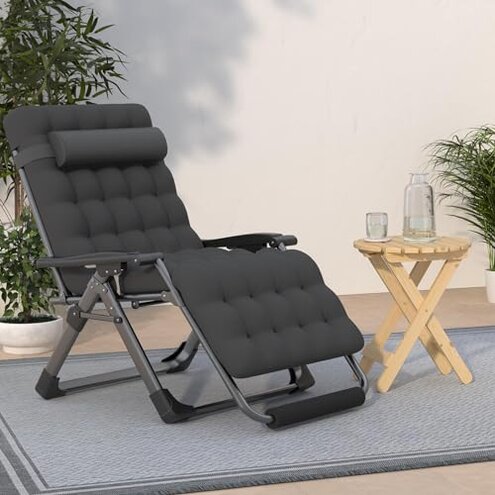
Safety-first loungers should skip it if lock confidence is non-negotiable, because recurring lock-shift reports show up during real recline changes.
People with back sensitivity should avoid it if they hate readjusting, since persistent cushion shifting and pressure-point feedback appears after longer sits.
Frequent carriers should pass if you move chairs daily, because 26.4 pounds can become a regular friction point.
Buyers wanting “set-and-forget” add-ons should avoid it, since accessory fit can be inconsistent depending on angle and body size.
Who this is actually good for
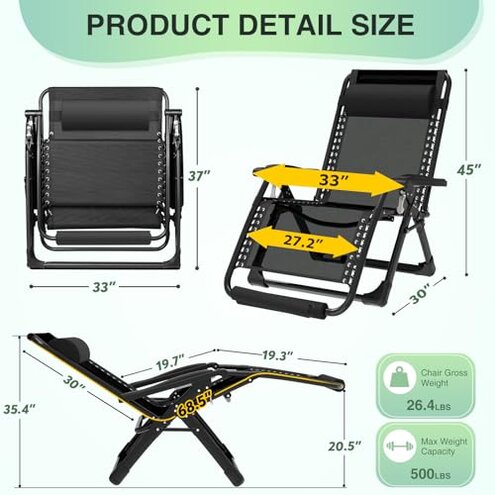
Stationary patio users who leave it in one spot can tolerate the heavier feel because they won’t carry it often.
People who like large seating may accept occasional readjusting because they prioritize roomier dimensions like 33 inch width.
Hands-on tinkerers who don’t mind a test lean routine may be fine if they’re willing to re-check the lock each adjustment.
Seasonal loungers who treat the cushion as optional can manage the heat and shifting by swapping cushion use by weather.
Expectation vs reality
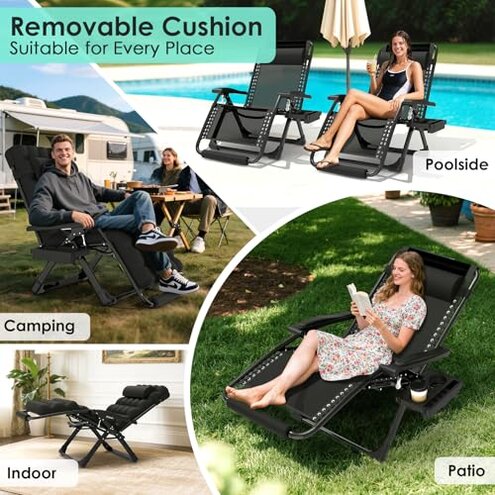
- Expectation: A recliner lock should hold steady once set, which is reasonable for this category.
- Reality: Lock behavior can feel less predictable during angle changes, which creates safety doubt.
- Expectation: A thick cushion should mean easy comfort with fewer tweaks.
- Reality: Extra padding can mean more shifting and more “re-find the sweet spot” time.
- Expectation: “Portable” means quick moves from storage to patio.
- Reality: 26.4 pounds is manageable sometimes, but annoying when it becomes a daily habit.
Safer alternatives
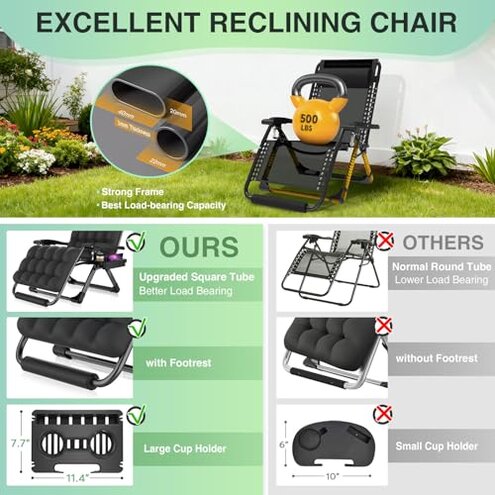
- Prioritize lock consistency by choosing models with lots of feedback about angle holding during real recline changes.
- Reduce cushion hassle by picking a chair with a non-slip pad attachment or a simpler seat surface if you hate readjusting.
- Buy for carrying by filtering for lighter options if you do frequent trips, since weight friction becomes the real cost over time.
- De-risk add-ons by treating trays and headrests as optional, and buying a chair that’s comfortable bare first.
The bottom line
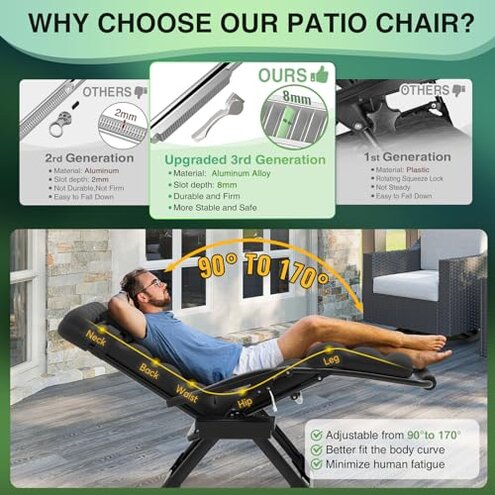
Main regret trigger: The biggest avoid reason is lock trust, because recurring reports describe shifting during recline changes.
Higher-than-normal risk: Compared with typical mid-range chairs, this feels less forgiving since stability problems are more disruptive than cosmetic wear.
Verdict: Avoid if you need a recliner that feels predictable every time you lean back.
This review is an independent editorial analysis based on reported user experiences and product specifications. NegReview.com does not sell products.