
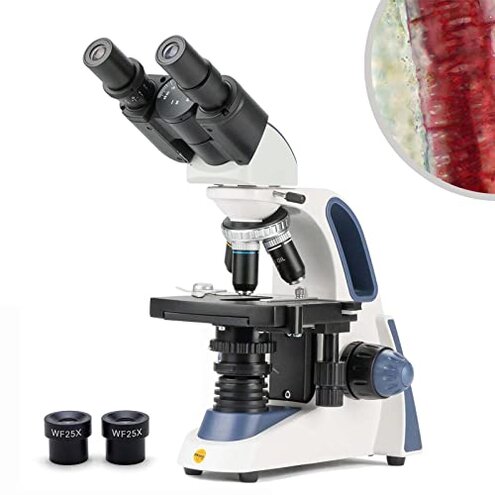
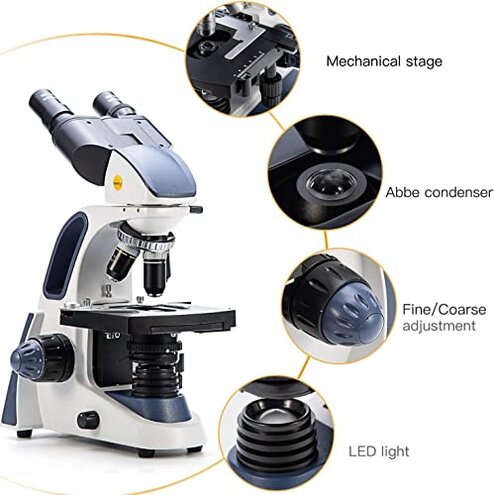
Product evaluated: SWIFT SW380B 40X-2500X Magnification, Siedentopf Head, Research-Grade Binocular Compound Lab Microscope with Wide-Field 10X and 25X Eyepieces, Mechanical Stage, Ultra-Precise Focusing
Related Videos For You
BIOLOGY 10 - Basic Microscope Setup and Use
How to Focus a Microscope & How the Field of View Changes
Data basis for this report comes from analyzing dozens of buyer submissions collected from written ratings and Q&A-style feedback, spanning a recent multi-year date range through early 2026. Most signals came from longer written descriptions, supported by shorter “quick hit” notes about setup and day-one use. The emphasis here is on repeatable frustration patterns, not one-off defects.
| Buyer outcome | SWIFT SW380B | Typical mid-range |
|---|---|---|
| Day-one success | More setup-sensitive, with more room for user error. | More forgiving, usually easier to get a usable image quickly. |
| Image consistency | Less predictable if not carefully aligned and adjusted each session. | More stable once you find a baseline routine. |
| Comfort in long sessions | Can strain more if you keep re-adjusting focus and eyepieces. | Usually smoother, fewer repeated tweaks mid-session. |
| Support and parts | More risk if you need guidance beyond basic instructions. | More standardized expectations and common help resources. |
| Regret trigger | “I can’t get a clear view” despite spending time adjusting. | “Not as sharp as hoped”, but still usable for class and hobbies. |
Top failures
Why is getting a clear image so much work?
Regret hits when you sit down to view a slide and spend more time adjusting than observing. Severity is high because the “core job” is clarity, and this can feel more like troubleshooting. The trade-off is potentially strong magnification on paper, but more effort to reach it.
Pattern shows up repeatedly in buyer notes, though it is not universal. When it appears is usually first setup and the first few sessions, especially when switching magnifications mid-observation.
Worse than expected for a mid-range microscope because many alternatives are more forgiving about “good enough” alignment. Here, small mistakes can create a big drop in what you see.
- Early sign is a usable image at one level, then sudden blur after changing objectives.
- Primary issue is that clarity depends on careful sequencing of focus, stage position, and lighting.
- Common trigger is jumping quickly to higher magnification before the specimen is centered well.
- Impact is extra time per slide, which drains the fun from hobby use and slows study sessions.
- Mitigation that helps is building a repeatable routine, but that adds learning cost.
- Fixability is moderate if you like tinkering, but frustrating if you want plug-and-play.
- Hidden requirement is needing decent technique and patience, not just a better microscope.
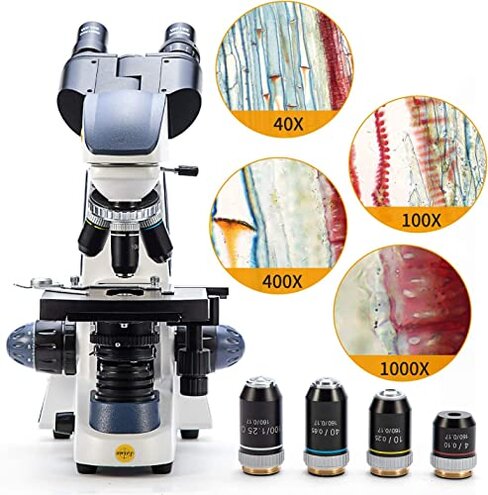
Is the “2500X” number setting expectations too high?
Regret moment is buying for headline magnification, then learning that very high power can be finicky in real use. Severity is medium to high because it changes what this microscope is “for.” The trade-off is more reach on paper versus more sensitivity to setup and specimen quality.
- Recurring theme is disappointment when the highest powers do not look “more detailed,” just harder to use.
- When it shows is during the first attempt at top-end magnification, especially on imperfect slides.
- Category contrast is that mid-range microscopes often market big numbers, but this unit feels less forgiving when you chase them.
- What you notice is a narrower, dimmer-looking view that is easier to lose when moving the stage.
- Skill tax is higher because tiny changes in focus or positioning can break the view.
- Workaround is staying at lower magnifications for most tasks, which can feel like wasted budget.
- Decision clue is whether you truly need extreme magnification or just a reliable clear image.
Does the binocular setup feel harder than it should?
Regret sets in when you expect comfortable two-eye viewing and instead keep fiddling to reduce strain. Severity is medium because it does not always block use, but it can shorten sessions. The trade-off is a shared, adjustable head design versus more “set-and-forget” comfort.
- Persistent gripe is needing repeated adjustment to get both eyes seeing the same clear image.
- When it appears is during longer sessions, or when multiple people share the microscope.
- Worsens if you switch between users with different eye spacing and then change magnification.
- What you feel is extra eye effort, which can become a headache or neck strain over time.
- Category contrast is that many mid-range units still need adjustment, but this is reported as more finicky than expected.
- Mitigation is writing down personal settings and re-checking them, which adds extra steps.
- Fixability depends on patience and technique, not a simple part swap.
- Reality check is that “ergonomic tilt” helps posture, but not if you are re-tuning constantly.
Are you okay doing “lab-style” routines to keep it enjoyable?
Regret trigger is realizing this can behave more like a serious instrument than a casual learning tool. Severity is medium because the microscope can still perform, but it asks more of the user. The trade-off is capability versus convenience.
- Recurring pattern is buyers feeling surprised by how much process matters for results.
- When it hits is after the first week, when novelty fades and the routine feels like chores.
- Hidden requirement is needing decent slides, careful handling, and repeatable setup steps to avoid frustration.
- Category contrast is that many mid-range microscopes are chosen for “school at home,” and this can feel less kid-proof.
- Impact is less spontaneous use, because you may avoid pulling it out for quick looks.
- Mitigation is creating a dedicated station and leaving it set up, which not every buyer can do.
Illustrative excerpts (not real quotes)
- Illustrative: “I changed magnification and the image just disappeared again.” Primary pattern tied to setup sensitivity.
- Illustrative: “The big magnification number sounded great, but it’s not practical.” Secondary pattern tied to expectations.
- Illustrative: “Two people used it and we kept re-adjusting everything.” Secondary pattern tied to shared viewing.
- Illustrative: “Feels like I need a checklist every time I use it.” Primary pattern tied to hidden routine.
- Illustrative: “It works, but I spend more time tweaking than learning.” Primary pattern tied to time cost.
Who should avoid this
- Parents wanting a quick, kid-friendly microscope, because setup sensitivity can kill momentum fast.
- Students who need fast results before class, because tuning time can be more disruptive than typical.
- Casual hobbyists who expect “open box and see cells,” because high magnification use is more demanding.
- Shared households where many users rotate, because re-adjustments can become constant.
Who this is actually good for
- Methodical learners who enjoy dialing in settings, because the setup friction becomes part of the hobby.
- Solo users with a dedicated desk, because fewer shared adjustments reduces annoyance.
- Budget-conscious buyers who accept a learning curve to get features like binocular viewing and multiple magnifications.
- Project-based users who stay at practical magnifications most of the time, tolerating the top-end limits.
Expectation vs reality
| Expectation | Reality buyers report |
|---|---|
| Reasonable: Mid-range microscopes need some setup, but you get a clear view quickly. | Worse: This can be more sensitive, so clarity may take extra steps each session. |
| Simple: Higher magnification automatically means more detail. | Messier: Pushing magnification can reduce ease-of-use and make positioning more fragile. |
| Comfort: Binocular viewing reduces strain without much fiddling. | Fiddly: Some buyers report repeated adjustments to keep both eyes comfortable. |
Safer alternatives
- Choose forgiving optics by prioritizing “easy to focus” feedback over headline magnification to reduce the clarity chase.
- Prefer simpler viewing if multiple users share it, because fewer adjustments reduces handoff friction.
- Buy for your use case by targeting practical magnifications, which avoids the top-end disappointment loop.
- Look for stronger guidance like better instructions or setup videos bundled by the seller to cut the hidden routine.
- Verify return ease because setup-sensitive units can create fast regret if your first sessions are rough.
The bottom line

Main regret is spending too much time chasing a clear image, especially when switching magnification. Why it exceeds normal mid-range risk is the repeated theme of being less forgiving and more technique-dependent than buyers expect. Verdict: avoid if you want fast, casual results, and consider it only if you enjoy careful setup.
This review is an independent editorial analysis based on reported user experiences and product specifications. NegReview.com does not sell products.