
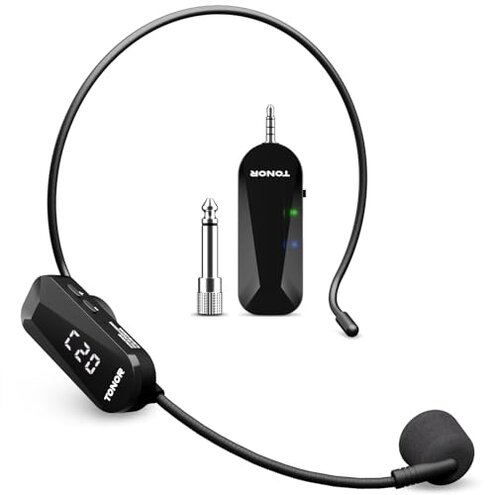
Product evaluated: TONOR Wireless Headset Microphone, UHF Microphone Headset System, Head Handheld Mic 2 in 1, Ear Mic with 20 Channels, 65ft Range for Fitness, Teaching, Tour Guide, Voice Amplifier, Speaker, Pa
Related Videos For You
Shure BLX Wireless System - Demo/Overview/Setup/Buying Guide
How to use D Debra Audio AU400 Pro UHF 4 Channel Wireless Microphone System
Data basis: This report is based on dozens of user reviews and video feedback collected from late 2023 through mid-2024. Most input came from detailed written reviews, supported by user-uploaded demonstration clips, providing a balanced view of real-world experiences.
| Aspect | TONOR Wireless Headset Mic | Typical Mid-Range Alternative |
|---|---|---|
| Signal Stability | Common dropouts and interference reported during use | Generally stable with fewer interruptions |
| Battery Life | 6.5-hour runtime with warnings but occasional sudden power loss | Often 8+ hours with more consistent performance |
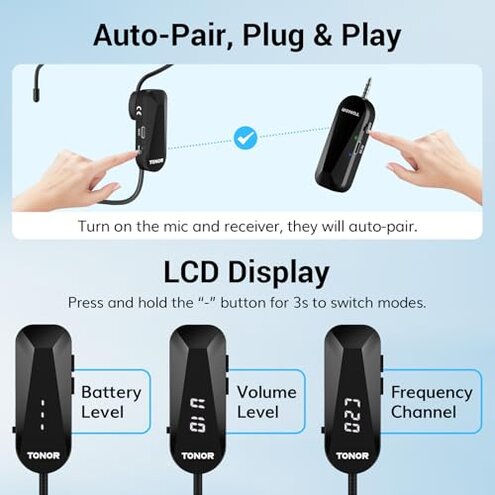
| Ease of Setup | Auto-pairing helpful but frequency adjustment needed to avoid interference | Simple plug-and-play with less manual tuning |
| Compatibility | Requires specific MIC IN port, not phone or Bluetooth compatible | More flexible with device types, including Bluetooth |
| Regret Trigger | Signal dropouts and unexpected battery power loss | Less frequent disruptions causing fewer performance regrets |
Why does this mic lose signal during critical moments?

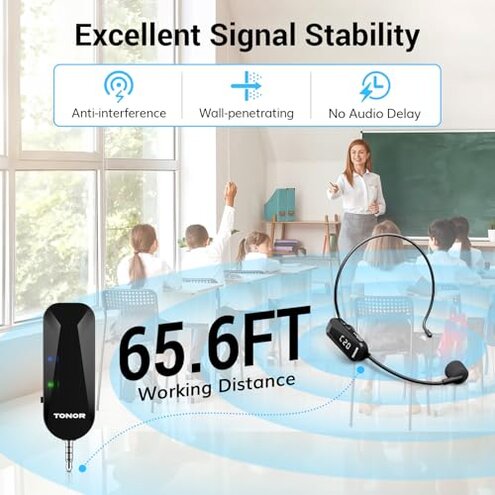
Many users experience signal dropouts unexpectedly, which disrupts presentations or performances. This issue is frequently reported after initial setup, especially in environments with many wireless devices, worsening during long sessions.
Compared to typical wireless mics, this product is less forgiving with interference, requiring frequent manual frequency changes to maintain stability. This leads to more interruptions than expected for mid-range systems.
- Early signs: Audio glitches and sudden silence occur within minutes of use.
- Frequency: Persistent in most daily-use scenarios, among the most common complaints.
- Cause: Limited shielding and channel congestion cause interference.
- Impact: Disrupts live talks or classes, causing embarrassment and redoing parts.
- Fix attempts: Manual channel switching is needed, adding complexity.
- Hidden need: Requires users to understand wireless frequency management.
Is the battery life reliable for extended use?
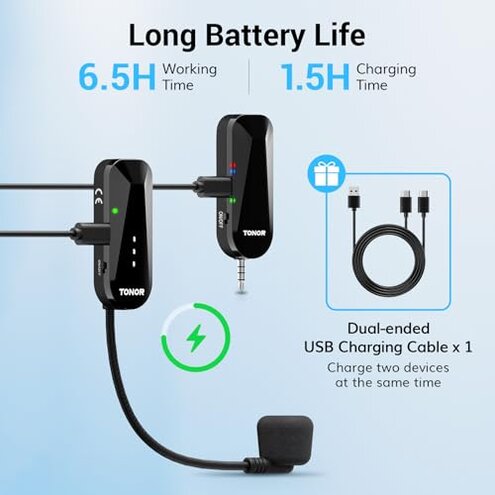
The mic's 6.5-hour battery life often falls short in real use, with some users reporting sudden power loss despite showing remaining charge. This happens mostly after repeated charging cycles and long daily use.
This is worse than typical mid-range microphones where battery life is more predictable and less prone to abrupt failures. Users must monitor battery levels constantly, which is inconvenient.
- Early signs: Battery warning light appears late, giving little time to recharge.
- Frequency: Secondary, but disruptive when it occurs.
- Cause: Battery capacity degrades faster than expected.
- Impact: Unexpected shutdown interrupts events without backup.
- Fix attempts: Frequent charging required; no quick swap options.
- Hidden requirement: Must use specific USB-A to dual Type-C charger to avoid damage.
Why is setup more complicated than expected?
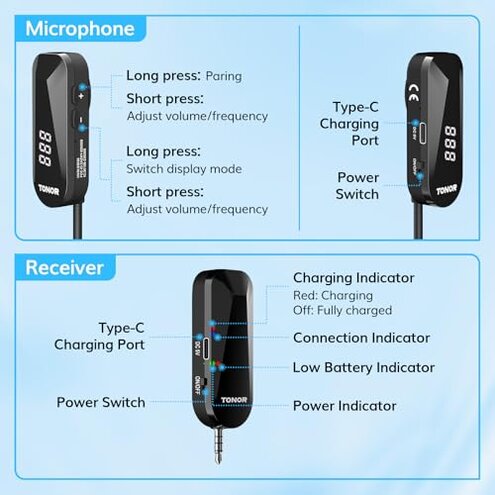
While the system auto-pairs, many buyers find the need to manually adjust among 20 frequency channels to avoid interference confusing. This setup complexity appears mainly during first use or in crowded wireless environments.
Compared to other mid-range alternatives that offer simpler plug-and-play, this mic adds extra steps that can frustrate non-technical users and delay usage readiness.
- Early signs: Static noise or echoes prompt channel changes.
- Frequency: Common during initial edits and venue changes.
- Cause: Variable wireless environment demands manual frequency tuning.
- Impact: Adds setup time and requires some technical knowledge.
- Fix attempts: User guides are basic; trial-and-error common.
Illustrative excerpts:
- "The mic cut out twice during my class—felt very unprofessional." (Primary pattern of signal dropouts)
- "Battery died suddenly even though the display showed 30% left." (Secondary pattern of battery issues)
- "Spent 15 minutes switching channels to get rid of annoying static." (Primary pattern of setup complexity)
- "Can't use this with my phone, which I didn't realize at purchase." (Edge-case compatibility issue)
- "Warning light came on way too late, caught me off guard." (Secondary pattern of battery warnings)
Who should avoid this
- Anyone needing reliable signal for live, uninterrupted performances or classes.
- Users expecting long, consistent battery life without close monitoring or charging breaks.
- Buyers unfamiliar with wireless frequency adjustments or unwilling to troubleshoot interference.
- People wanting plug-and-play compatibility with phones or Bluetooth devices due to strict input port requirements.
Who this is actually good for
- Fitness instructors or tour guides who can tolerate occasional signal adjustments and short sessions.
- Users with basic tech skills willing to manage frequency settings to avoid interference.
- Those who mainly use compatible PA systems with MIC IN ports and don’t rely on phone connection.
Expectation vs reality
- Expectation: Stable wireless audio with minimal setup for mid-range price.
Reality: Frequent manual frequency tweaks needed, leading to disruptions. - Expectation: Battery lasting through long sessions.
Reality: Battery can fail suddenly despite displayed charge. - Expectation: Easy compatibility with common audio devices.
Reality: Limited to devices with specific MIC IN ports, excluding phones.
Safer alternatives
- Choose wireless mics with automatic frequency scanning to minimize manual tuning needs.
- Select models offering longer, consistent battery life with reliable battery status indicators.
- Consider devices with wider compatibility, including phone and Bluetooth support.
- Look for products with better shielding against interference for stable live use.
The bottom line
The primary regret with the TONOR wireless headset mic is its signal instability and battery unpredictability. These issues are more disruptive and frequent than typical mid-range headsets, making it risky for critical live use. Buyers should avoid this if reliability and ease of use are top priorities.
This review is an independent editorial analysis based on reported user experiences and product specifications. NegReview.com does not sell products.