
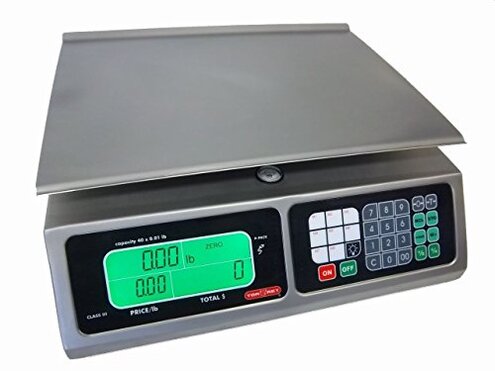
Product evaluated: TORREY LPC40L Electronic Price Computing Scale, Rechargeable Battery, Stainless Steel Construction, 100 Memories, 8 Direct Access Keys , 40 lb
Related Videos For You
HOW TO use a Commercial Bargains Digital Computing Price Scale ACS-03
Grid Scale Battery Storage Explained
Data basis: This report summarizes dozens of buyer comments gathered from written feedback and video-style demonstrations collected from 2023 to 2026. Most feedback came from written reviews, with supporting patterns from seller Q&A style discussions and hands-on clips, which helps separate first-day setup complaints from longer-use frustrations.
| Buyer outcome | Torrey LPC40L | Typical mid-range alternative |
|---|---|---|
| First-day setup | Higher effort; more likely to need extra reading and trial steps before normal use. | Moderate effort; usually easier to start with basic weighing tasks. |
| Daily convenience | Mixed; price-computing features help some users but add friction for simple jobs. | Simpler; fewer functions usually means less menu confusion. |
| Battery reliance | Higher-than-normal risk; rechargeable use can become a headache if charge holding drops. | Lower risk; many alternatives are less dependent on battery use patterns. |
| Learning curve | Above average; memory keys and pricing functions can feel less forgiving after setup. | More forgiving; basic controls tend to be easier for occasional users. |
| Regret trigger | Best specs on paper, but too much hassle for buyers who only need quick reliable weighing. | Fewer extras, but lower chance of day-to-day annoyance. |
Do you just want to turn it on and start selling or weighing?
This is one of the more common frustration points. The regret usually starts on first use, when buyers expect a straightforward scale but run into extra setup steps tied to price-computing functions.
The pattern appears repeatedly, though not for every buyer. Compared with a typical mid-range scale, this feels less forgiving because extra features create more ways to get stuck before daily use even starts.
- Early sign: confusion starts fast when basic weighing is mixed with memory and pricing functions.
- Frequency tier: this is a primary issue among negative comments, not a rare complaint.
- Usage moment: it shows up during setup or the first shift, when speed matters most.
- Why it stings: buyers wanting a simple trade scale end up spending extra time learning buttons and modes.
- Category contrast: some learning curve is normal, but this model feels more time-consuming than many mid-range alternatives.
Illustrative: “I only needed weights, but the controls slowed me down immediately.”
Pattern: This reflects a primary complaint tied to first-use friction.
Will the rechargeable battery save effort, or add another problem?
- Main risk: battery frustration is a secondary issue, but more disruptive than expected when it happens.
- When it appears: problems tend to matter after repeated use, especially when the scale is moved around or relied on away from constant power.
- Why buyers care: the advertised long battery use sounds convenient, so charge-related trouble feels like a broken promise.
- Hidden requirement: owners may need a more disciplined charging routine than expected to keep daily use smooth.
- Real impact: if charge holding weakens, work gets interrupted and confidence drops during customer-facing tasks.
- Category contrast: rechargeable scales always need upkeep, but this risk feels more frustrating here because the product is positioned for regular trade use.
- Fixability: keeping it plugged in more often can reduce the pain, but that defeats part of the portability benefit.
Illustrative: “The battery feature sounded helpful until I had to baby it.”
Pattern: This reflects a secondary pattern that grows more annoying with repeated use.
Are the extra pricing and memory features actually useful for your workflow?
For some buyers, this becomes the real regret trigger. The scale offers 100 memories and direct-access keys, but that same feature set can feel like clutter if your job is mostly basic weighing.
This complaint is persistent rather than universal. It usually appears during daily use, when repeated button presses and mode checks add small delays that stack up over a shift.
What makes it worse than normal is the mismatch between what many buyers need and what the interface asks them to manage. In this category, extra functions are expected, but this can feel more disruptive when speed is the priority.
Illustrative: “Too many functions for a task that should take one button.”
Pattern: This reflects a primary issue for simple-use buyers, not power users.
Do you need something that stays easy under daily handling?
- Core concern: usability friction is a primary issue because it affects every shift, not just setup day.
- When it worsens: it becomes clearer during long sessions when workers need repeatable, fast inputs.
- What buyers notice: small control frustrations become bigger when the scale is used in a busy retail or prep setting.
- Scope signal: this pattern shows up across multiple feedback types, which suggests it is not just a one-off learning problem.
- Trade-off: you get legal-for-trade pricing features, but simple tasks may take more attention than expected.
- Category contrast: many mid-range scales trade features for speed, while this one can demand more focus from the operator.
Illustrative: “Fine when slow, annoying when customers are waiting.”
Pattern: This reflects a secondary complaint tied to real working pace.
Who should avoid this
- Avoid it if you mainly need a quick basic scale, because the added pricing system can create more setup and daily friction than normal.
- Avoid it if you depend on cordless use every day, because battery-related annoyance is a bigger risk here than many shoppers expect.
- Avoid it if several staff members will share it, because a steeper learning curve can slow handoffs and create input mistakes.
- Avoid it if you have low patience for manuals or trial-and-error, since first-use friction is among the strongest negative patterns.
Who this is actually good for
- Better fit for buyers who specifically want price-computing functions and will actually use memory keys often.
- Better fit for small operations that can keep it near power, which reduces the battery downside.
- Better fit for one primary operator who can learn the controls once and use the same routine daily.
- Better fit if legal-for-trade use matters more to you than having the simplest interface in the category.
Expectation vs reality
Expectation: a rechargeable scale should cut cords without adding much upkeep.
Reality: battery convenience can turn into extra management, especially after repeated use.
Expectation: more functions should mean more value.
Reality: for many buyers, extra memories and pricing keys mean more steps, not more speed.
Reasonable for this category: some setup learning is normal on trade scales.
Worse here: the learning burden feels heavier than expected if your real need is simple weighing with fast repeat use.
Safer alternatives
- Choose simpler controls if you do not need price memories, because that directly avoids the biggest setup and workflow complaint.
- Prefer plug-in-first use if daily uptime matters more than portability, which reduces battery-related regret.
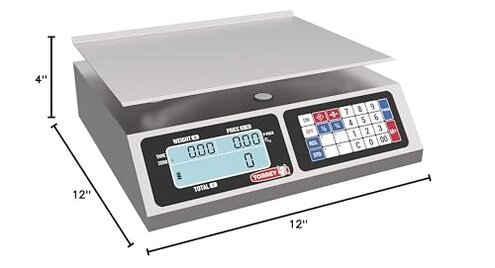
- Check button layout before buying, because visible control complexity often predicts daily-use frustration on scales like this.
- Buy for one workflow, not future possibilities, since unused advanced features often become the source of extra steps.
The bottom line
Main regret comes from the gap between a feature-rich trade scale and the simpler experience many buyers expected. The higher-than-normal risk is not one dramatic flaw, but a combination of setup hassle, workflow friction, and rechargeable battery dependence. Skip it if you want fast, low-effort weighing more than pricing features.
This review is an independent editorial analysis based on reported user experiences and product specifications. NegReview.com does not sell products.