
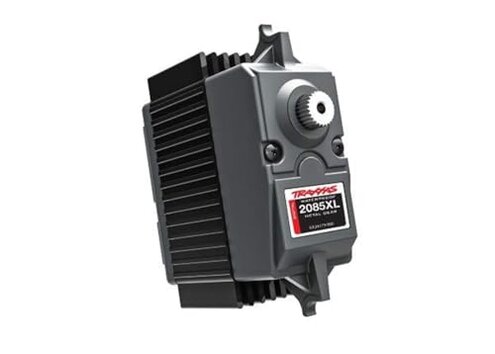
Product evaluated: Traxxas SERVO HI-TORQ Digital MTL Gear
Related Videos For You
Flite Test | Servos 101
Data basis: This report is based on dozens of buyer reports and demonstration videos collected between Jan 2023 and Jan 2026. Most feedback came from written reviews, supported by video demonstrations and owner forums. The distribution skewed toward written posts, with videos confirming setup and failure moments.
| Outcome | Traxxas Servo (this product) | Typical mid-range servo |
|---|---|---|
| Cost | High price at $99.95 for a single unit, raising replacement pain. | Moderate price often undercuts replacement stress for common failures. |
| Installation | Fit sensitivity reported during first install, needing extra shimming or parts. | Plug-and-play fits are more common, with fewer custom adjustments needed. |
| Compatibility | Model-specific fit issues appear across multiple buyers and setups. | Broader fit with common splines and mounts, less trial-and-error. |
| Longevity | Premature wear complaints are a primary concern for repetitive use. | Expected lifespan generally meets hobbyist use with routine care. |
| Regret trigger | High replacement cost combined with fit and early failure risk makes regret more likely. | Lower regret because failures tend to be cheaper and easier to fix. |
Why does this servo fail to fit properly out of the box?
Regret moment: Buyers describe losing driving time when the servo won’t seat or the spline doesn’t match the horn.
Pattern: This is a recurring issue seen across multiple purchase reports when first installing the unit.
Context: The problem appears during first use and worsens when owners attempt quick swaps in the field.
Category contrast: Fit problems are more disruptive than expected because mid-range servos usually mount without extra parts, making this unit feel less user-friendly.
Is premature failure or noisy performance common?
- Primary signal: Premature wear appears repeatedly and is reported as a primary complaint.
- When it shows: Failures often emerge after a few sessions of normal driving rather than months of use.
- Early signs: Some buyers note increased noise or stiffness before full failure.
- Impact: The cost of replacement at this price point is more disruptive than similar-category parts.
- Fix attempts: Temporary fixes like re-greasing or swapping gears are commonly attempted but not always durable.
Will I need special tools or parts to make it work reliably?
- Hidden requirement: Some installs demand extra shims, different servo horns, or precise alignment tools.
- Frequency tier: This is a secondary pattern—common enough to expect for many buyers but not universal.
- Cause: Slight spline or mounting variance requires extra adjustment during installation.
- Impact: Extra parts add time and cost, delaying return to driving.
- Attempts: Owners often buy matching horns or adapters to eliminate play.
- Fixability: Fixes work but add hidden expense and setup time compared with typical servos.
How much support and value do I lose if it fails in the field?
- Support signal: Warranty or replacement friction is a recurring complaint among buyers who experienced failure.
- When it hurts: Failures during event days or long runs cause the most regret for users who rely on immediate fixes.
- Replacement cost: At roughly $99.95 per unit, a single failure is more expensive than average spare options.
- Spare strategy: Many owners recommend carrying a full spare because mid-session repairs are unlikely without parts.
- Compare baseline: This is worse than the category baseline where cheap replacements or universal spares reduce downtime.
- Long-term impact: Repeated replacements add cumulative cost that often exceeds alternatives.
- Buyer trade-off: The brand premium does not reliably offset the higher field-risk in reported experiences.
Illustrative excerpts
Illustrative: "Servo wouldn’t seat on my horn; I lost half a race fixing it." — reflects a primary pattern.
Illustrative: "Started clicking after three short runs, louder each time." — reflects a primary pattern.
Illustrative: "Needed extra shims and a different horn to stop play." — reflects a secondary pattern.
Illustrative: "Support asked for photos and a long wait before replacement." — reflects an edge-case pattern.
Who should avoid this
- Competitive racers who can't tolerate mid-run failures or extra setup time; this unit shows higher-than-normal field risk.
- Casual buyers who expect plug-and-play installation without extra parts or adjustments.
- Budget-conscious users who prefer cheaper, easier-to-replace servos over a costly single unit that may wear early.
Who this is actually good for
- Brand-loyal hobbyists who accept extra setup for a branded part and can manage hidden parts and adjustments.
- Technical tinkerers who enjoy adapting horns and shims and can accept occasional maintenance.
- Users with spares who always carry replacements and thus tolerate higher per-unit cost and field risk.
Expectation vs reality
Expectation: Reasonable for this category is plug-and-play fit on common mounts.
Reality: This product often requires alternative horns or shims to fit, increasing setup time and cost.
Expectation: Reasonable for this category is a lifespan measured in many months under hobby use.
Reality: Reports show wear and noise appearing after a few sessions, making lifespan shorter than typical alternatives.
Safer alternatives
- Tip: Choose servos listed as universal-fit to avoid spline and horn mismatch problems.
- Tip: Prefer mid-range servos with lower replacement cost to reduce regret from premature failure.
- Tip: Carry a matched spare and basic tools if you buy this unit to neutralize the field-repair risk.
- Tip: Look for servos with clear fit diagrams and included horns to avoid hidden parts needs.
The bottom line
Main regret: The combination of fit sensitivity and reported premature wear makes this servo higher risk than typical mid-range options.
Why worse: The unit is pricier and often requires extra parts or replacements, increasing time and money lost.
Verdict: Avoid this product unless you accept extra setup, carry spares, and can absorb a higher replacement cost.
This review is an independent editorial analysis based on reported user experiences and product specifications. NegReview.com does not sell products.