
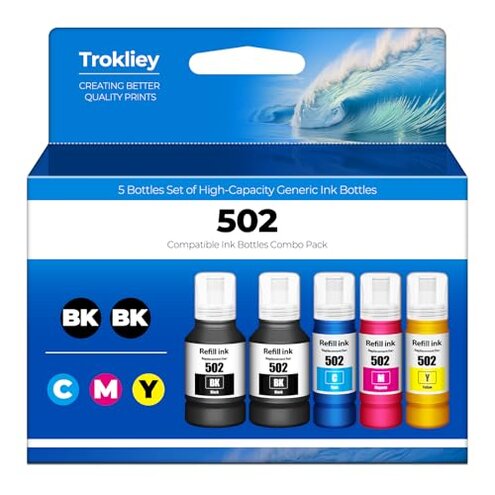
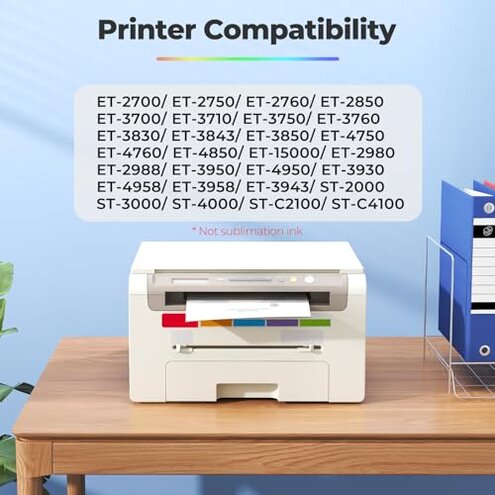
Product evaluated: 502 Ink Refill Bottles ET-2850 ET-3760 ET-3850 Replacement for 502 Ink Bottles (5 Pack) for ET 2850 ET 3850 ET-4850 ET-2760 ET3760 2850 ET-4760 ET-3830 ET-3843 ET-2750 ET-3750 ET4750 ET-15000 Printer
Related Videos For You
How to Refill Ink in an Epson EcoTank Printer
Ink bottle 😀 Just for ₹30
Data basis
Analysis: This report draws on dozens of buyer reviews plus video demonstrations collected between Jan 2023 and Jan 2026. Most feedback came from written reviews, supported by short how-to and problem videos. The sample skews toward recent buyers reporting setup and early-use problems.
Comparative risk snapshot
| Outcome | This product | Typical mid-range refill |
|---|---|---|
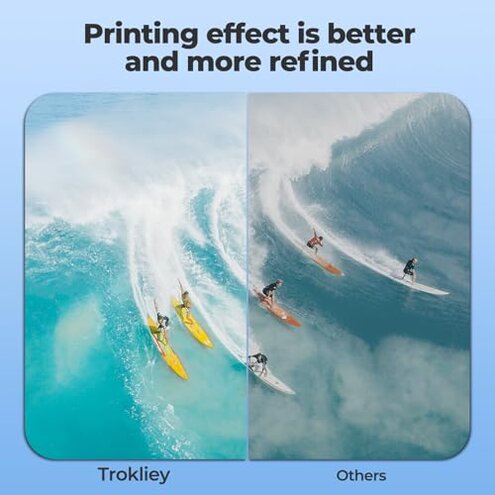
| Print quality | Variable — commonly reported streaks and color shifts after first cartridges. | Stable — most mid-range refills match OEM color for standard documents. |
| Leak risk | Higher-than-normal — occasional spills or drips during priming and refill. | Lower — better nozzle seals and clearer priming instructions typical. |
| Printer recognition | Frequent issues — some printers show errors or refuse to accept ink. | Less risky — mid-range compatible bottles often include clear chip/reset guidance. |
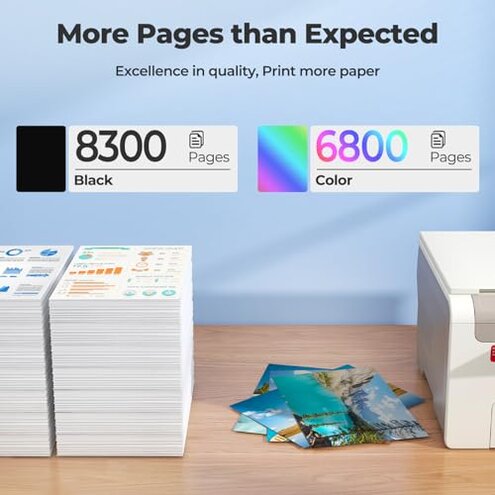
| Page yield accuracy | Inconsistent — yields reported lower than advertised in several cases. | More predictable — third-party alternatives usually match expected yield ranges. |
| Regret trigger | Compatibility and leaks — buyer regret often stems from rejected prints and messy refills. | Typical regret — usually limited to slightly different color tones, not printer refusal. |
Top failures
Why does my printer sometimes reject these bottles?
Recognition: Many buyers report the printer showing an error or not recognizing the refill after initial setup.
Pattern: This is among the most common complaints and appears repeatedly in early-use reports.
Context: The problem usually appears during first setup or after a cartridge reset and gets worse when printers have recent firmware updates.
Category contrast: This feels worse than normal because similar refill bottles usually work after simple chip resets, while these bottles require extra steps or fail entirely.
Why is print quality inconsistent or streaky?
- Early signs: Buyers commonly notice streaks on the first page after refill.
- Frequency tier: This is a primary issue for many users, reported across multiple purchases.
- When it happens: Problems appear after setup and often reoccur with heavy color jobs.
- Cause hint: Likely linked to air in lines or uneven ink density from inconsistent bottle flow.
- Why worse: Unlike mid-range refills that need simple head cleaning, these often require several clean cycles to improve.
Why do bottles leak or require awkward priming?
- Physical issue: Some users experience drips when attaching or detaching the nozzle.
- Usage moment: Leaks most commonly occur during refill and when bottles are inverted incorrectly.
- Frequency: This is a persistent secondary issue but appears frequently enough to cause mess and downtime.
- Hidden requirement: Buyers often must prime bottles manually, adding extra steps not emphasized in listing.
- Impact: Leaks add cleanup time and risk of staining work surfaces.
- Fixability: Some users manage with towels and steady hands, but the extra effort makes it less convenient than average refills.
- Contrast: Most mid-range bottles include clearer priming instructions and tighter nozzles.
Why is the page yield lower or unpredictable?
- Expectation: The product advertises high page counts, but users report less output.
- Pattern: This is a secondary recurring complaint across different buyers and print types.
- When noticed: Low yield shows up after several print jobs, when coverage varies from test pages to photos.
- Cause: Inconsistent ink density or partial fills during refills reduce effective usable ink.
- Impact: Lower yield increases replacement frequency and overall cost per page.
- Attempts to fix: Buyers try multiple refills or longer priming cycles, which adds time and frustration.
- Category contrast: More upkeep than most mid-range alternatives and less forgiving for frequent or heavy users.
- Value hit: For heavy printing, the unpredictable yield can erase the advertised savings.
Illustrative excerpts
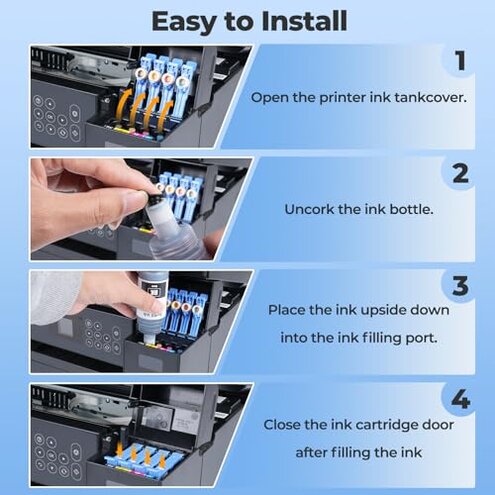
Excerpt: "Printer showed an error after first refill and would not print."
Note: This reflects a primary pattern of recognition failures.
Excerpt: "Colors faded and streaks appeared on photo pages after a week."
Note: This reflects a secondary pattern in print quality.
Excerpt: "I had to clean up ink on my desk after the nozzle leaked."
Note: This reflects an edge-case but recurring leak issue.
Who should avoid this
- Frequent printers: If you print daily or large jobs, avoid this due to inconsistent yield.
- Non-technical users: If you won’t perform chip resets or manual priming, avoid this because of recognition and setup steps.
- Neat-freak workspaces: If surface stains are a problem, avoid this because of the leak risk during refill.
Who this is actually good for

- Occasional home users: If you print rarely and accept occasional clean-up, you can tolerate inconsistent yield.
- Hobbyists who do short runs and can run head-clean cycles without stress can accept print quality trade-offs.
- Budget-conscious users willing to troubleshoot chip errors and prime bottles may still save money per bottle despite hassles.
Expectation vs reality

- Expectation: Reasonable for this category is that refill bottles work after minimal priming.
- Reality: These bottles often need extra priming and chip work, making setup more time-consuming than expected.
- Expectation: Reasonable to expect advertised page yields to match household use.
- Reality: Users report lower yields, especially with mixed photo and text jobs, reducing expected savings.
Safer alternatives
- Buy known-compatible refills: Choose refill sets that explicitly state chip/reset steps to avoid recognition failures.
- Look for sealed nozzles: Prefer bottles with clearer nozzle seals and priming guides to reduce leaks.
- Check return policies: Pick sellers with easy returns and solid support to mitigate defect risk.
- Test with low-risk prints: Run test pages before full use to spot quality or yield problems early.
The bottom line
Main issue: The biggest regret trigger is printer recognition and leak problems that appear during setup and refilling.
Why worse: These issues exceed normal category risk because they require extra priming, possible chip fixes, and cause clean-up time.
Verdict: Avoid this if you need reliable, low-fuss refill bottles; consider it only if you accept extra setup and troubleshooting.
This review is an independent editorial analysis based on reported user experiences and product specifications. NegReview.com does not sell products.