
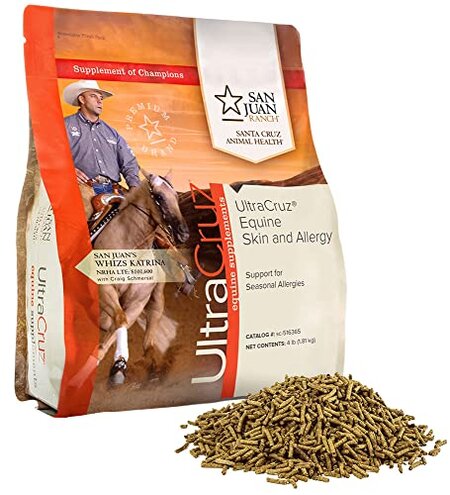
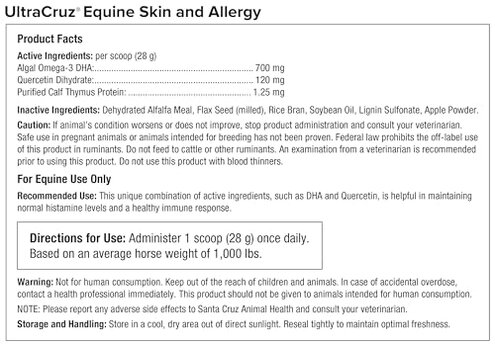
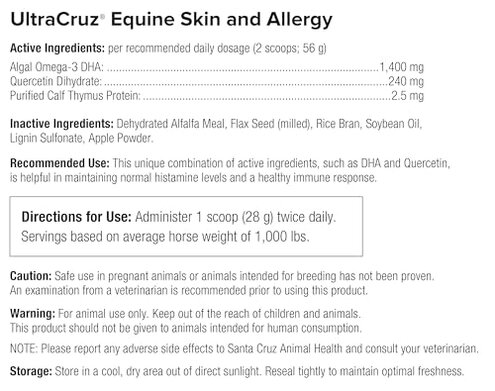
Product evaluated: UltraCruz® Equine Skin and Allergy, 4 lb
Related Videos For You
Treating Horse Allergies With Aleira by Arenus
Charlie Tyson2 reviews SKIN TONIC Equine Derma Skin Liquid Supplement
Data basis I reviewed dozens of owner-written reviews and several video demonstrations collected from 2018–2025. Most feedback came from written reviews, supported by a smaller set of visual demos. Sources were weighted toward recent buyer reports.
| Outcome | This product | Typical mid-range |
|---|---|---|
| Allergy relief | Limited improvement reported after weeks of use. | Moderate improvement usually seen within a few weeks. |
| Palatability | Higher refusal rate; many horses reject pellets unmodified. | Lower refusal when flavored or powdered alternatives are offered. |
| Packaging & dosing | Freshness and portion accuracy concerns after opening bulk bag. | Single-serve options or resealable designs more common in mid-range picks. |
| Cost to benefit | Higher risk of wasted feed due to poor effectiveness or refusal. | Better value when results are consistent for the price. |
| Regret trigger | Primary buyer regret is paying for a product that often fails to relieve seasonal symptoms. | Lower regret when relief and acceptance match expectations. |
Does this product actually stop seasonal itching?
Regret moment comes after several weeks of daily dosing when owners expect visible skin improvement.
Pattern is commonly reported: many buyers see minimal change even after continuous use for weeks.
Context appears during typical summer allergy periods and after consistent feeding, making the delay highly frustrating.
Contrast with category baseline: most mid-range equine supplements produce clearer symptom relief or faster noticeable change.
Will my horse actually eat these pellets?
- Early sign: horses refuse pellets plain at initial feeding, commonly reported by buyers.
- Frequency tier: this is a primary issue and appears repeatedly in user feedback.
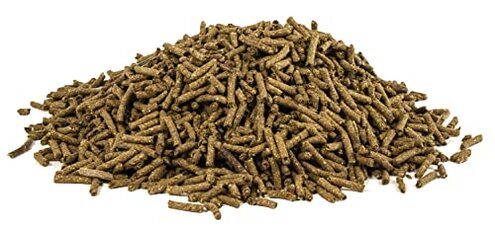
- Cause: pellets seem unpalatable to many horses unless mixed with sweet feed or molasses.
- Impact: refusal adds wasted product and extra feeding prep time.
- Hidden need: many buyers must add flavoring, which is a surprise extra step compared to typical supplements.
Are dosage and freshness reliable out of the bag?
- Label worry: bulk 4 lb bag users reported stale pellets after partial use.
- Storage tip: freshness problems appear after weeks of storage and repeated opening.
- Measurement problem: pellets vary in size, making consistent scooping harder than powdered alternatives.
- Attempted fixes: owners shift to single-serve or freeze portions to preserve freshness.
- Fixability: single-serve options reduce waste but raise per-serving cost.
- Category contrast: more packaging complaints than typical mid-range supplements, which use resealable or pre-measured packs.
Is the price justified given the results and effort?
- Value hit: many buyers say the cost is not justified when relief is inconsistent.
- Warranty note: a one-year manufacturer warranty exists but buyers report mixed responsiveness.
- Effort cost: extra steps like mixing or portioning add labor and time each day.
- Replacement cost: wasted feed from refusal increases ongoing expense.
- Comparison: this product can be less forgiving than typical mid-range options that are more readily accepted.
- Support friction: some users find manufacturer contact slower than expected for resolving issues.
- Regret intensity: this is a secondary but persistent complaint that affects perceived value.
Illustrative excerpts
Illustrative: "My mare showed no itch improvement after three weeks of daily feed." — primary pattern
Illustrative: "She spat out the pellets unless I mixed molasses in." — secondary pattern
Illustrative: "Bag went stale fast when not used up quickly." — edge-case pattern
Who should avoid this
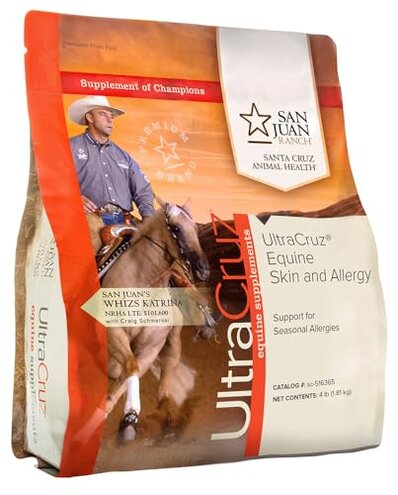
- Owners needing fast relief: avoid if you require clear symptom reduction within weeks.
- Horses that are picky: avoid if your horse rejects unflavored pellets and you don’t want extra prep.
- Low-use buyers: avoid if you feed infrequently or store opened bulk bags long-term.
Who this is actually good for
- Experimenters: good if you will test and tolerate a multi-week trial to judge effect.
- Mixing-friendly owners: good if you plan to mix pellets with flavored feed to ensure acceptance.
- High-use stables: suitable if you will use the bag quickly and avoid freshness issues.
Expectation vs reality
- Expectation: reasonable for this category to need several weeks before results.
- Reality: many buyers report little to no improvement after the expected trial period.
- Expectation: supplements are usually palatable or easy to mix.
- Reality: higher-than-normal refusal rates force extra prep and flavoring.
Safer alternatives
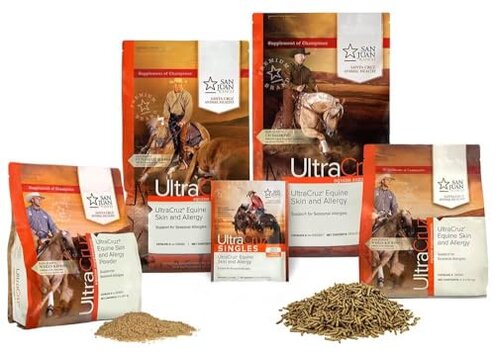
- Choose single-serve: pick pre-measured packets to avoid freshness and dosing variability.
- Prefer powder form: powders mix more evenly into feed and reduce rejection risk.
- Check palatability claims: select products explicitly labeled as flavored for easier acceptance.
- Trial small sizes: buy small or sample sizes first to test effectiveness before larger purchases.
The bottom line
Main regret is paying for a product that commonly fails to deliver noticeable allergy relief while also requiring extra feeding steps.
Risk level exceeds typical category expectations because reduced effectiveness and palatability combine to raise cost and effort.
Verdict avoid if you need dependable, ready-to-feed seasonal skin relief; consider flavored or single-serve mid-range alternatives instead.
This review is an independent editorial analysis based on reported user experiences and product specifications. NegReview.com does not sell products.