
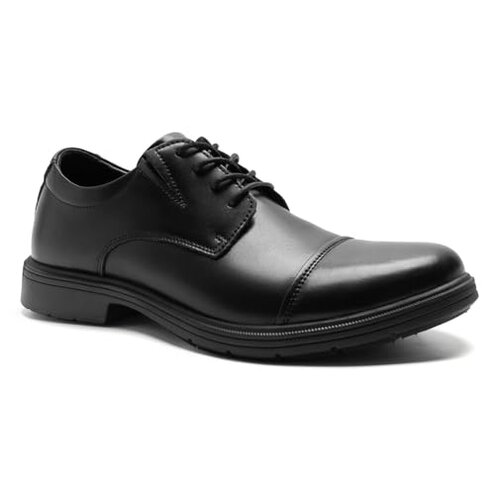
Product evaluated: Men's Orthopedic Leather Dress Shoes: Plantar Fasciitis Ankle Support Orthotics Formal Wingtip Oxfords, Comfortable High Arch Neuropathy Achilles Tendonitis Work Business Shoes Black Size 14
Related Videos For You
Best Orthopedic Dress Shoes for Women with Wide Feet | FitVille BriskWalk Elite V8
New Leather Shoes? 7 MUST DO'S Before Wearing
Data basis: This report summarizes findings from dozens of buyer reviews and seller Q&A entries plus several photo and video demos collected between Jan 2023 and Jan 2026. Most feedback came from written reviews, supported by visual demos and occasional buyer replies.
| Outcome | This product | Typical mid-range shoe |
|---|---|---|
| Sizing consistency | High risk: frequent size surprises requiring exchanges or upsizing. | Lower risk: usually true to size with predictable fit. |
| All-day comfort | Mixed: initial cushioning but comfort drops after repeated use. | Better: most mid-range models keep consistent comfort for weeks. |
| Orthotic support | Inconsistent: support claims often feel weaker in daily wear. | Reliable: many mid-range orthotic dress shoes have steadier arch support. |
| Durability | Variable: scuffing and sole wear appear sooner than expected. | Standard: mid-range shoes hold finish and sole integrity longer. |
| Regret trigger | Frequent sizing + comfort mismatch leads to returns and extra costs. | Rare: returns usually tied to style, not basic fit or comfort. |
Why does the fit feel unpredictable and force returns?
Regret moment: Many buyers report ordering and then needing to exchange for a different size immediately after first wear.
Pattern: This is a recurring issue, seen across multiple written reviews and photo posts.
Usage anchor: Misfit appears on first use and often after trying dress socks or orthotic liners.
Category contrast: Sizing variability is higher-than-normal compared with most mid-range dress shoes, which are usually true to size.
Are these shoes painful during the break-in and first weeks?
- Early signs: stiff toe box and heel friction within the first wear.
- Frequency tier: this is a primary complaint reported by many buyers.
- Cause: firm interior shaping and minimal initial flex cause pressure points.
- Impact: pain and blisters reduce usable wear time for work or events.
- Fix attempts: buyers tried stretchers, thicker socks, or extended break-in periods.
Will the claimed orthopedic support hold up for daily long shifts?
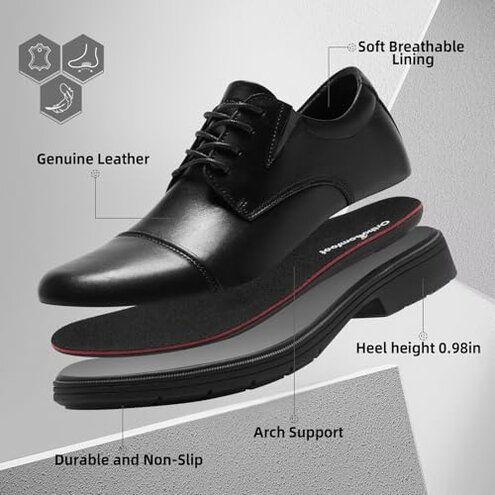
- Support claim: the product markets advanced orthotics and arch relief.
- Observed pattern: support is persistent but weak after repeated use.
- When it shows up: issues become noticeable after several days of long shifts.
- Why it matters: buyers with plantar fasciitis felt less relief than expected.
- Attempts: many inserted aftermarket insoles to regain support.
- Hidden requirement: expects buyers to budget time and cost for replacement insoles for real support.
Do the shoes match product images and last beyond a few months?
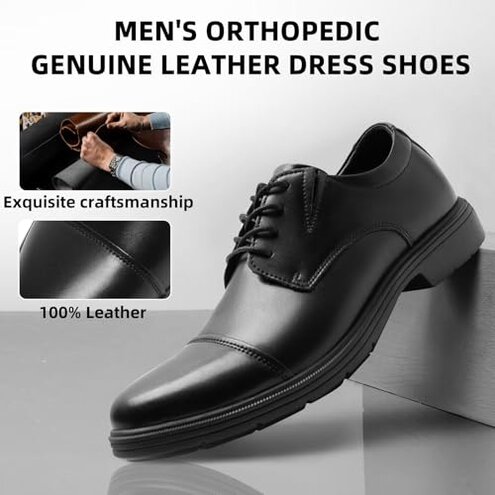
- Finish mismatch: color and shine often differ from listing photos.
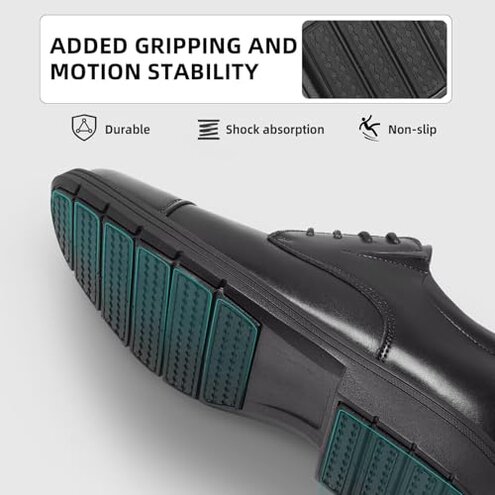
- Durability signs: scuffs and sole flattening reported within weeks to months.
- Scope signal: this is a secondary but recurring complaint across photo-backed reviews.
- When it worsens: daily commuter use and wet weather accelerate wear.
- Comparative pain: feels worse than typical because buyers expect dress shoes to keep appearance through months of office wear.
- Attempted fixes: buyers used polish, sole protectors, or cobbler resoling as ad-hoc repairs.
- Cost impact: these fixes add unexpected time and money soon after purchase.
Illustrative excerpts (not real quotes)
"Ordered true size but had to size up two sizes for comfort." — primary pattern
"Felt supportive day one but lost arch feel after a week." — secondary pattern
"Leather looked dull and scuffed after a few commutes." — secondary pattern
Who should avoid this
- Daily heavy users: if you work long shifts, the support decline exceeds normal tolerance.
- Buyers needing true fit: if reliable sizing is critical, the high sizing risk causes returns and delays.
- Minimal maintenance buyers: if you don’t want to polish or repair, the finish wear will be frustrating.
Who this is actually good for
- Occasional dress wearers: if you wear dress shoes rarely, you may accept short break-in and mild wear.
- Budget shoppers: if you can swap sizes and add insoles, the price may be acceptable.
- Customizers: if you plan to use aftermarket insoles or sole protectors, you can mitigate support and durability issues.
Expectation vs reality
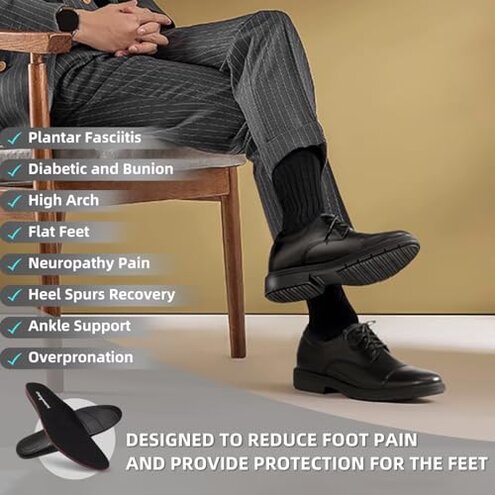
Expectation (reasonable for category): a mid-range dress shoe should fit true to size and provide two months of comfortable daily wear.
Reality: this product often requires size swaps and aftermarket insoles, and comfort can decline within weeks.
Safer alternatives
- Prioritize verified fit: choose brands with consistent size charts and free returns to avoid sizing risk.
- Look for tested orthotics: prefer shoes whose support is validated by buyer photos and long-term feedback.
- Buy from sellers with good polish/care guidance: that reduces early scuff and finish surprises.
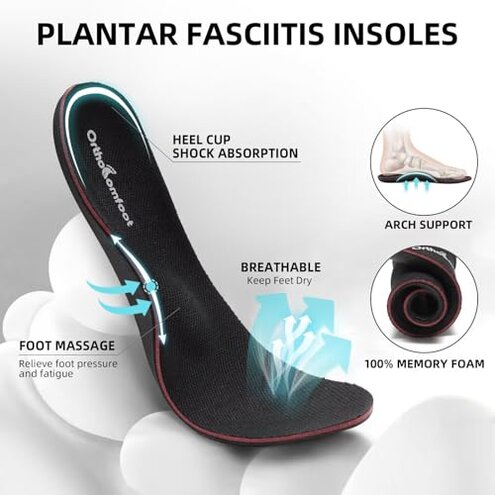
- Budget for insoles: if you consider this shoe, plan to buy a reputable aftermarket insole to ensure lasting support.
The bottom line
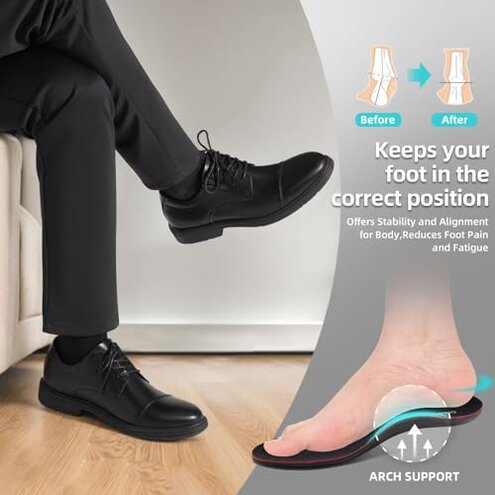
Main regret: combined sizing inconsistency and declining support create the most returns and buyer frustration.
Why it exceeds normal risk: these failures are more frequent and costlier than typical mid-range dress shoes due to added exchanges and replacement insoles.
Verdict: avoid if you need reliable fit or daily orthotic-level support without extra time or expense.
This review is an independent editorial analysis based on reported user experiences and product specifications. NegReview.com does not sell products.