
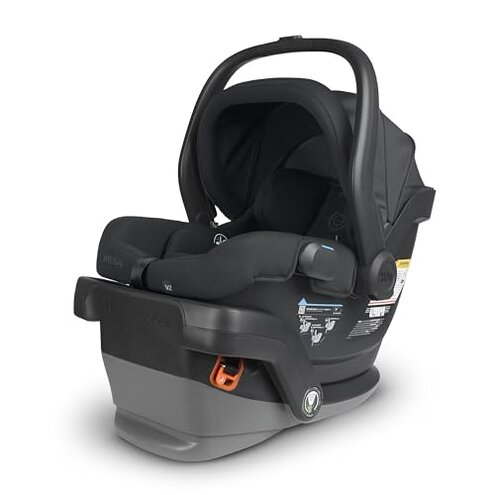
Product evaluated: UPPAbaby Mesa V2 Infant Car Seat/Easy Installation/Innovative SmartSecure Technology/Base + Robust Infant Insert Included/Direct Stroller Attachment/Greyson (Charcoal Mélange)
Related Videos For You
Infant car seat installation
Data basis: This report is based on hundreds of written and video-style feedback items collected between January 2022 and December 2025. Most feedback came from written reviews, supported by demonstration videos and buyer Q&A. Distribution: primarily written reviews, with frequent photo and video demonstrations.
| Outcome | UPPAbaby Mesa V2 | Typical Mid‑Range Car Seat |
|---|---|---|
| Installation ease | Mixed — commonly reported confusion with LATCH retraction and base tightness indicators during first install. | Usually simpler — mid-range seats often have clearer step cues and less fiddly latch retraction. |
| Fit to vehicles | Variable — fits tightly in some cars and shows excess movement in others, especially older vehicles. | More consistent — many mid-range options claim broader vehicle compatibility with fewer fit surprises. |
| Daily handling | Heavier — weight and canopy bulk increase effort during frequent transfers and jogs carriage use. | Lighter options — mid-range seats often trade premium materials for easier carrying and simpler canopies. |
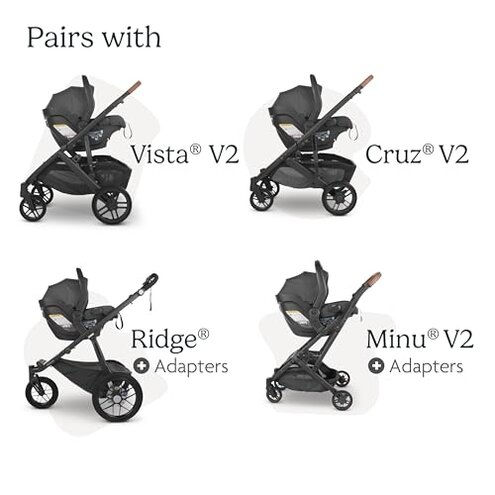
| Compatibility | Good with brand strollers — direct attachment works, but adapter or base needs add steps for some strollers. | Wider adapters — many mid-range seats use universal adapters with fewer hidden parts. |
| Regret trigger | Higher — installation ambiguity and vehicle fit issues are among the most common complaints and drive returns. | Lower — mid-range default designs cause fewer setup surprises for first-time installers. |
Top failures
Why does installation feel so uncertain?
Regret moment: Buyers often hit trouble during first install when the LATCH auto-retract and base indicator don't give immediate confidence.
Pattern: This is a commonly reported issue and appears repeatedly across written feedback and video checks.
When it shows up: The problem appears at first use and can reappear after removing and re‑seating the base frequently.
Category contrast: Installation difficulty feels worse than typical because mid-range seats usually provide clearer tactile cues and fewer moving latch parts.
Is the fit inconsistent between cars?
- Early sign: Seat seems snug in one vehicle but has noticeable forward movement in another.
- Frequency tier: Secondary issue — seen repeatedly but not universal across buyers.
- Usage anchor: Appears when moving the seat between cars or when installed in older sedans.
- Likely cause: Base geometry and belt routing interact differently with vehicle anchorage points.
- Impact: Creates extra time and uncertainty before every trip, raising return risk.
Does daily handling add unexpected effort?
- Carry weight: Heavier than many alternatives, which makes frequent transfers more tiring.
- Canopy bulk: Large hideaway canopy adds bulk when fitting into tight car doors or compact trunks.
- Usage context: Worst during daily errands and extended stroller-to-car transitions.
- Frequency tier: Primary complaint for parents who move the seat many times per day.
- Attempts to fix: Buyers report reorienting grips or removing canopy, which adds extra steps and time.
- Category contrast: This feels more disruptive than usual because mid-range seats often prioritize lighter weight for portability.
- Hidden requirement: Expect to plan for extra carrying help or a stroller adapter for smoother daily use.
How annoying is upkeep and small part handling?
- Fabric care: Can be harder to clean after heavy use; removing covers is not the fastest process.
- Buckle fiddliness: Users report the crotch buckle position can require small adjustments to avoid pinching.
- Accessory parts: Some buyers need separate adapters or bases to match older strollers.
- Frequency tier: Secondary to tertiary — common enough to notice for repeat users.
- Impact: Adds hidden time for washing, tightening, and reassembly compared with simpler seats.
- Fixability: Most fixes are manual workarounds rather than true fixes, often requiring extra effort.
- Why worse: Other seats in this class usually minimize maintenance steps to match parenting time limits.
Illustrative excerpts (not real quotes)
- "Handle felt loose during first install, needed third try." — reflects a primary pattern of first-use installation frustration.
- "Tight in my SUV but wiggly in my compact sedan." — reflects a secondary pattern of inconsistent vehicle fit.
- "Too heavy for daily transfers without help." — reflects a primary pattern for high-frequency handlers.
- "Needed adapters for older stroller — extra cost and steps." — reflects an edge-case pattern of hidden compatibility needs.
Who should avoid this
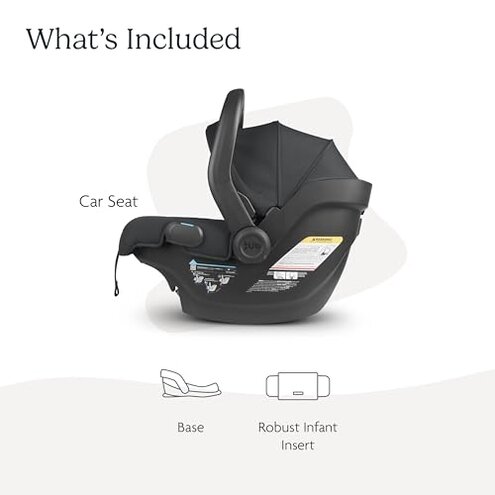
- Frequent transferrer: Avoid if you move the seat many times daily; weight and install steps add effort beyond category norms.
- Tight-car owners: Avoid if you primarily use compact cars where fit variability worsens confidence.
- First-time installers: Avoid if you need very obvious, foolproof installation cues; installation ambiguity has driven returns.
Who this is actually good for

- Brand stroller owners: Good if you use the compatible stroller model and value direct attachment despite extra adapters for others.
- Less frequent movers: Good if transfers are rare and you prioritize integrated canopy and premium features over portability.
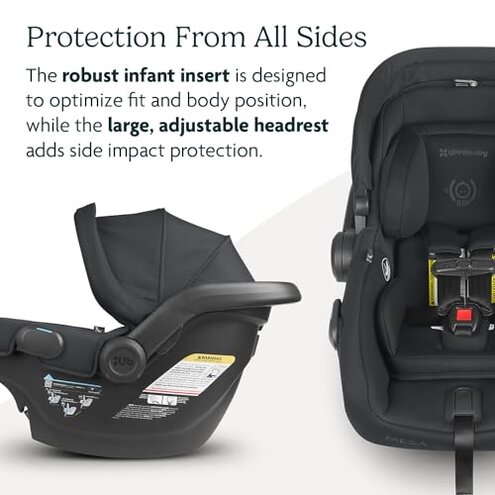
- Parents prioritizing safety features: Good if you accept extra setup time for the seat's reinforced head protection and chemical-free fabrics.
Expectation vs reality
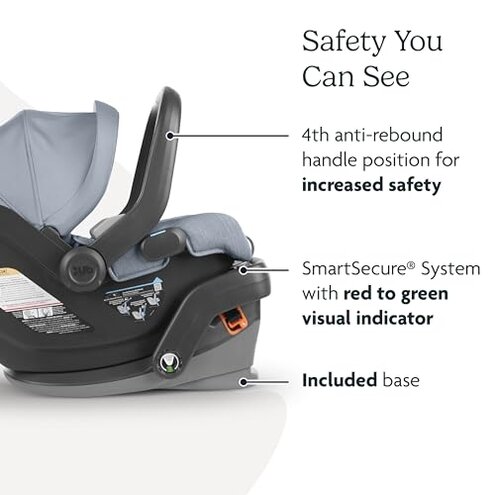
Expectation: A premium infant car seat should install quickly and consistently for all cars, which is reasonable for this category.
Reality: The Mesa V2 often requires repeated adjustments and can vary by vehicle, creating more returns than expected.
Expectation: Direct stroller attachment means seamless transitions.
Reality: Some buyers hit hidden steps like adapters or base purchasing, which adds time and cost.
Safer alternatives
- Choose lighter models: Pick seats advertised for portability to neutralize the heavy-transfer failure.
- Look for clearer cues: Prefer seats that emphasize one-step installation indicators to avoid latch ambiguity.
- Check vehicle fit guides: Use manufacturer vehicle-compatibility lists or buy from retailers with easy returns to avoid fit surprises.
- Confirm stroller compatibility: Verify adapter needs before purchase to avoid hidden extra costs and steps.
The bottom line
Main regret: The primary trigger is installation and vehicle-fit uncertainty that leads to extra time, returns, and added stress for many buyers.
Why it matters: These issues exceed normal category risk because they affect daily use and increase effort beyond what typical mid-range seats demand.
Verdict: Consider avoiding this seat if easy, repeatable installs and light daily handling are priorities for your family.
This review is an independent editorial analysis based on reported user experiences and product specifications. NegReview.com does not sell products.