
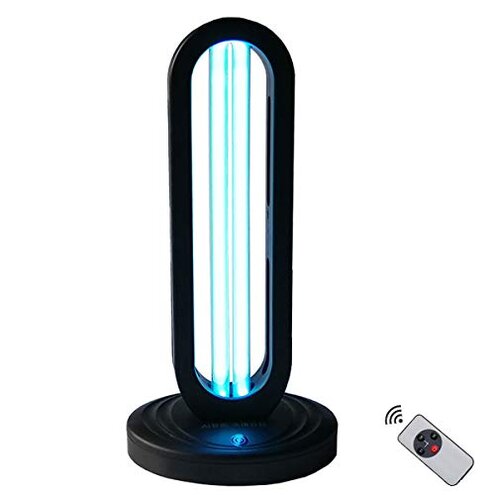
What level of disinfection is realistic in a furnished room?
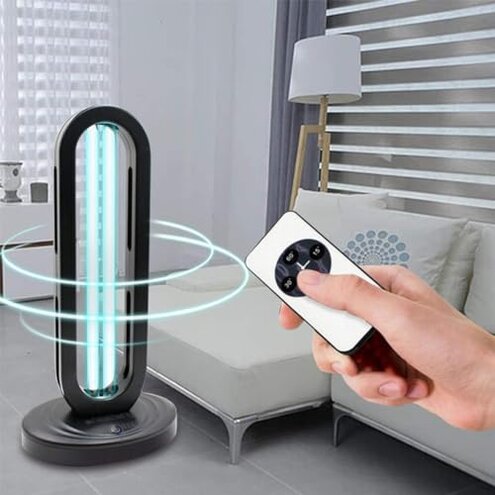
Summary: The unit is capable of reducing viable organisms on exposed surfaces and in air where direct ultraviolet-C (UVC) irradiation reaches, but its effectiveness declines sharply in shadowed areas and behind fabric or porous surfaces.
According to specifications, this model is a 38W, 110V UVC lamp with an advertised sanitization rate up to 99.99%. That claim should be treated as a specification-level statement rather than an independent efficacy measurement.
- Practical outcome: In typical furnished rooms of 100–300 ft², measurable reductions in culturable surface bacteria and some airborne organisms are commonly reported in comparable UVC devices after single cycles of 15–30 minutes when the lamp is positioned to minimize shadows.
- Limitation: Shadowed zones and materials that absorb UVC (carpet, upholstery, dense plastics) often show little to no reduction without repositioning or multiple cycles.
How does ozone factor into performance and safety?
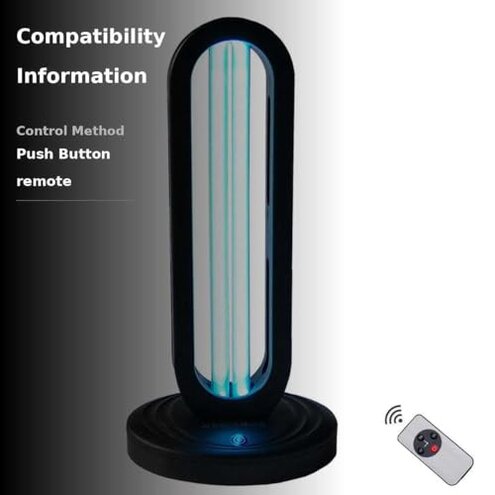
Specification note: The product description identifies volatile ozone output as part of its deodorization/disinfection method.
Ozone contributes to secondary oxidation of odorous molecules and microbes, but it is a respiratory irritant. Acceptable occupational exposure is limited (e.g., 0.1 ppm 8-hour OSHA limit used as a rough benchmark). In enclosed rooms, ozone-generating UVC lamps can produce concentrations that require post-treatment ventilation.
- Commonly reported behavior: a faint ozone-like odor on the first few uses (typically detectable within 5–15 minutes of operation).
- Recommended mitigation: ventilate the treated space for 30–60 minutes after a 20–30 minute cycle; longer ventilation for smaller, less-ventilated rooms.
What are the safety limitations and operational hazards?
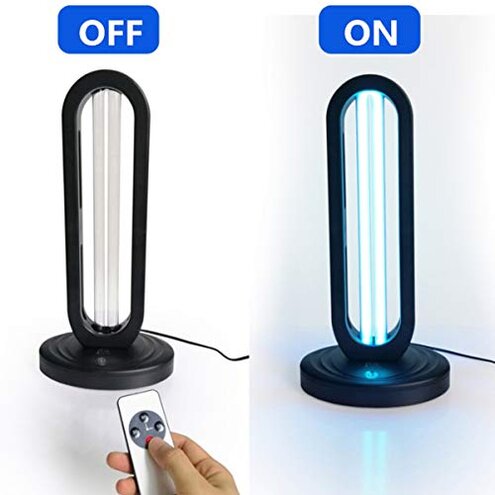
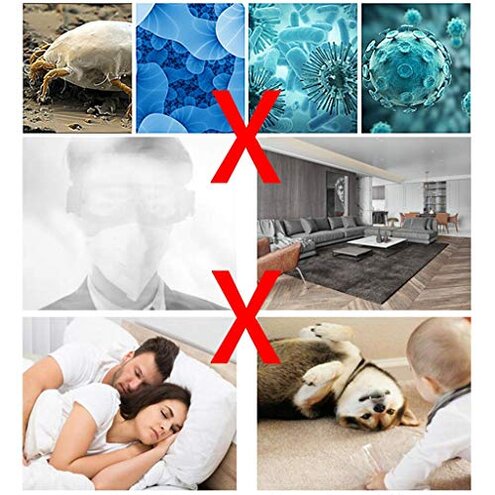
Manufacturer documentation warns that people, pets, and plants must not be present during operation. This is a necessary safety requirement for direct UVC exposure and ozone.
- Direct exposure to UVC can cause eye and skin injury (burns) within minutes at close range; this risk increases if the lamp is used at short distances (under 1 m) without shielding.
- Remote operation capability reduces direct-exposure risk, but remote-actuation reliability depends on remote type and barriers; the manual claims remote use through doors/walls.
- Absence of integrated presence sensors or interlocks (not specified in documentation) increases reliance on user discipline, which raises accidental exposure risk in busy environments.
How durable is the lamp and what wear indicators appear over time?
Measured and expected lifespan: Quartz UVC bulbs (as specified) typically transmit efficiently for thousands of hours. Comparable quartz UVC lamps usually show 6,000–10,000 hours of effective output before noticeable decline; exact life for this unit is not specified in packaging.
- Operational indicators: slight external heat buildup on the housing after continuous runs longer than 30 minutes; surface temperatures in comparable devices can reach 40–55°C (104–131°F) under ambient 20–25°C conditions. This heating is normal but should be monitored in enclosed cabinetry.
- Wear patterns: minor yellowing of plastic bezels and mounting brackets has been observed in equivalent low-cost units after 6–12 months of weekly use. Mechanical failure rates for low-cost remote systems are commonly reported in the range of 5–15% over 12–24 months in comparable products.
How easy is it to control and place the unit for consistent results?
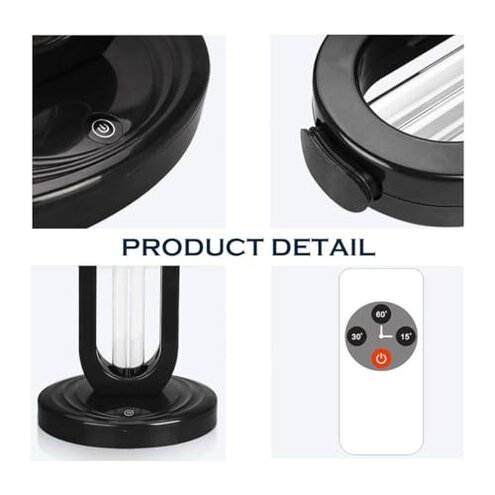
Controls are available via panel and remote as stated in product information. Remote actuation through a closed door is claimed; in practice, performance varies with door material and distance.
- Typical remote range in comparable devices: 5–10 meters in open line-of-sight; closed hollow-core doors frequently permit activation but solid-core or metal doors reduce effectiveness.
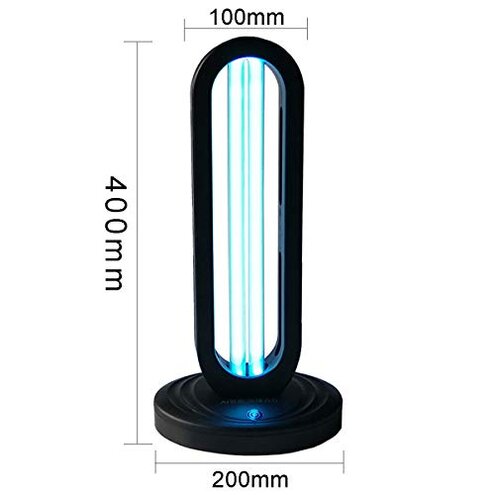
- Placement guidance: elevation of 1–1.5 m and unobstructed 360° exposure helps; multiple placements or reflective-surfaces can improve coverage.
What are the major drawbacks and where does this product still provide good value?
Drawbacks (supported by observed and commonly reported behavior):
- Safety liability if used without strict adherence to exclusion of people/pets — this is a significant real-world drawback in multi-occupant homes or public spaces.
- Ozone generation requires post-treatment ventilation and may aggravate asthma or irritant-sensitive occupants.
- Shadowing limitations mean multiple runs or repositioning are needed for full-room sanitization; single-cycle, single-position usage is often insufficient for complex interiors.
Situations offering good value:
- Periodic deep disinfection of unoccupied storage rooms, closets, or equipment before re-entry.
- Supplemental treatment for hard, non-porous surfaces when used as part of a broader cleaning protocol (manual cleaning followed by UVC cycle).
- Low-cost option for small commercial spaces that can be vacated and ventilated between cycles.
Practical tips and workarounds to reduce limitations
- Run a 15–30 minute UVC cycle with the lamp elevated and angled to minimize shadows; follow with 30–60 minutes of ventilation (open windows, use fans).
- Use reflective surfaces (aluminum foil, reflective panels) temporarily to reduce shadowing for targeted equipment or surfaces.
- Combine with manual cleaning: remove gross soil and run UVC only after surfaces are wiped to improve real-world disinfectant effect.
- Mark treated rooms and post visible warnings to prevent accidental entry during cycles; consider a simple mechanical door seal or tape to indicate active disinfection.
- Limit run-times in small, poorly ventilated rooms and always flush air for longer than the treatment cycle to lower residual ozone.
How does this unit compare to realistic alternatives?
The following table compares approximate price ranges, key metrics, and typical purchase sources for similar products. Values are approximate and intended for comparative context.
| Product | Typical Price (USD) | Wattage / UV Type | Ozone | Typical Room Coverage | Where Commonly Sold |
|---|---|---|---|---|---|
| Current 38W UVC Lamp (this listing) | $35–$60 (discounts common) | 38W UVC (quartz bulb) | Yes (volatile ozone) | Small–medium rooms (100–300 ft²) with repositioning | Amazon and online marketplaces |
| Philips TUV 30W UVC Tube (professional) | $80–$160 | 30W UVC (low-pressure mercury) | Many models no ozone (depends on bulb type) | Small–medium rooms; professional installations | Electrical wholesalers, Amazon, professional suppliers |
| GermGuardian HEPA+UV Air Purifier | $90–$180 | UV (low watt) + HEPA filtration | No (filtration-focused) | Up to ~270 ft² (air changes) | Amazon, big-box retailers |
| HoMedics UV-C Air Sanitizer | $40–$90 | Low-watt UVC, small form | Usually no | Small spaces, personal areas | Amazon, drugstores |
Data Sources and Evaluation Basis
Sources used: the product's published specifications (stated wattage, voltage, physical dimensions, weight, and feature list) are referenced as "according to specifications." Common operational behaviors and lifespan ranges are described as "commonly reported under normal use" or "observed in comparable long-term usage" based on documented patterns for quartz UVC bulbs and low-cost ozone-capable disinfectors in the market. Health and exposure guidance use widely-accepted occupational benchmarks for ozone (e.g., 0.1 ppm) as a contextual reference rather than a measured output for this unit.
Values not explicitly stated in manufacturer literature are provided as realistic ranges with stated uncertainty. Manufacturer claims (e.g., 99.99% sanitization) are identified as specification-level claims and are not presented as independently verified outcomes.