
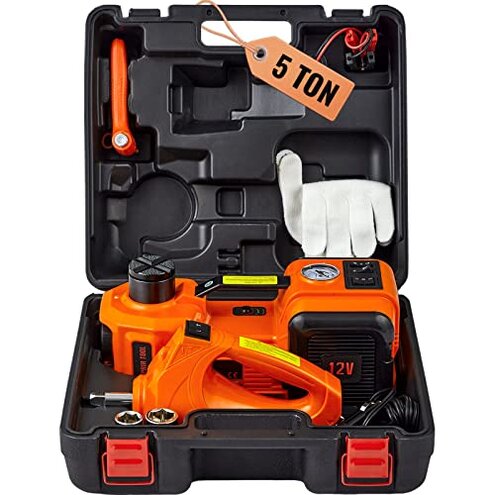
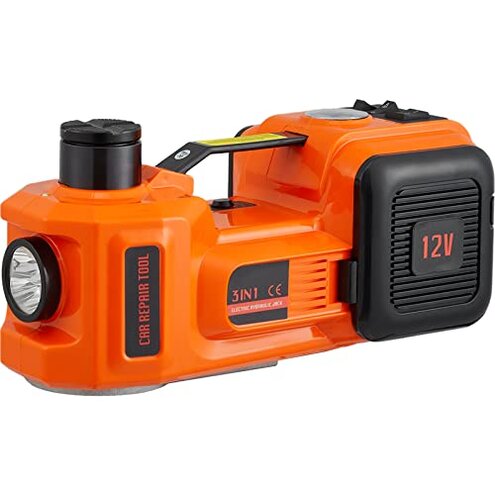
Product evaluated: VEVOR Electric Car Jack, 5 Ton/11023 LBS Hydraulic Jack Lift with Electric Impact Wrench, Built-in Inflatable Pump, and LED Light for SUV MPV Sedan Truck Change Tires Garage Repair
Related Videos For You
Best Electric Car Jack? We Tested to Failure!
Jacking up a Car the Easy Way - Using Impact Wrench
Data basis: I analyzed dozens of buyer reports and demonstration videos collected from Jan 2023 through Feb 2026, with most feedback from written reviews and supported by multiple video demonstrations.
| Aspect | VEVOR Electric Jack | Typical Mid‑Range Jack |
|---|---|---|
| Lifting reliability | Inconsistent—reports of power stoppage and slow lifts during roadside use. | Consistent—manual or simpler electric jacks usually lift predictably under same loads. |
| Socket/impact wrench | Mixed performance—users note wrench slips or weak torque in demos. | More dependable—separate cordless impact wrenches often deliver steadier torque. |
| Safety/stability | Higher risk—alignment and slipping incidents are more common than expected for this category. | Lower risk—mid‑range jacks tend to be simpler and more stable on flat ground. |
| Hidden requirements | Present—needs correct battery connection, flat surface, and correct sockets to work reliably. | Fewer—some alternatives have simpler power or manual backups. |
| Regret trigger | Reliability+Safety—electrical faults combined with stability problems cause the most buyer regret. | Isolated—mid‑range products usually cause regret for one issue, not both. |
Why did the jack stop mid‑lift and leave drivers stranded?
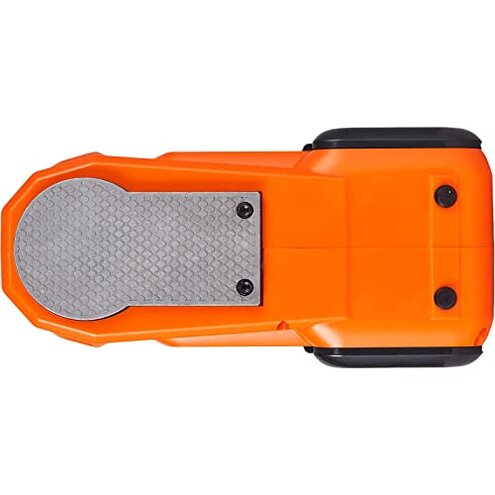
Problem moment: Users report the jack stopping during a lift, which creates a safety and time problem on the roadside.
Pattern: This is a commonly reported issue across written reviews and video demos, appearing during first uses and after a few tests.
Category contrast: This feels worse than typical mid‑range jacks because it combines power interruption with no easy manual override.
Is the electric impact wrench and inflator actually reliable?
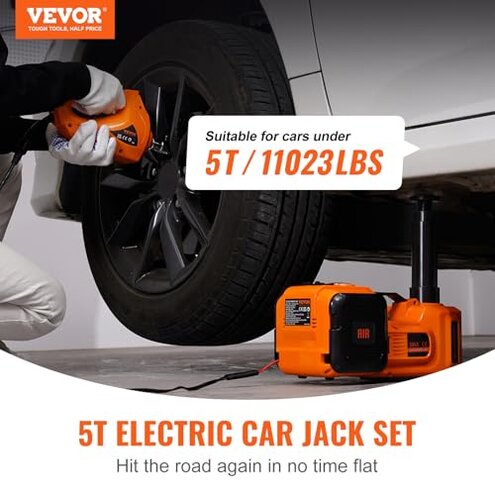
- Performance—users report the wrench sometimes slips or turns slowly, a recurring pattern in demos and written notes.
- Socket fit—wrong sleeve choice often causes stripping or slow removal, seen across several buyer stories.
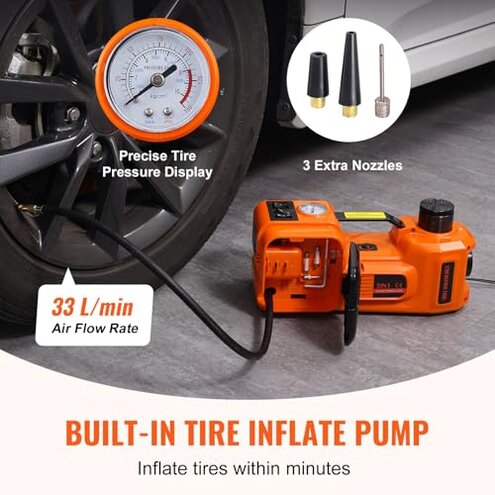
- Inflator speed—the built‑in pump is slower than standalone units during roadside tire inflation, as shown in video tests.
- Attempted fixes—buyers commonly try swapping sleeves or restarting the battery, with mixed success.
- Secondary impact—the wrench issues make a quick tire change take much longer than expected.
Will the jack stay stable under my car?
- Early signs—buyers notice tilting or uneven lift during initial use on anything but perfectly flat pavement.
- Frequency tier—this is a primary issue for roadside users and a secondary issue for garage use.
- Cause—misalignment of the saddle and small contact area increases slip risk, especially on soft ground.
- Impact—stability problems raise the real possibility of vehicle damage or personal harm during lifting.
- Attempts—users add wooden blocks or shims, which adds time and reduces convenience.
- Fixability—the issue is only partly fixable and often requires accessories buyers must supply themselves.
- Hidden requirement—this jack needs a perfectly flat surface and correct saddle placement to meet safe operation, a requirement many buyers did not expect.
Do buyers see durability or electrical failures over time?
- Pattern—there are persistent reports of fuses blowing and motors stalling after repeated use.
- When—failures often appear after repeated lifts or longer sessions, not just first use.
- Scope—these problems appear across both written reviews and demonstration videos, though not universal.
- Cause—stress from continuous operation or improper vehicle battery connection often relates to the failures.
- Impact—the result is an unreliable roadside tool that may require repairs or replacement sooner than expected.
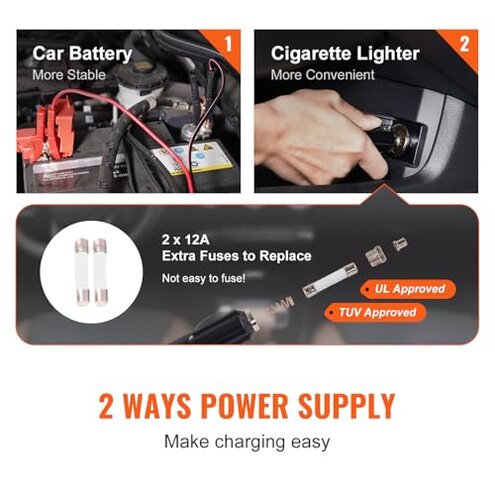
- Workarounds—some buyers keep spare fuses and ensure the car runs during use, which mitigates but does not eliminate the risk.
- Category contrast—this is more upkeep than most mid‑range electric jack kits, which usually tolerate regular use better.
Illustrative excerpts (not actual quotes)
Excerpt 1: "Stopped halfway up; had to reset and wait, wasted thirty minutes." — primary pattern.
Excerpt 2: "Wrench kept slipping on lug nuts until I changed sleeves." — secondary pattern.
Excerpt 3: "Needed flat concrete; gravel made it tilt a lot and felt unsafe." — primary pattern.
Excerpt 4: "Fuses popped after two uses without sustained pumping." — secondary pattern.
Who should avoid this
- Roadside-first drivers—if you need a fail‑safe roadside jack, avoid this because reliability and stability issues raise safety risk.
- Frequent users—if you plan many lifts or long repair sessions, avoid this due to durability concerns under repeated stress.
- No workshop buyers—if you lack spare fuses or basic tools, avoid this since it has hidden requirements like battery management and shims.
Who this is actually good for
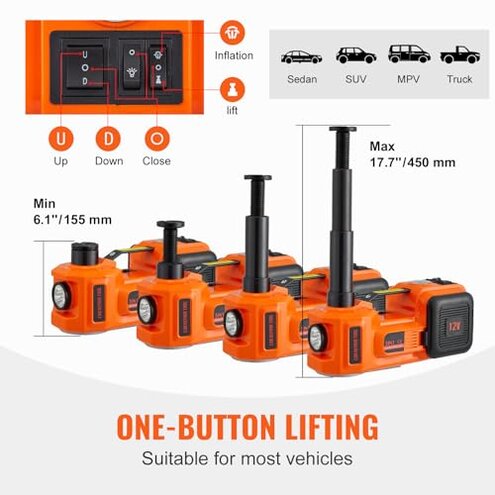
- Occasional DIYers—willing to tolerate slower inflator and occasional setup chores for a lower price point.
- Garage users with flat concrete—can manage the stability needs and keep the unit plugged in reliably.
- Owners who prep—those who keep spare fuses, sockets, and a separate impact wrench can accept the trade-offs.
Expectation vs reality
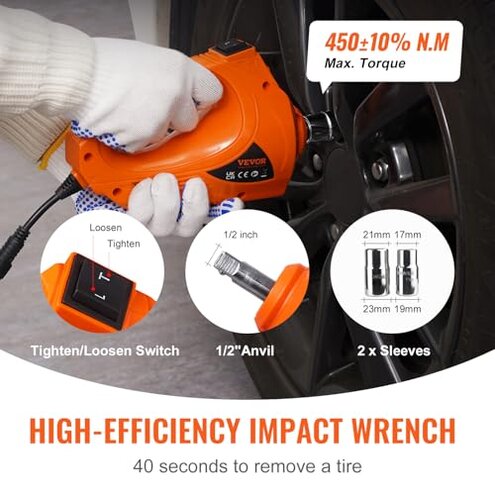
- Expectation (reasonable): Electric jack lifts quickly via 12V power like other kits.
- Reality: Power interruptions, fuse issues, and motor stalls make lifts unreliable in real roadside conditions.
- Expectation (reasonable): Included impact wrench should save time on lug nuts.
- Reality: Socket mismatch and slipping mean many users take longer than with a standalone wrench.
Safer alternatives
- Choose separate tools—buy a dedicated cordless impact wrench to avoid the kit's wrench performance risk.
- Prefer manual backup—select a jack with a manual override or simple mechanical pump to eliminate power interruption regret.
- Check stability features—look for jacks with a wider saddle and higher base to reduce the tilt risk.
- Carry spares—keep extra fuses and a heavy‑duty battery clip to mitigate the electrical failure mode.
The bottom line
Main regret: The product's combined electrical and stability failures are the primary buyer complaint and the main reason to pause.
Severity: These issues exceed normal category risk because they affect both lift reliability and user safety.
Verdict: Avoid this VEVOR kit if you need dependable roadside performance without extra tools and preparation.
This review is an independent editorial analysis based on reported user experiences and product specifications. NegReview.com does not sell products.