
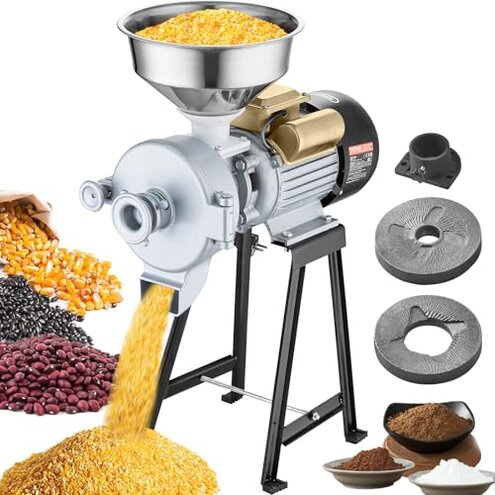
Product evaluated: VEVOR Electric Grain Mill Grinder, 3000W Spice Grinders, Commercial Corn Mill with Funnel, Thickness Adjustable Powder Machine, Heavy Duty Feed Flour Cereal Mill Wheat Grinders, Dry & Wet Grinder
Related Videos For You
How to Mill Grains with the KitchenAid Grain Mill
How to clean a STICKY grinder!
Data basis: This report uses dozens of buyer feedback points collected from written comments and photo or video-backed demonstrations between 2024 and 2026. Most feedback came from written experiences, with supporting clips showing setup, grinding results, and cleanup, which helps separate first-impression complaints from problems that show up during regular use.
| Buyer outcome | This grinder | Typical mid-range alternative |
|---|---|---|
| First-use effort | Higher setup friction and more trial-and-error before useful results | Lower learning curve for basic dry grinding |
| Mess control | Higher-risk for powder spread and wet-use cleanup burden | Usually easier to contain and wipe down |
| Noise comfort | More disruptive during active grinding | Commonly loud, but often less punishing for short sessions |
| Consistency | Less predictable across grain types and thickness settings | More forgiving with common dry ingredients |
| Regret trigger | Hidden effort after setup, tuning, and cleanup outweighs speed | Lower regret if you just need basic repeatable grinding |
Did you expect quick grinding, but got a messy workflow instead?
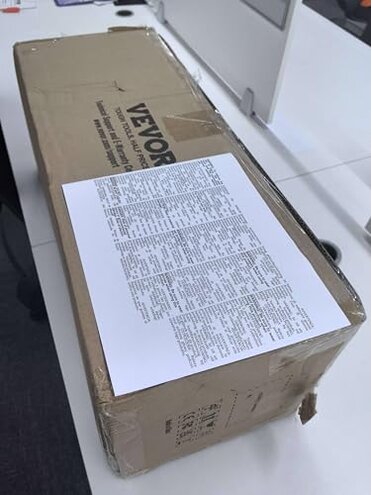
This is a primary issue. The regret moment usually appears during daily use, not on the product page. Buyers expecting fast flour or spice prep often find that speed comes with extra powder spread, splatter risk in wet use, and more cleanup than expected.
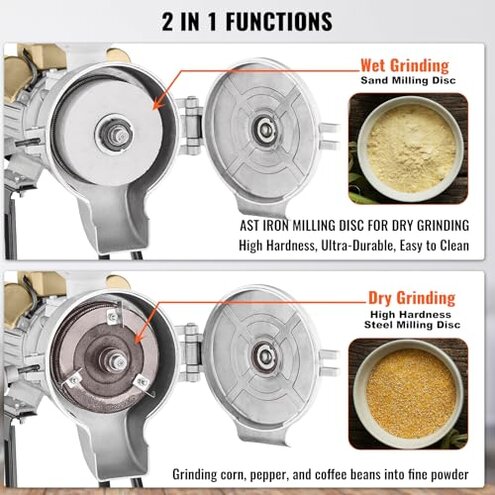
This pattern appears repeatedly. Some mess is normal for grain mills, but this tends to feel worse than typical because the machine is marketed for both wet and dry work, which adds extra switching and cleanup steps.
- Early sign: Fine material starts escaping the work area once grinding begins, especially when feeding is not perfectly controlled.
- Frequency tier: This is among the most common complaints because it shows up in both dry grinding and wet pulp use.
- Usage moment: It becomes more noticeable after setup when you try longer runs or process more than a small batch.
- Impact: The extra cleanup adds time and frustration, which cuts into the main reason people buy a powered mill.
- Buyer attempts: Users often try slower feeding, smaller batches, or changing grind thickness to contain the mess.
- Fixability: Partly fixable, but usually only with a better prep area and more careful technique.
- Hidden requirement: You may need a dedicated workspace, which is more than many home buyers expect at this price.
Are you counting on simple settings for different grains?
- Pattern: In aggregated feedback, consistency issues are a recurring secondary problem rather than a one-off defect story.
- When it shows up: It often appears after first use when buyers switch between corn, wheat, spices, beans, or soaked ingredients.
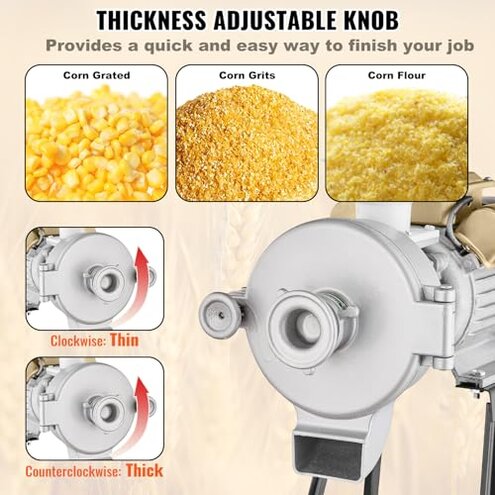
- What buyers notice: The output can feel less predictable than expected, even with the thickness adjustment available.
- Why it stings: In this category, some tuning is normal, but this model seems less forgiving when ingredient texture or moisture changes.
- Practical cost: That means more test batches, more re-grinding, or settling for a texture you did not want.
- Worsening condition: The problem gets more annoying in mixed-use households where one machine is expected to handle many ingredient types.
- Fixability: Buyers who get acceptable results usually invest extra time learning feed rate and adjustment behavior.
Will the power feel helpful, or just too loud and aggressive?
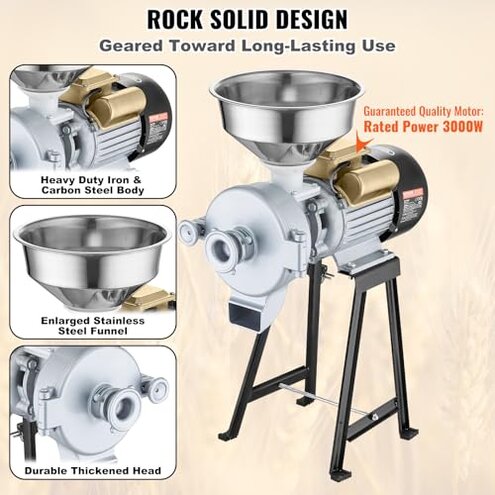
Noise is a secondary issue. It tends to show up immediately on first use, especially for home buyers moving up from smaller kitchen grinders. The machine’s heavy-duty pitch makes some users feel they bought something closer to workshop equipment than countertop help.
This is not universal. People who expect commercial-style equipment tolerate it better, but many home users find it more disruptive than expected for short indoor jobs.
The category contrast matters. Grain mills are rarely quiet, but buyers commonly expect noise to be the trade-off for speed, not a sign that the machine needs a separate space.
Do you want one machine for wet and dry jobs without extra hassle?
- Core problem: The 2-in-1 promise is appealing, but combination tools often demand more cleanup and process changes.
- Pattern signal: This appears as a persistent frustration across mixed-use buyers rather than only beginners.
- When it happens: The trouble shows up between tasks when moving from dry flour work to soaked grains or pulp-making.
- Buyer-visible effect: You spend more time cleaning and resetting than expected before the next batch feels safe or clean.
- Why it is worse than normal: Mid-range alternatives with a narrower job focus are often simpler to live with because they ask less of the user.
- Hidden requirement: This machine makes more sense if you can keep a repeatable routine for one style of use instead of constant switching.
- Fixability: The issue is manageable, but mostly by accepting that convenience is lower than the headline suggests.
- Regret point: If you bought it to replace multiple easier tools, this can become an edge-case dealbreaker.
Illustrative excerpts
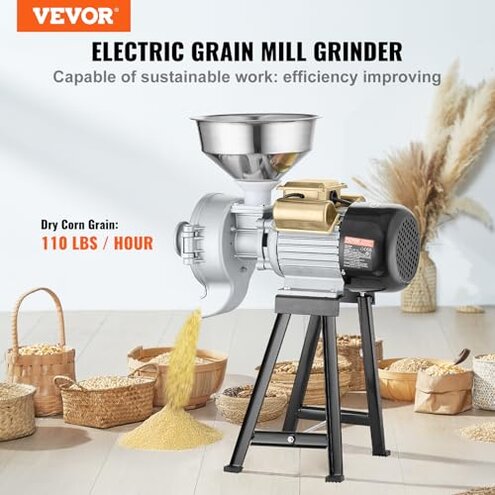
- Illustrative: “I finished fast, but the cleanup took longer than the grinding.” Primary pattern tied to mess and workflow burden.
- Illustrative: “It works, but getting the texture right took too many tries.” Secondary pattern tied to adjustment sensitivity.
- Illustrative: “This sounds more like shop equipment than a kitchen helper.” Secondary pattern tied to noise and home comfort.
- Illustrative: “Wet and dry in one machine sounded easier than it really is.” Primary pattern tied to hidden process effort.
Who should avoid this
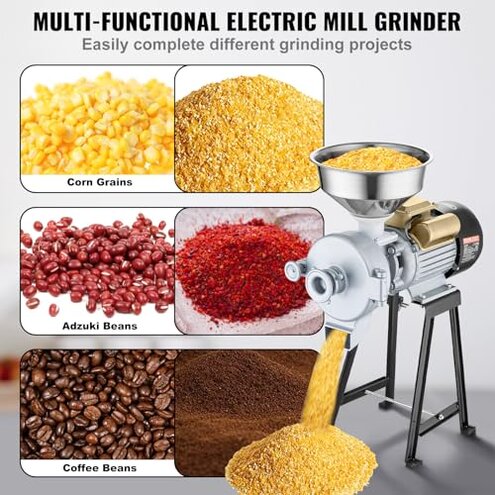
- Avoid it if you want a clean countertop experience, because the mess risk appears repeatedly during normal grinding.
- Avoid it if you need predictable results across many ingredient types without trial batches, because setup sensitivity is higher than normal.
- Avoid it if you live with noise-sensitive people, because the sound level feels more industrial than many home users expect.
- Avoid it if your main goal is one-tool convenience, because the wet-and-dry switching burden can outweigh the space savings.
Who this is actually good for
- Better fit for buyers with a garage, utility area, or dedicated prep zone who can tolerate mess in exchange for high-output grinding.
- Better fit for people mostly doing one repeatable task, like the same grain type, where the adjustment learning curve happens once.
- Better fit for users already comfortable with heavy-duty equipment noise and willing to trade comfort for speed.
- Better fit for hobby or small-scale food prep where cleanup time is accepted as part of the process.
Expectation vs reality
Expectation: A powerful grinder should save time from start to finish.
Reality: Grinding speed may be strong, but setup, containment, and cleanup can give that time back.
Expectation: A thickness adjustment should make results simple to control.
Reality: Adjustment learning often takes extra batches, especially when ingredient moisture or hardness changes.
Expectation: It is reasonable for this category to expect some noise.
Reality: The noise can feel worse than expected for home use, not just normal grinder loudness.
Expectation: A wet-and-dry machine should reduce clutter and simplify prep.
Reality: Dual-use convenience can turn into extra cleaning steps and more workflow discipline.
Safer alternatives
- Choose a dry-only mill if your main concern is mess and cleanup, because single-purpose designs usually reduce switching hassle.
- Look for enclosed-feed designs if powder spread is your dealbreaker, since they better neutralize one of this model’s main frustrations.
- Prioritize easier adjustment systems if you change ingredient types often, because that lowers the trial-and-error burden seen here.
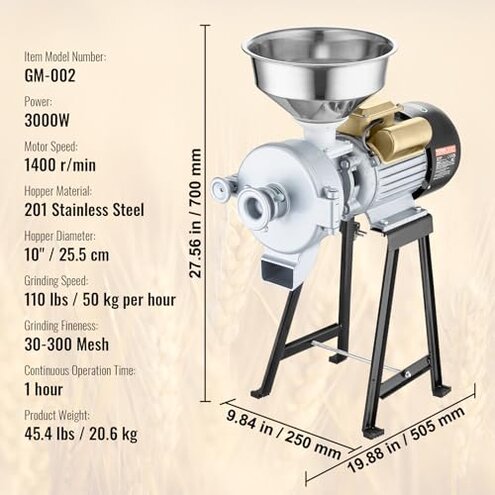
- Buy for your space by matching machine size and noise to a utility area, not a quiet kitchen, if you still want heavy-duty output.
- Consider smaller-capacity grinders if you value repeatability over raw power, because they are often easier to control and clean.
The bottom line
The main regret trigger is not simple failure to grind. It is the combination of mess, tuning, and cleanup effort that appears repeatedly once real use begins.
That exceeds normal category risk because some grinder noise and dust are expected, but the total workflow burden here can feel higher than a typical mid-range alternative. Avoid it if you want easy home use, and consider it only if you accept a more industrial routine.
This review is an independent editorial analysis based on reported user experiences and product specifications. NegReview.com does not sell products.