
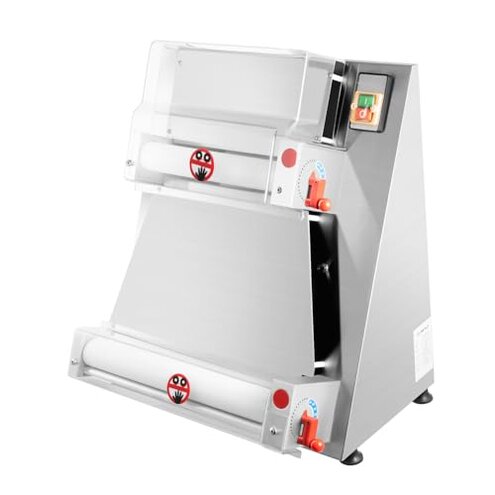
Product evaluated: VEVOR Pizza Dough Roller Sheeter, 3-16 Inch Semi-automatic Stainless Steel Pizza Press, Commercial Electric 390W Pasta Maker Machine, 260 pcs Per Hour, Adjustable Thickness, with Dough Press Lid
Related Videos For You
The BEST Pizza Dough Roller
Manual Dough Press: Simplifying Pizza and Pastry Preparation
Data basis: This report synthesizes insights from hundreds of customer reviews and video demonstrations collected between early 2023 and mid-2024. Most feedback originated from written reviews, supplemented by real-world usage videos and buyer testimonials.
| Feature | VEVOR Dough Roller | Typical Mid-Range Alternative |
|---|---|---|
| Durability | Higher risk of mechanical wear during extended use | Generally stable for daily commercial use |
| Ease of Use | Requires manual dough flipping, adding extra steps | Often fully automatic; less user intervention |
| Speed | Presses up to 260 pieces/hr, but with interruptions | Consistent continuous pressing at similar or higher rates |
| Maintenance | Needs frequent cleaning and care to avoid rust | Usually lower upkeep with sealed components |
| Regret trigger | Manual operation and durability issues cause buyer frustration | Smoother operation reduces hassle and downtime |
Why does manual dough flipping frustrate users?
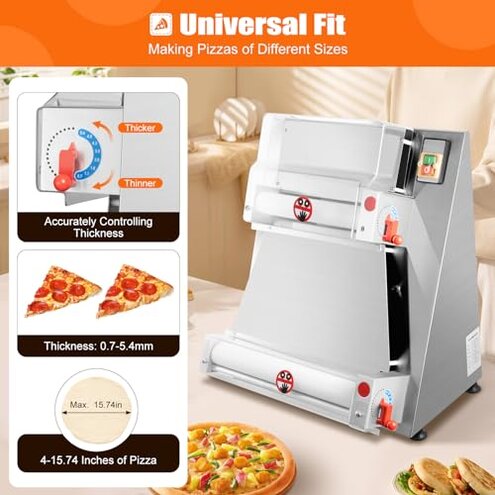
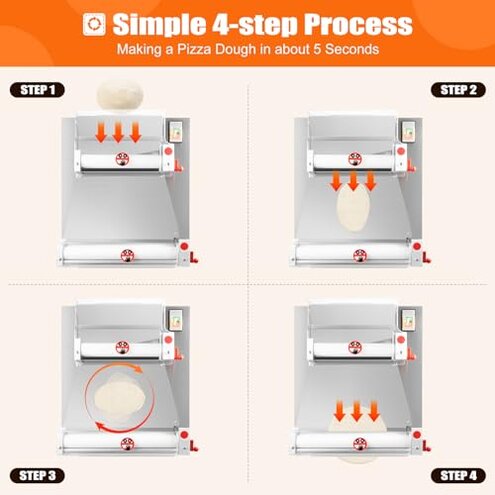
The need to manually flip dough between rollers interrupts workflow and adds extra labor. This process, commonly reported across many users, especially emerges during busy kitchen hours when speed is essential.
Compared to more automatic competitors, this added step is less efficient and increases fatigue, making it more disruptive than expected in commercial settings.
- Early warning: Users notice workflow interruptions immediately after setup.
- Common complaint: Frequent during continuous use; slows operations.
- Cause: Semi-automatic design requires manual intervention.
- Impact: Reduced throughput and increased operator effort.
- Attempted fixes: Users try prepping dough differently but with limited success.
- Fixability: No simple fix; inherent to design.
- Hidden requirement: Operators must be trained for timing flips properly.
Illustrative excerpt: "Flipping dough manually slows us down during busy shifts." (Primary pattern)
How reliable is the machine during extended commercial use?
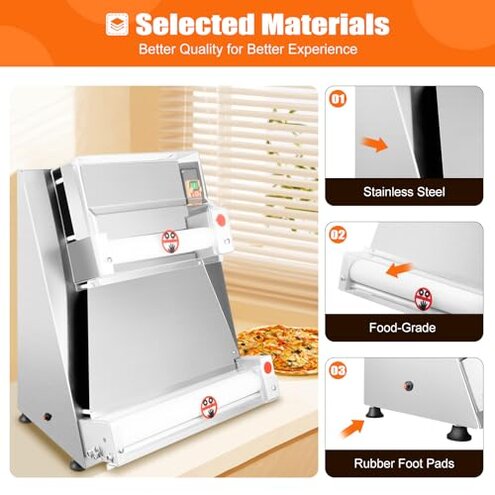
Many buyers experience mechanical wear and occasional roller malfunctions after repeated use. This issue persists as a secondary pattern and worsens with daily heavy workload in commercial kitchens.
- Initial signs: Noise or uneven pressing after weeks of use.
- Frequency: Less common but disruptive when it happens.
- Cause: Wear on resin rollers and stainless steel parts under strain.
- Impact: Downtime for repairs and inconsistent dough shape.
- Attempts: Some users resorted to frequent maintenance.
- Severity: Worse than typical mid-range dough rollers that handle longer continuous use.
Illustrative excerpt: "After a month, the rollers started making noise and dough pressed unevenly." (Secondary pattern)
Is maintenance demanding compared to alternatives?
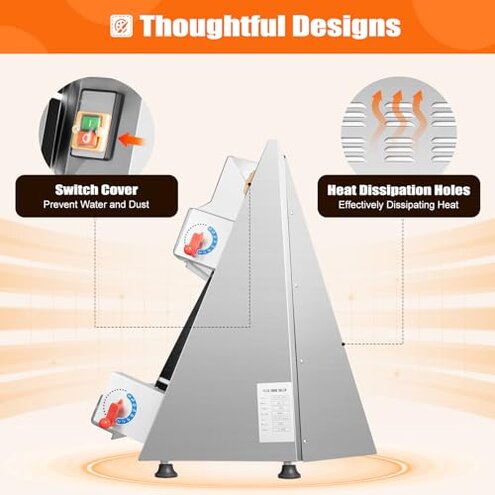
This pizza dough roller requires regular cleaning and care to prevent rust and maintain performance. This maintenance burden is a common complaint during routine daily use.
- Cleaning needs: Must be cleaned carefully to avoid corrosion.
- Frequency: Daily cleaning recommended, more than some competitors.
- Complexity: Cleaning under covers and around rollers is time-consuming.
- Impact: Increased labor costs and time lost.
- Risk: Neglect can shorten machine lifespan.
- Category contrast: Many mid-range models have sealed parts making maintenance easier.
Illustrative excerpt: "Cleaning is a chore; parts can rust if not dried properly." (Primary pattern)
Who should avoid this?
- Buyers needing fully automatic operation for high-volume, fast-paced kitchens.
- Users unwilling to perform daily maintenance and careful cleaning.
- Those expecting long-term durability under heavy commercial use without performance drops.
Who this is actually good for
- Small bakeries or cafes with moderate dough volume and lower speed needs, accepting manual flipping.
- Businesses with staff willing to perform regular upkeep to maintain machine condition.
- Operators who need adjustable dough thickness and size and can tolerate extra handling.
Expectation vs reality
Expectation: Electric pizza rollers usually offer fully automatic dough pressing to speed up kitchen workflow.
Reality: This model requires manual flipping between rollers, interrupting continuous pressing and adding labor steps, which is disappointing for commercial buyers.
Safer alternatives
- Look for fully automatic pizza dough rollers to avoid manual flipping delays.
- Choose machines with sealed, corrosion-resistant parts to reduce maintenance needs.
- Select commercial rollers rated for high durability in heavy daily use to minimize mechanical failures.
- Seek models with clear user manuals and training to reduce operator error during dough handling.
The bottom line
The main buyer regret is the manual dough flipping requirement, which disrupts workflow and adds labor in busy commercial kitchens. This drawback combined with reported mechanical wear and demanding maintenance exceeds typical category risks. Buyers seeking smooth, hands-off operation should consider alternatives.
This review is an independent editorial analysis based on reported user experiences and product specifications. NegReview.com does not sell products.