
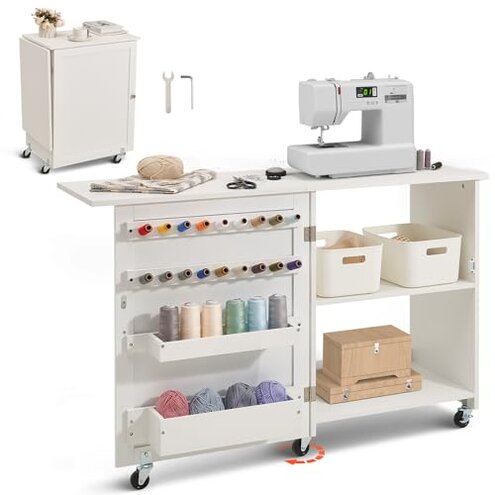
Product evaluated: VEVOR Folding Sewing Table, Multipurpose Sewing Machine Table with Compact Design, Wheels, Shelves, Storage Trays, Wooden Pegs, and Magnetic Doors, Sewing Desk Cabinet for Sewing Machine, White
Related Videos For You
Folding Sewing Table | Multipurpose Sewing Machine Table with Compact Design
Juki DDL 8700 Table, Motor & Sewing Machine Assembly
Data basis Dozens of customer comments and visual reports were analyzed from written reviews and video demonstrations collected Jan 2024–Feb 2026, with most feedback coming from written reviews supported by videos.
| Outcome | VEVOR Folding Sewing Table | Typical Mid‑Range Table |
|---|---|---|
| Stability | Higher wobble risk — commonly reported wobble under medium sewing sessions. | Moderate stability — most mid-range tables stay steady under similar loads. |
| Assembly time | Longer setup — assembly often takes more time and adjustments than expected. | Average setup — mid-range models usually assemble faster with clearer fit. |
| Storage usability | Fragmented fit — trays and pegs work but require careful placement to avoid sagging. | More usable — competitors offer better tray fit and higher practical load capacity. |
| Mobility | Wheels inconsistent — rolling and locking performance varies across units. | Reliable caster locks — typical models provide consistent mobility and locking. |
| Regret trigger | Stability during use — more disruptive than expected for a sewing station. | Less disruptive — mid-range alternatives present fewer stability surprises. |
Top failures
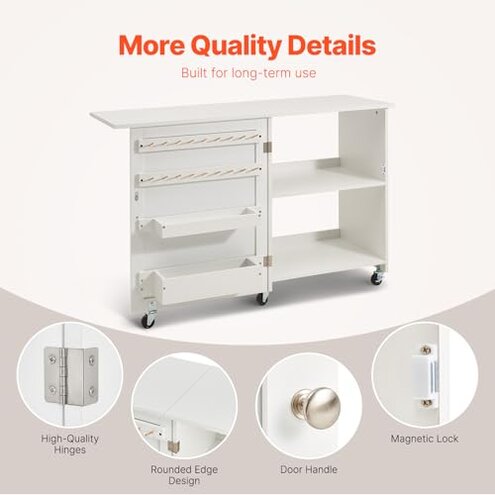
Why does the table feel wobbly during sewing?
Stability Many buyers reported persistent wobble, making precise sewing difficult and frustrating during medium-length sessions.
Pattern This is a primary issue that appears repeatedly across written and video reports and worsens when the table holds heavier machines or when sewing for longer stretches.
Category contrast The wobble is more disruptive than normal for mid-range sewing tables because it directly affects stitch quality and user confidence.
Why is assembly harder or slower than expected?
- Early signs Some buyers found misaligned holes and tight fittings immediately at first use.
- Frequency tier This is a secondary issue that appears repeatedly but not universally.
- When it shows Problems surface during first assembly and get worse when you rush or skip steps.
- Cause The folding design and panel fits often require extra adjustments and force to align.
- Impact Extra setup time adds friction compared with typical mid-range alternatives.
Why do storage trays and doors underperform?
- Primary complaint Trays can sag or feel loosely supported under moderate load.
- Usage anchor This appears during daily use when storing thread boxes and medium-weight fabrics.
- Cause Removable trays and magnetic doors fit but lack the robust tolerance buyers expect.
- Hidden requirement You may need extra reinforcement or careful weight distribution to avoid sagging.
- Attempts Buyers commonly re‑arrange contents to reduce stress on trays.
- Category contrast Less forgiving than most mid-range storage cabinets, leading to repeated adjustments.
- Fixability The issue is often fixable with added blocks or by avoiding heavy items in trays.
Why are the wheels and locking behavior inconsistent?
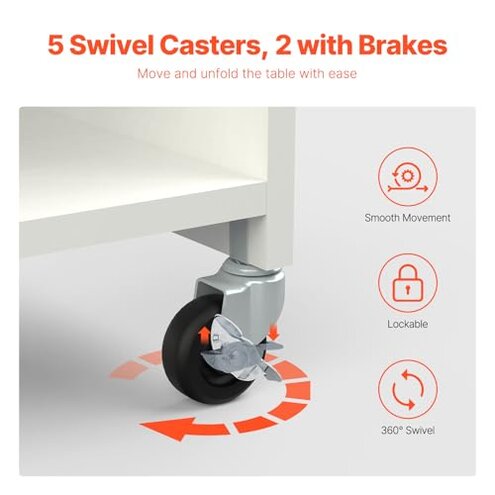
- Observed problem Wheel performance varies across units and affects stability while moving the table.
- When it happens Issues appear during relocation and when locking the table for sewing sessions.
- Cause Some casters roll unevenly or the locks do not hold firmly in repeated use.
- Impact This secondary failure raises setup time and can cause the table to shift during sewing.
- Frequency It is a commonly reported annoyance rather than a universal defect.
- Attempts Buyers try tightening, replacing casters, or using floor stops to manage movement.
- Category contrast Mobility is less reliable than typical mid-range options, increasing the chance of movement during use.
- Hidden cost Fixing wheels may require buying replacement casters or tools not included in the package.
Illustrative excerpts
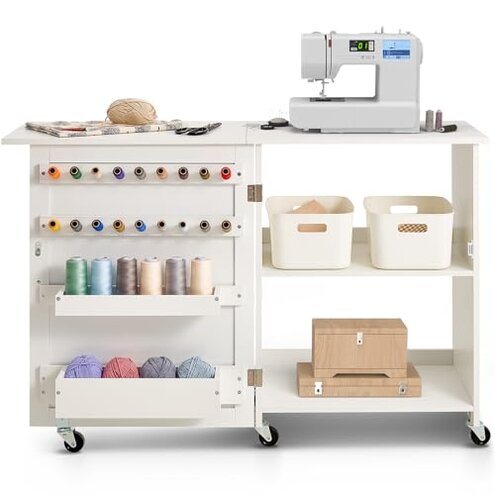
Illustrative: "Table wobbled under my sewing machine during a long session." — primary
Illustrative: "Assembly took more time than I planned and needed extra tools." — secondary
Illustrative: "Trays sag when I store medium‑weight fabric bundles." — primary
Who should avoid this
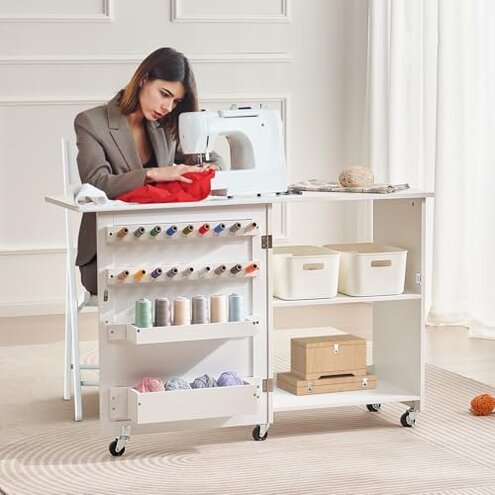
- Frequent sewers Avoid if you need a rock‑solid table for long sewing sessions because wobble is a primary regret trigger.
- Heavy machine owners Avoid if your machine weighs towards the upper end, since trays and folding panels show strain under moderate loads.
- Non‑handy buyers Avoid if you do not want to spend extra time or tools on assembly and caster fixes, which many buyers reported.
Who this is actually good for
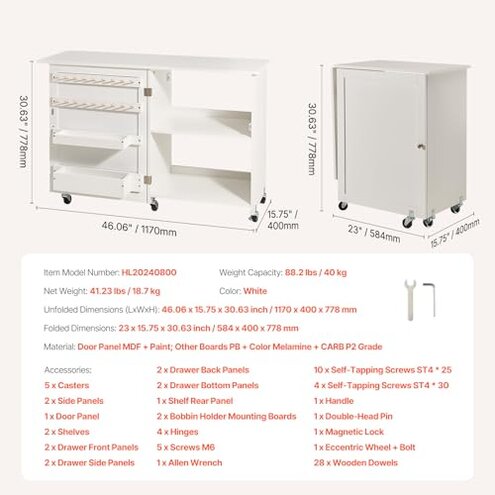
- Occasional users Good for light or occasional sewing where mobility and compact folding matter more than absolute stability.
- Budget shoppers Good for buyers willing to accept extra setup time in exchange for a lower price point.
- Small-space needs Good for tight spaces where folding into a cabinet is valued and heavy loads are not stored.
- DIY fixers Good for people ready to reinforce trays or swap casters to reach acceptable performance.
Expectation vs reality
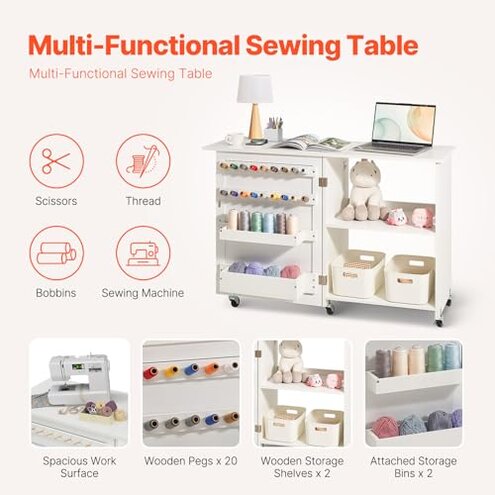
Expectation Reasonable for this category: folding tables are expected to be lighter and need some setup.
Reality The table shows more wobble and fit issues than typical mid‑range folding models, which leads to stitch problems and repeated adjustments.
Expectation Reasonable for this category: casters provide mobility and simple locks.
Reality Wheels and locks are inconsistent and may need replacement to ensure safe movement and bracing.
Safer alternatives
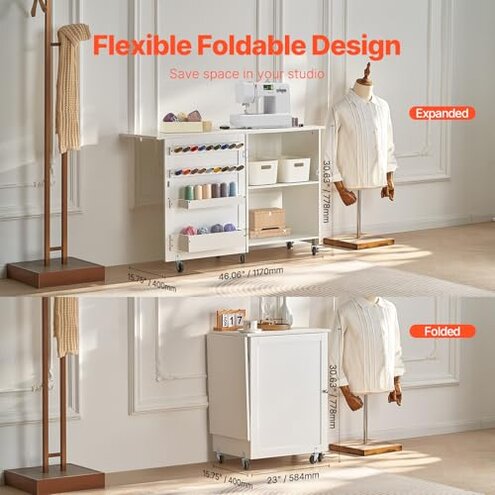
- Prioritize solid base Look for tables advertised with reinforced cross‑bracing to neutralize the wobble problem.
- Check caster specs Buy units with documented caster load ratings and replaceable wheels to avoid mobility issues.
- Prefer fixed shelves Choose tables with integrated shelves rather than removable trays to prevent sagging.
- Read setup notes Seek sellers that include detailed assembly guides and required tool lists to reduce surprise time.
- Plan reinforcement If choosing a folding cabinet, budget for simple reinforcement parts to avoid hidden fixes.
The bottom line
Main regret The primary trigger is stability problems that interfere with sewing accuracy and comfort.
Why it matters These issues are more disruptive than typical mid‑range folding sewing tables because they affect everyday use and stitch quality.
Verdict Avoid this model if you need a reliable, heavy‑use sewing station; consider it only if you accept extra setup, reinforcement, or occasional fixes.
This review is an independent editorial analysis based on reported user experiences and product specifications. NegReview.com does not sell products.