
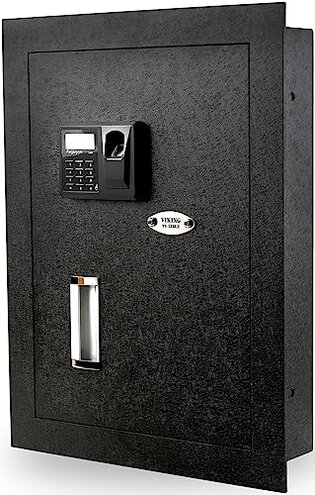
Product evaluated: Viking Security Safe VS-52BLX Heavy Duty Hidden in Wall Safe Biometric Fingerprint
Related Videos For You
How to install a Wall Safe
Your Fingerprint Lock STOPPED Working? DON’T PANIC – Here’s the FIX!
Data basis: I reviewed dozens of buyer reports and visual demos collected between 2020–2025, combining written reviews and video demonstrations. Most feedback came from written reviews, supported by video demonstrations and seller Q&A, with a clear tilt toward access and install complaints.
| Outcome | Viking VS-52BLX | Typical mid-range safe |
|---|---|---|
| Access speed | Slower on failure — fingerprint retries or PIN add extra steps. | Consistent — most open quickly with fewer retries. |
| Biometric reliability | Higher failure risk — biometric issues are a common complaint. | Lower risk — sensors usually work after setup. |
| Installation | Tricky in-wall fit — often needs framing or professional install. | Simpler — many mid-range safes bolt to shelf or floor. |
| Mechanical durability | Mixed reports — jams and alignment issues appear repeatedly. | More robust — fewer early mechanical failures reported. |
| Regret trigger | Access failure — being locked out when you need access. | Minor inconvenience — rare temporary delays open with backup keys. |
Will the fingerprint reader let me down when I need it?
Primary failure is inconsistent biometric access, commonly reported across buyers. When it shows up is during first use and daily quick-access moments, where failed reads force PINs or keys.
Why it matters is that this is worse than typical mid-range safes where sensors usually work after simple re-enrollment. Trade-off is higher hassle for the promise of fast access.
Does the lock or door jam under normal use?
- Early sign — door rubs or sticks when opening immediately after installation.
- Frequency tier — this is a secondary issue that appears repeatedly in reports.
- Cause — alignment sensitivity during in-wall mounting or weak latch tolerances.
- Impact — jams make quick access unreliable and increase wear on the mechanism.
- Fixability — owners report adjustments help but some required return or professional repair.
Will in-wall installation create hidden headaches?
- Hidden requirement — unit expects a between-stud fit and often needs additional framing or trimming.
- Usage anchor — issues appear during first install and when moving walls or drywall is imperfect.
- Frequency tier — commonly reported by buyers attempting DIY installs.
- Installation cost — may add professional labor compared to bolt-down safes.
- Long-term risk — poor mounting increases door alignment and security problems over time.
- Category contrast — more installation steps than most mid-range alternatives, which are often bolted to floor or shelf.
- Buyer requirement — expect tools and carpentry time or a contractor visit.
What happens when batteries die or backup keys are needed?
- Power issue — battery removal or death can complicate access despite claimed backup options.
- Pattern — persistent reports of awkward key backups or buried emergency contacts.
- Usage context — shows up during low-battery warnings, long-term storage, or infrequent use.
- Impact — being locked out or forced to drill is a high-regret event for buyers.
- User attempts — owners report carrying extra batteries and practicing backups to reduce risk.
- Fixability — workaround exists but adds time and undermines the quick-access promise.
- Category contrast — less forgiving than many safes that include clearer, simpler emergency access paths.
- Security trade-off — sound-off features and tight seals reduce noise but can mask alerts until access fails.
Illustrative excerpts
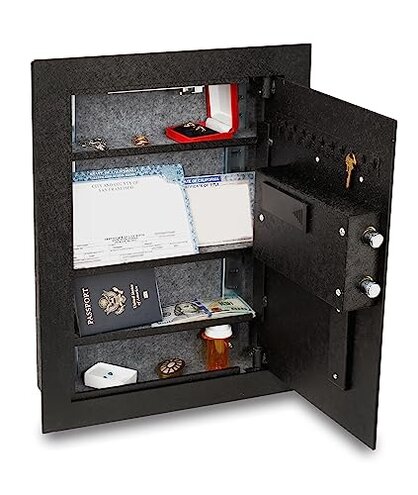
Excerpt: "Fingerprint failed; had to use the key in an emergency." — Primary pattern reflecting access-critical failures.
Excerpt: "Door rubbed and stuck after wall install; needed trimming." — Secondary pattern showing installation alignment issues.
Excerpt: "Battery died while away; backup steps were unclear and slow." — Secondary pattern tied to power and backup problems.
Who should avoid this
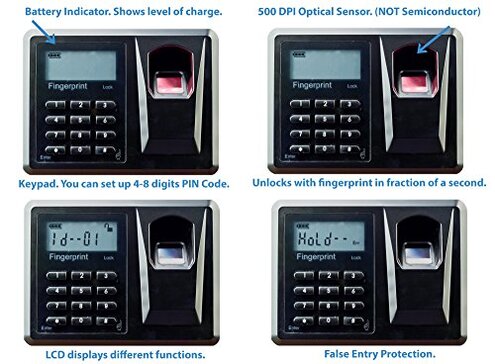
- Fast-access dependents — anyone who needs instantly reliable fingerprint entry should avoid this model.
- DIY installers without carpentry — buyers unwilling to frame a wall opening or hire help will face extra cost and frustration.
- Low-maintenance buyers — if you expect set-and-forget battery life, this model requires more attention than similar safes.
Who this is actually good for
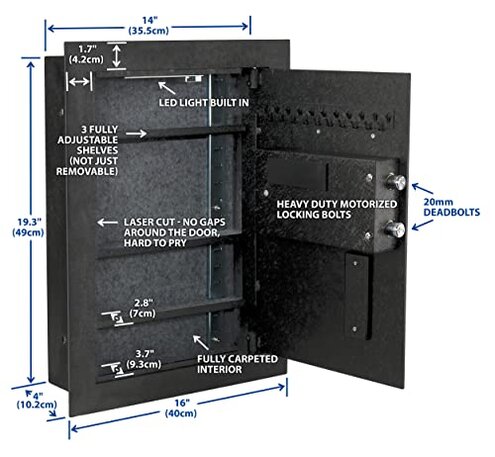
- Tech-tolerant owners — people comfortable troubleshooting biometrics and keeping backups can accept the trade-offs.
- Professional installers — electricians or carpenters who can ensure a flush, aligned in-wall fit will reduce many failures.
- Secondary storage — those using it for items that do not require instant access will be less exposed to the main risks.
Expectation vs reality
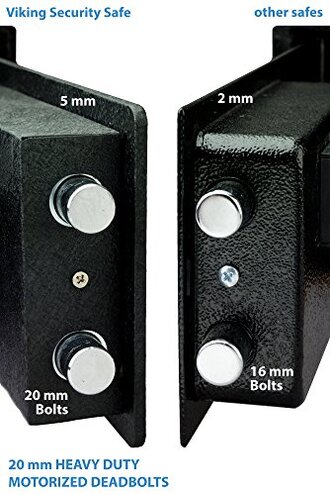
Expectation (reasonable for this category): fingerprint should give near-instant, repeatable access after setup.
Reality: many buyers report recurring read failures and extra steps like PINs or keys are needed far more often than typical mid-range safes.
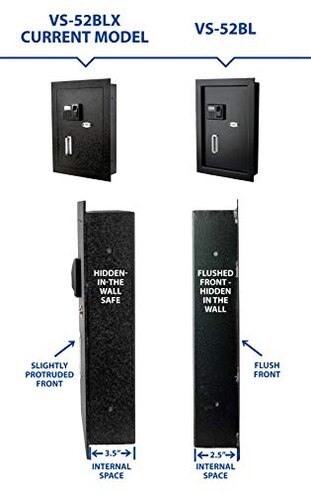
Expectation (reasonable for this category): in-wall safe fits between studs with minimal modification.
Reality: this model frequently requires trimming or additional framing, which adds time and cost.
Safer alternatives
- Pick sensor-first — choose safes with well-documented sensor calibration and easy re-enrollment to reduce biometric failures.
- Prefer bolt-down — if you can't do carpentry, consider bolt-down or shelf safes to avoid in-wall fit problems.
- Check backup access — prioritize safes with clearer backup-key or external battery procedures to avoid lockouts.
- Read install guides — confirm required wall opening and framing steps before purchase to prevent surprises.
The bottom line
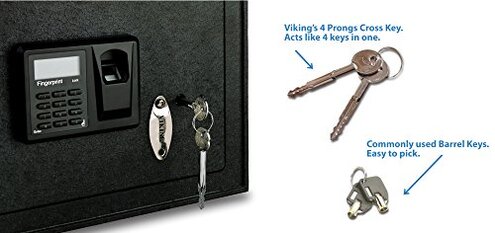
Main regret is unreliable fingerprint access that often forces PINs or keys when speed matters.
Severity exceeds normal category risk because access failures happen repeatedly and installation adds more failure points.
Verdict — avoid if you need consistently fast, low-maintenance access; consider alternatives or plan for professional install and active maintenance.
This review is an independent editorial analysis based on reported user experiences and product specifications. NegReview.com does not sell products.