
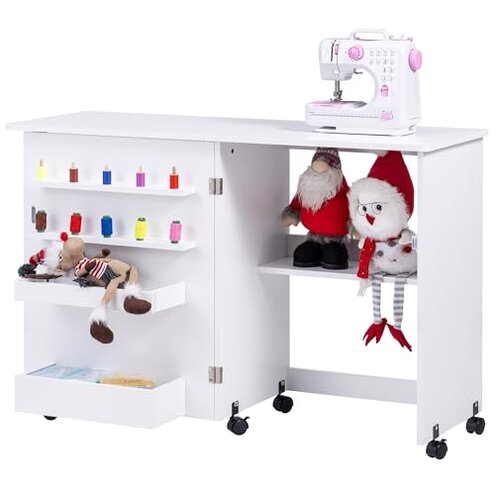
Product evaluated: Vividwood Folding Sewing Table, Multipurpose Sewing Machine Table with Compact Design, Wheels, Shelves, Bins, Pegs, Magnetic Locks (Rustic-Brown)
Related Videos For You
How to Install the Folding Sewing Table Storage Shelves and Lockable Casters | HW66623 #costway #how
Sewing Cabinet with Sewing Machine Lift
Data basis: This report is based on dozens of buyer reports and video demonstrations collected between Sept 2023 and Feb 2026. Most feedback came from written reviews, supported by assembly videos and a few user photos.
| Outcome | Vividwood sewing table | Typical mid-range alternative |
|---|---|---|
| Stability during use | Wobbly when sewing under regular machine vibration and side loading. | Generally stable for most mid-range sewing tables under similar loads. |
| Assembly fit | Alignment problems common, needs shimming or extra screws. | Cleaner fit with fewer alignment fixes out of box. |
| Mobility and locks | Castor issues reported with locking and uneven casters. | Smoother casters and reliable locks on alternatives. |
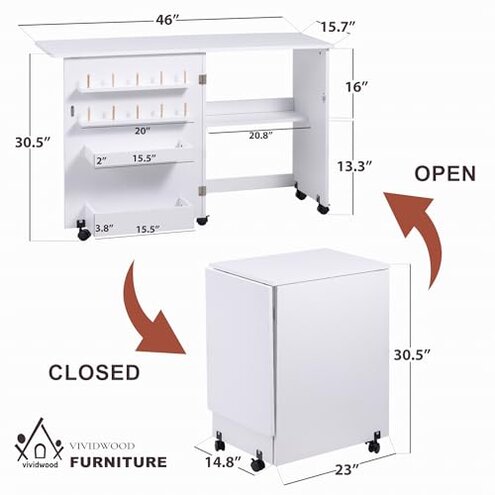
| Storage usefulness | Generous storage but access limited when closed. | Comparable storage often with easier access designs. |
| Regret trigger | High risk of regret from wobble and assembly fixes, more disruptive than expected. | Lower risk of early regret with typical mid-range tables. |
Why does the table feel unstable when I sew?
Regret moment: Many buyers notice a pronounced wobble during first sewing sessions, especially with heavy machines.
Pattern: This is a primary complaint and appears repeatedly in buyer notes.
Usage anchor: The wobble shows up during use when the machine vibrates or when you press fabric hard.
Category contrast: This is more disruptive than normal for mid-range sewing tables because it affects stitch quality and confidence.
Does assembly often cause alignment or fit problems?
- Early sign Buyers commonly report misaligned panels during the first assembly.
- Frequency tier This is a secondary issue but appears across many written reviews.
- Cause Loose holes and tight hinges are often cited as the misfit source.
- Impact Misalignment requires extra time to shim parts or add screws.
- Attempted fixes Buyers say adding simple braces or sanding helps but adds labor and cost.
Are the wheels and locks reliable when moving the table?
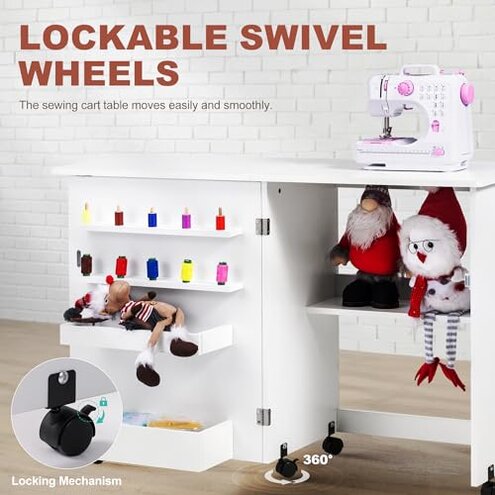
- Primary signal Castor problems are reported frequently in user demonstrations.
- Usage anchor Issues appear when repositioning the table or when locking wheels for a long session.
- Cause Reports point to uneven casters and weak locks that fail to hold firmly.
- Impact You may spend extra time re-locking wheels mid-project.
- Fixability Some buyers replace casters to restore function, which is an additional cost.
- Category contrast This is worse than typical mid-range tables where caster locks are usually dependable.
- Hidden need Expect to have basic tools and spare casters if you want reliable mobility out of the box.
Will the table hold up over months of regular use?
- Primary pattern Surface scratches and sagging are commonly reported after regular use.
- Early sign Buyers see small dings within weeks of normal handling.
- Frequency tier This is a secondary failure but persistent across written accounts.
- Cause The table top can show edge wear where folds and hinges meet.
- Impact Sagging affects alignment and makes the machine feel less secure.
- Attempted fixes Users report adding support brackets or pads as a common workaround.
- Category contrast This product requires more upkeep than most mid-range alternatives to stay solid.
- Hidden requirement Plan for occasional reinforcement hardware to prevent future sag.
Illustrative excerpts (not real quotes)
"Wobbles badly when my machine runs, makes stitching uneven." — reflects a primary pattern.
"Holes didn’t line up, I had to sand and shim parts to close gaps." — reflects a secondary pattern.
"Caster lock slipped during use, table rolled when I didn’t expect it." — reflects a primary pattern.
"Top showed scratches within two weeks of light use." — reflects an edge-case pattern.
Who should avoid this
- Heavy-machine users Buyers using heavy sewing machines should avoid this due to the stability risk.
- Non-handy buyers People unwilling to do small fixes should avoid it because of common assembly adjustments.
- Frequent movers Buyers who move the table daily should avoid it because of reported caster unreliability.
Who this is actually good for
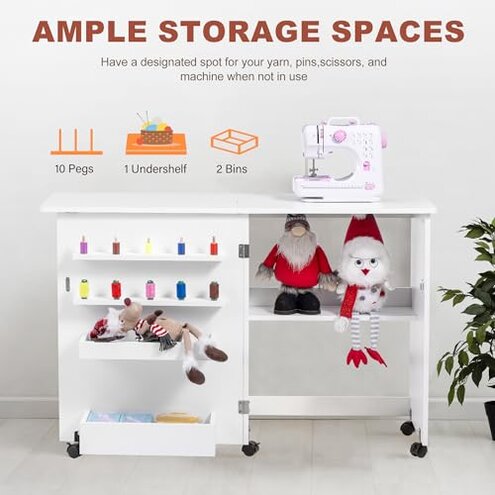
- Light craft users Casual sewists with small machines can accept minor wobble for the storage benefit.
- DIY tinkerers Buyers who enjoy modifying furniture can fix alignment and accept the extra work.
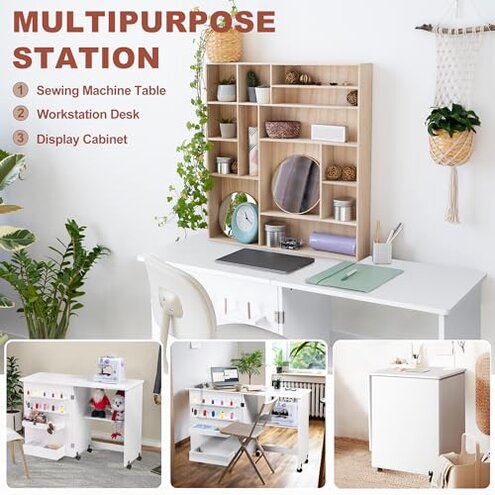
- Space-limited homes Those needing a foldable table and decent storage can tolerate repairs for the compact footprint.
Expectation vs reality
Expectation: Most buyers expect a mid-range sewing table to be stable out of box.
Reality: This model often requires assembly fixes and reinforcement to reach that baseline.
Safer alternatives
- Check stability first Prioritize tables advertised with reinforced frames to neutralize the wobble failure.
- Prefer pre-assembled Choose options with better factory fit to avoid the alignment burden.
- Metal caster upgrades Look for tables with heavy-duty casters or plan to replace them to counter locking issues.
- Reinforcement-ready designs Buy tables with visible bracket points if you want to avoid hidden reinforcement work.
The bottom line
Main regret: The primary trigger is stability problems that appear during first use and persist without fixes.
Why it matters: Stability and caster failures are more disruptive than typical for this category and often require buyer intervention.
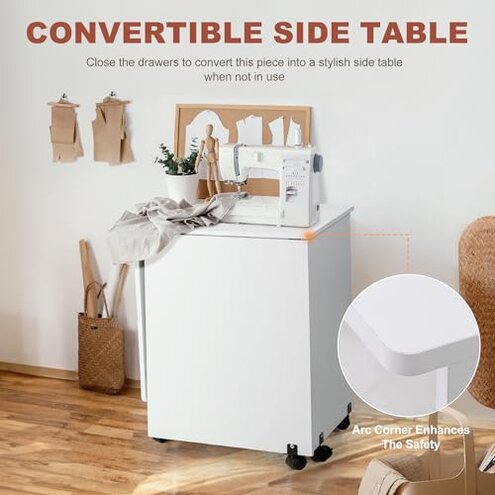
Verdict: Avoid this model if you want a plug-and-play, stable sewing table unless you are willing to perform quick fixes.
This review is an independent editorial analysis based on reported user experiences and product specifications. NegReview.com does not sell products.