
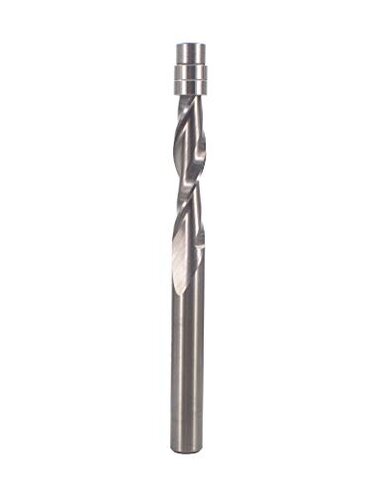
Product evaluated: Whiteside Router Bits RFT2100 1/4-Inch Diameter Spiral Flush Trim Up Cut
Related Videos For You
99% of Beginners Don't Know the Basics of Router Bits
Data basis: This report draws on dozens of written reviews and several demonstration videos collected between 2015 and 2025. Most feedback came from written reviews, supported by video demonstrations and user Q&A, with recurring patterns tracked across sources.
| Outcome | This product | Typical mid-range alternative |
|---|---|---|
| Price vs lifespan | Higher cost with complaints of shorter life than expected. | Balanced cost with more consistent edge life for the price. |
| Bearing durability | Premature wear appears more often than usual for this category. | Sealed bearings or replaceable units last longer under similar use. |
| Cut quality | Clean initially but reports of chip-out after repeated use. | More consistent edge quality across extended sessions. |
| Long session stability | More chatter and vibration under long runs or high feed rates. | Less vibration when using mid-range bits with better balance. |
| Regret trigger | Unexpected replacement due to bearing failure or dulling. | Planned replacement after predictable wear, less regrettable cost. |
Top failures
Why did my bit wobble or the bearing fail so fast?
Regret moment: Many users report a sudden wobble that ruins the cut or seizes the bearing.
Pattern note: This issue is commonly reported and appears after repeated routing sessions rather than on first use.
Context anchor: Wobble shows up after weeks of occasional use or during long continuous passes, especially at higher feed rates.
Category contrast: Bearings are usually expected to last longer in mid-range bits; this feels less durable than the reasonable category baseline.
Why does the edge chip or dull quickly?
- Early sign: Initial cuts are clean but edges show tiny chips after a few cuts.
- Frequency tier: This is a primary issue for some users, and a secondary complaint for others.
- Likely cause: Reports point to carbide dulling under hardwood and composite use.
- Impact: Chip-out forces extra sanding or rework, adding time and cost.
- Fixability: Temporary resharpening helps but is a short-term fix for many buyers.
Why does the bit chatter or tear out material?
- Velocity link: Chatter shows up during high-speed passes or when feed rate increases.
- Balance sign: Users note a vibration that grows with longer runs.
- Surface result: The finish becomes rough and can require additional sanding or a second pass.
- Usage anchor: This is most obvious when routing plywood or laminated material.
- Repair attempts: People try tighter collet grip and slower speeds with mixed success.
- Category contrast: Mid-range bits usually give cleaner long passes; this product underperforms in extended use.
Why does the price feel high for the life I get?
- Expectation gap: Buyers expect a durable bit for the price, but many report shorter service life.
- Replacement cost: Replacing the bit more often raises the effective cost well above category norms.
- Hidden requirement: Some buyers discovered this bit needs a very true collet and a router table to avoid early damage.
- Attempted fixes: Users try lubricating bearings and re-sharpening edges with limited benefit.
- Scope signal: Complaints span written reviews and demonstration videos, not limited to one source.
- Worse than normal: The combination of price and maintenance needs is more disruptive than typical bits in this tier.
- Decision impact: This makes the purchase feel like a risk rather than an upgrade for many buyers.
Illustrative excerpts
Excerpt (illustrative): "Bearing started making noise after a few months of light use." — primary pattern
Excerpt (illustrative): "Edge chipped on veneer the second time I used it." — secondary pattern
Excerpt (illustrative): "Needed a router table to stop wobble around the template." — hidden-requirement pattern
Excerpt (illustrative): "Paying premium but replacing sooner than expected." — primary pattern
Who should avoid this
- High-volume users: If you rout daily, bearing wear and dulling may cost more than expected.
- Finish-first woodworkers: If you need pristine edges after long passes, the chatter risk is unacceptable.
- Budget-minded buyers: Paying premium but replacing often makes the effective cost high.
Who this is actually good for
- Occasional hobbyists: If you route infrequently, initial cut quality may be acceptable despite later wear.
- Template-only users: If you use a router table and correct collet, you can avoid the wobble problem.
- People who resharpen: If you plan to resharpen carbide and accept maintenance, you can extend life.
Expectation vs reality
Expectation: Buyers reasonably expect a router bit in this price range to have durable bearings and steady long-run performance.
Reality: In practice, users commonly find premature bearing wear and dulling after repeated use, which raises operating costs.
Safer alternatives
- Look for sealed bearings: Choose bits with sealed or replaceable bearings to reduce premature failure.
- Check balance specs: Prefer bits advertised for low runout or dynamic balance for long passes.
- Lower cost sets: Buy multi-bit sets to reduce replacement cost when chips occur.
- Collet accuracy: Use a high-precision collet or router table to avoid wobble related damage.
The bottom line
Main regret: The primary complaint is bearing wear and faster-than-expected dulling that forces early replacement.
Why worse: This product shows a higher-than-normal risk compared with mid-range bits under similar use.
Verdict: Avoid if you need long sessions or minimal maintenance; consider more robust, sealed-bearing alternatives.
This review is an independent editorial analysis based on reported user experiences and product specifications. NegReview.com does not sell products.