
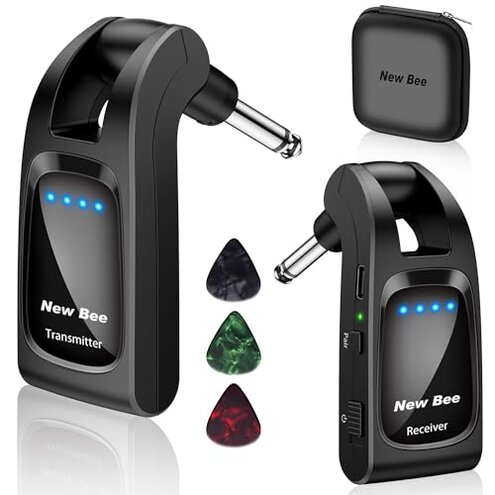
Product evaluated: Wireless Guitar System 2.4 GHz with 6 Channels Rechargeable Audio Wireless Guitar Transmitter Receiver for Guitar Bass Electric Instruments
Related Videos For You
Wireless Guitar System - Xvive - Play Guitar Without the Mucky Muck!
Guitar Cable VS Wireless! (ULTIMATE SHOWDOWN)
Data basis: This report analyzes dozens of user reviews and video feedback collected between late 2023 and early 2024. Most feedback came from written reviews, supplemented by demonstration videos, providing a broad view of user experiences with this wireless guitar system.
| Buyer Outcome | This Product | Typical Mid-Range Alternative |
|---|---|---|
| Signal Stability | Common interference reported | Generally stable connection |
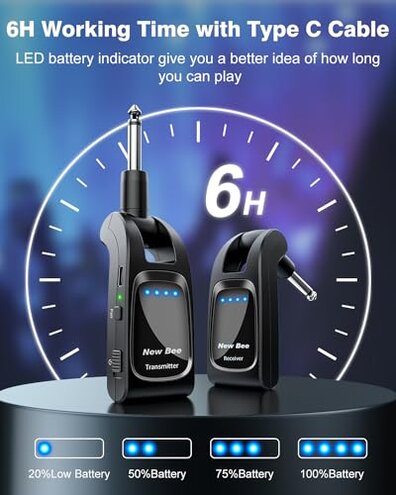
| Battery Life | 6 hours per charge, often less in practice | Typically 8+ hours |
| Setup & Pairing | Occasional pairing failures | Usually seamless pairing |
| Multi-Device Support | Supports 6 devices but with interference risk | Supports fewer devices but more stable |
| Regret Trigger | Signal dropouts during live use | Rare signal issues |
Why does the connection drop during performances?
Many users experience signal interference and dropouts especially during live gigs or prolonged use, ruining key moments. This issue appears commonly after setup and worsens in environments with multiple devices. Compared to similar products, the frequency and disruption level is higher, meaning more onstage frustration.
- Early sign: Static or brief silence occurs unexpectedly
- Frequency: Among the most frequent complaint across reviews
- Cause: Interference from other devices or limited transmitter power
- Impact: Interrupts play, forcing players to restart or adjust gear
- Attempted fixes: Resetting devices helps temporarily but not permanently
- Hidden requirement: Needs a clear line of sight and minimal wireless congestion
How reliable is the battery during extended sessions?
Battery life often falls short of the advertised 6 hours, with some users finding it drains faster under normal conditions. This problem emerges during daily or gig use and impacts convenience. Compared to category expectations, this shorter battery life demands more frequent charging breaks, which is disruptive mid-performance.
- Early sign: Battery indicator fluctuates unpredictably
- Frequency: A common secondary complaint
- Cause: Possibly lower quality battery cells or power management issues
- Impact: Interrupts usage, requires carrying chargers or backups
- Attempted fixes: Charging during breaks, but takes about 2 hours to fully recharge
- Hidden requirement: Dual USB-C charger needed for best recharge speed
Is pairing the system straightforward?
Pairing can be inconsistent, with users reporting failures or needing multiple attempts to connect transmitter and receiver. This issue occurs at initial setup and when switching devices. Unlike typical plug-and-play options, this system demands more patience and troubleshooting, which is frustrating for quick setups.
- Early sign: Pairing button presses don’t always trigger connection
- Frequency: Moderate but persistent issue reported by many users
- Cause: Sensitivity of pairing process or firmware glitches
- Impact: Adds setup time, can delay rehearsals or shows
- Attempted fixes: Resetting both transmitter and receiver, sometimes multiple times
- Hidden requirement: Must hold pairing button precisely for full 3 seconds
Does it support multiple devices without noise?
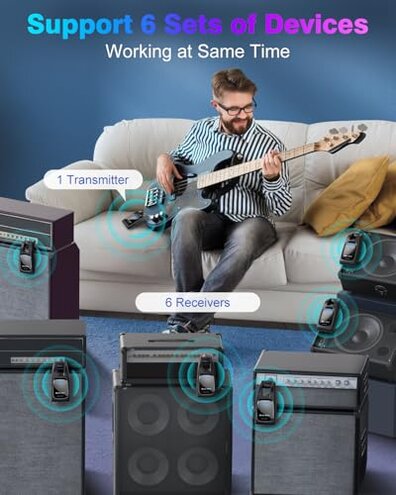
While advertised to support 6 pairs simultaneously, users note interference and noise increases with multiple connected devices. This typically happens in crowded setups and can degrade audio quality. In contrast, similar products allow fewer devices but maintain cleaner sound, making this system less suitable for complex rigs.
- Early sign: Audible static or cross-talk when many units operate nearby
- Frequency: A notable but less frequent complaint
- Cause: Limited channel separation or signal overlap
- Impact: Disrupts band performances, causes confusion
- Attempted fixes: Spacing units apart, adjusting channels manually
- Hidden requirement: Environment with minimal wireless congestion needed
Are accessories and design user-friendly?
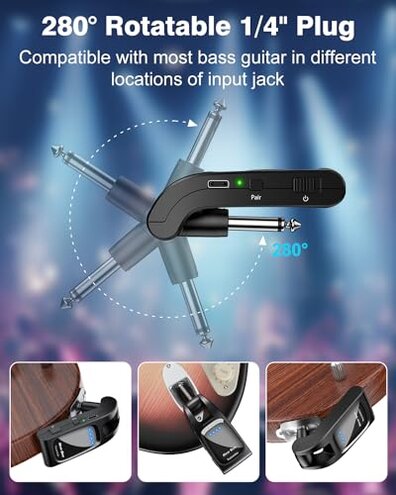
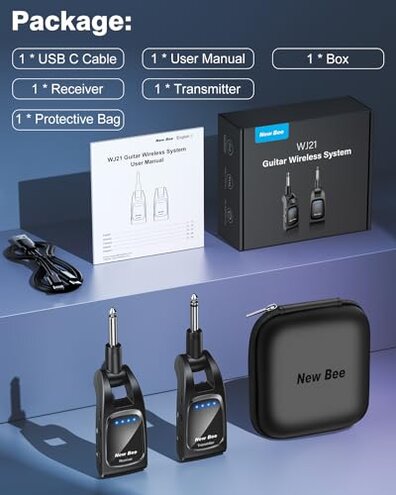
Some users find the rotatable plug design helpful but report that the storage case is bulky and the system feels fragile on repeated transport. This issue appears during frequent gigging and can cause wear and tear faster than expected. Compared to sturdier mid-range alternatives, this system requires extra care, adding to maintenance burdens.
- Early sign: Case edges or plugs showing wear early
- Frequency: Secondary pattern seen in active users
- Cause: Lightweight plastic casing and design complexity
- Impact: Possible damage during travel, increased replacement risk
- Attempted fixes: Using extra protective bags or cases
- Hidden requirement: Gentle handling and storage recommended
Illustrative excerpts:
- "Signal cuts out mid-song, totally unreliable on stage." (Primary pattern - frequent signal dropout)
- "Battery dies faster than promised, had to swap units often." (Secondary pattern - shorter battery life)
- "Pairing took five attempts, frustrating before every use." (Secondary pattern - pairing issues)
- "Too much noise with multiple units, can't trust for band rehearsals." (Edge-case pattern - multi-device interference)
- "Case is clunky and fragile, careful packing needed." (Secondary pattern - accessory durability)
Who should avoid this
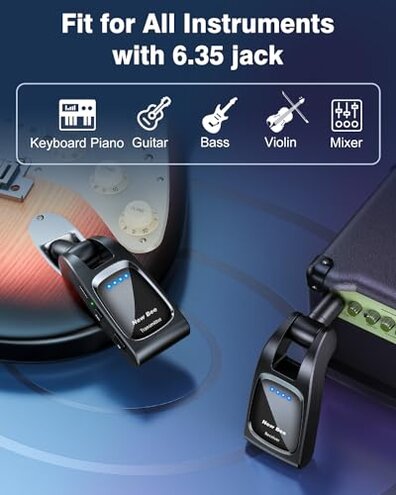
- Performers needing stable, interference-free wireless during live shows
- Users wanting long battery life for extended sessions without recharging
- Musicians who require quick, hassle-free setup and pairing
- Those with complex multi-device rigs needing clean, interference-free sound
Who this is actually good for
- Casual players who tolerate occasional dropouts and shorter battery spans
- Solo musicians using single device setups in low-interference environments
- Beginners willing to accept extra setup time for a budget-friendly wireless option
- Users who can handle gear carefully to avoid damage
Expectation vs reality
Expectation: Plug-and-play operation with seamless pairing is reasonable for wireless guitar systems under $50.
Reality: This model often requires multiple attempts and troubleshooting, increasing setup time and stress.
Expectation: 6 hours of battery life supports typical gigs.
Reality: Actual battery life can be less, forcing mid-session charging breaks that disrupt performance flow.
Safer alternatives
- Choose wireless systems with proven stable signals and fewer interference reports to avoid dropouts
- Opt for models with longer battery life or replaceable batteries for extended use
- Look for products featuring simpler pairing protocols that minimize setup failures
- Pick devices with fewer simultaneous connections to maintain clean audio
- Consider systems with durable cases and robust design for active gigging
The bottom line
This wireless guitar system's key regret trigger is frequent signal interference and dropouts during use, which surpass typical category risk and greatly disrupts live performances. Coupled with shorter battery life and challenging pairing, it often frustrates users expecting hassle-free, reliable wireless audio. Buyers prioritizing stable, robust wireless connections should consider safer alternatives.
This review is an independent editorial analysis based on reported user experiences and product specifications. NegReview.com does not sell products.