
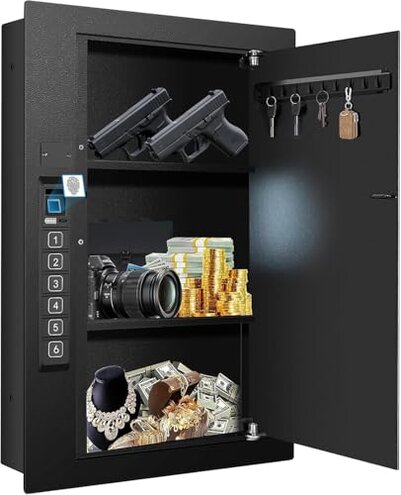
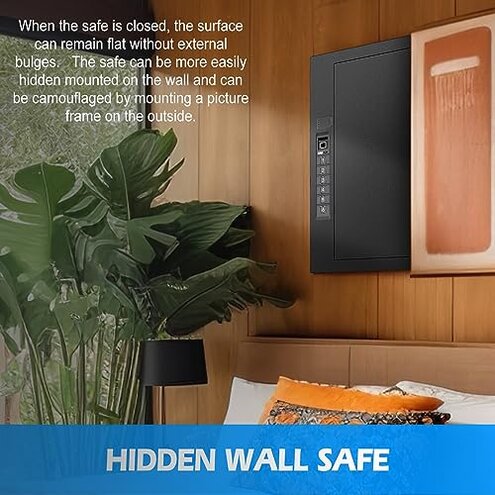
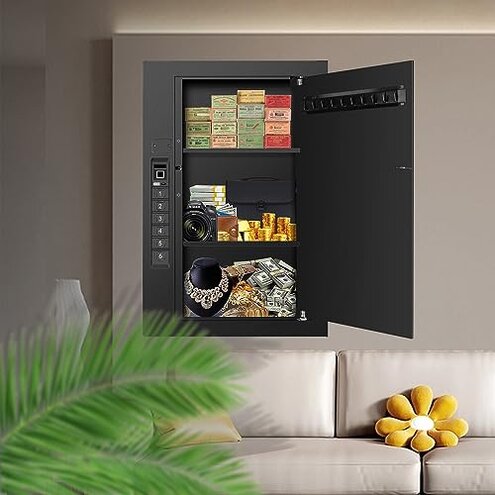
Product evaluated: Wall Safe, Hidden Fingerprint Security wall Safe, In Wall Safe Between Studs, Upgraded Biometric/Keypad/Key Access, Secure Handgun, Documents, Jewelry, Valuables (Biometric Fingerprint)
Related Videos For You
How to install a Wall Safe
How to Install a Wall Safe - Paragon Lock & Safe Install & Review
Data basis: This report draws on dozens of user reviews and demonstration videos collected between 2023 and 2025, with most feedback coming from written reviews supported by video demonstrations and Q&A posts.
| Outcome | WS021X (this product) | Typical mid-range in-wall safe |
|---|---|---|
| Access reliability | Unreliable – recurring fingerprint and keypad lockouts reported. | Generally reliable – biometric plus keypad with fewer lockouts. |
| Installation ease | Tricky – exact cutout and stud alignment often required. | Straighter fit – most mid-range models allow easier mounting adjustments. |
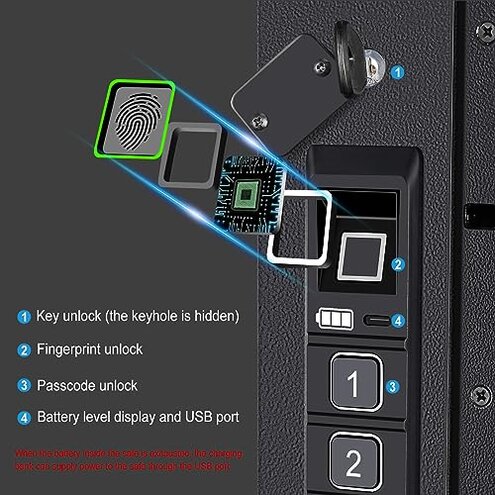
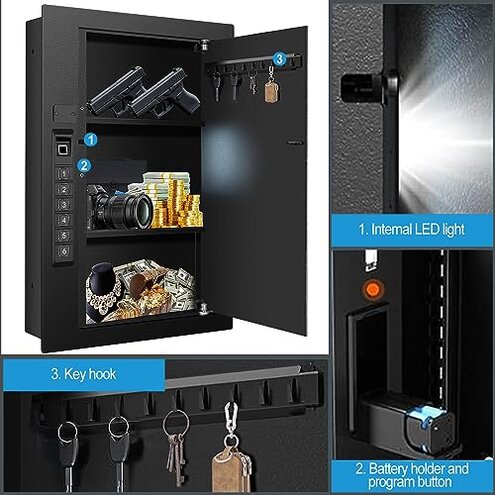
| Power backups | Hidden requirement – USB emergency port demands external power when batteries fail. | More forgiving – typical models include clearer battery access or physical override keys. |
| Build & security | Inconsistent – heavy weight but mounting and hinge fit issues reduce real-world protection. | Balanced – similar steel build but fewer fit/door-alignment complaints. |
| Regret trigger | High – access failures during first use or after months create biggest regret. | Lower – access failures are less frequent for typical mid-range options. |
Top failures buyers report
Why won’t the fingerprint open every time?
Frustration moment: Many buyers report the fingerprint sensor fails during first use or after repeated opens, creating urgent access delays.
Pattern signal: This is a primary and recurring complaint across written feedback and video demos.
Usage anchor: Faults appear when hands are damp, after a few weeks of use, or when users store multiple fingerprints.
Category contrast: Biometric unreliability here is worse than mid-range expectations because it causes frequent lockouts rather than occasional misses.
How often does power or backup access fail?
- Early sign: Batteries die and the keypad becomes unresponsive without warning.
- Frequency tier: Commonly reported after moderate daily use; not universal but persistent.
- Root cause: Reliance on a USB emergency port means you must have an external power bank at hand.
- Impact: Delayed access in urgent moments when battery replacement or external power is not available.
- Fix attempts: Users frequently report temporary fixes like constant battery swaps or carrying a cable for emergency power.
Will it fit my wall and open correctly?
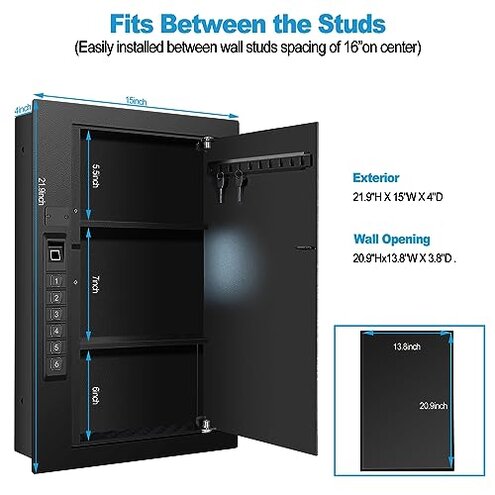
- Hidden requirement: Exact wall opening (20.9 x 13.8 x 4 in) and stud spacing are required for secure mounting.
- Early sign: Door alignment issues appear during installation when stud locations force offsets.
- When it worsens: Problems show up during first install and with regular door use when hinges rub or bind.
- Scope: Seen across multiple buyers who lacked a deeper recess or had uneven wall surfaces.
- Impact: Reduced door security, rattling, and in some cases inability to close or lock properly.
- Category contrast: More installation fiddliness than most mid-range in-wall safes, adding time and sometimes extra carpentry.
- Attempted fixes: Buyers often add shims, cut deeper openings, or reframe the cavity to force a fit.
Does the heavy build mean it’s secure?
- Observation: The safe is heavy but mounting method and door fit reduce practical resistance to tampering.
- Frequency tier: Secondary pattern — not everyone reports it, but those who do point to alignment or mounting failure.
- Cause: Pre-drilled holes and included bolts work only if studs align; otherwise, anchors or rework are needed.
- Impact: Perceived security is higher than actual when installation is poor.
- Hidden cost: Extra labor, tools, or a contractor are commonly required to make the safe meet expectations.
- Fixability: Fixes are possible but take time and extra expense, unlike typical mid-range models with more forgiving mounts.
- Long-term risk: Problems often become obvious after months when hinges loosen or door alignment drifts.
Illustrative buyer phrasing (not real quotes)
"Fingerprint failed during an emergency—keypad locked too." — reflects a primary pattern of access failure.
"Had to reframe my wall to fit the box properly." — reflects a secondary pattern about installation demands.
"USB port helped once, but I didn’t have a power bank." — reflects an edge-case pattern tied to backup power needs.
Who should avoid this
- Immediate-access users: Avoid if you need consistently fast, reliable entry under stress.
- DIY installers without carpentry skill: Avoid if you cannot reframe or modify a wall opening precisely.
- Low-maintenance buyers: Avoid if you don’t want frequent battery checks or carrying emergency power.
Who this is actually good for
- Skilled DIYers: Good if you can handle wall adjustments and want a lower-cost in-wall option despite extra work.
- Secondary storage: Good for storing documents or jewelry where instant access is not critical.
- Budget-conscious buyers: Good if you accept extra setup time to save over higher-end models.
Expectation vs reality
Expectation: A biometric in-wall safe gives quick, reliable fingerprint access like mid-range competitors.
Reality: Biometric misses and keypad/power quirks make access less dependable, causing real access delays.
Expectation: A heavy welded box equals strong protection out of the box.
Reality: Without exact mounting and proper alignment, weight alone does not prevent tampering or functional failure.
Safer alternatives
- Choose models with dual mechanical overrides: Look for safes that include clear physical key access to neutralize biometric lockouts.
- Prefer forgiving mounts: Pick alternatives with adjustable mounting brackets or wider tolerance for wall cavities to avoid reframing.
- Check power design: Select safes with front-access battery trays or hardwired backup options to avoid reliance on a power bank.
- Read setup videos first: Watch installation demonstrations to confirm your wall can meet the exact cutout and stud requirements.
The bottom line
Main regret: Frequent biometric failures and hidden installation/power requirements cause the most buyer regret.
Why it matters: These failures exceed normal category risk because they create urgent access delays and extra cost to fix.
Verdict: Avoid this model if you need fast, dependable access without extra installation or battery-management work.
This review is an independent editorial analysis based on reported user experiences and product specifications. NegReview.com does not sell products.