
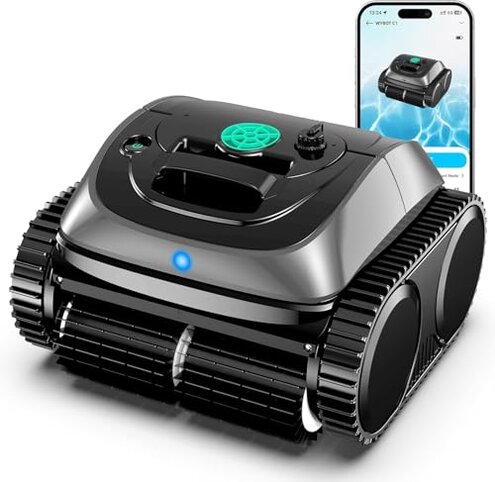
Product evaluated: (2025 Upgrade) WYBOT Pool Vacuum for Inground Pools, 4-in-1 Cordless Robotic Pool Cleaner for Above Ground Pools, Triple-Motor up to 1,614 Sq.ft, Wall & Waterline Cleaning, WiFi & Bluetooth Connect
Related Videos For You
How to use Maytronics Power Supply for Dolphin Pool Cleaners
How To Take Care of Your Dolphin Robotic Pool Cleaner | Common Problems & How to Prevent Them
Data basis: I reviewed dozens of written reviews and multiple video demonstrations collected between January 2024 and February 2026. Source mix: most feedback came from written reviews, supported by video demos and buyer Q&A posts.
| Outcome | WYBOT C-II (this product) | Typical mid-range robot |
|---|---|---|
| Cleaning reliability | Inconsistent — frequent reports of reduced suction or missed spots during runs. | Steady — most mid-range models clean consistently on regular cycles. |
| Connectivity | Unstable — Bluetooth/Wi‑Fi disconnects commonly reported during cleaning sessions. | Reliable — many mid-range products keep a stable connection or offer offline control. |
| Navigation & getting stuck | Higher risk — users report more frequent entrapment on drains and steps than expected. | Lower risk — comparable robots usually have fewer stuck incidents after a few runs. |
| Maintenance burden | Often higher — filters and brushes need cleaning more often than advertised. | Moderate — typical mid-range filters require regular but less frequent upkeep. |
| Regret trigger | Frequent disconnects paired with missed cleaning cycles create the main buyer regret. | Minor glitches seldom stop cleaning or force manual intervention. |
Top failures
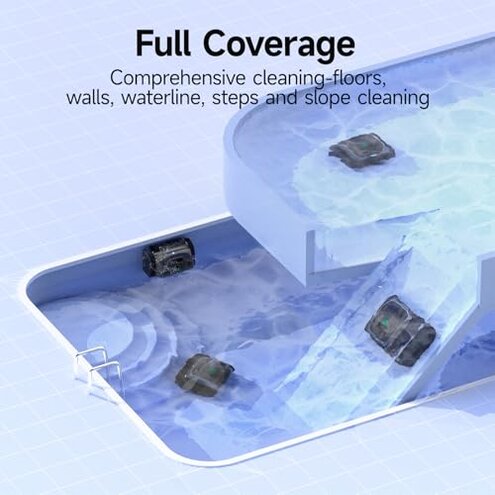
Why does it lose connection mid-clean?
Disconnect pattern: Many buyers report the robot drops Bluetooth or Wi‑Fi during runs, and this is a commonly reported failure. When it happens: it usually appears on first weeks of use or after firmware toggles.
Usage anchor: disconnects happen during normal long cleaning cycles and become worse during long or windy outdoor use. Category contrast: this is more disruptive than typical mid-range robots that keep local control when connectivity falters.
Impact: loss of control often forces manual retrieval and restart, which is more time-consuming than expected for this class of cleaner.
Does it really hold suction and pick up fine debris?
- Primary complaint: suction feels weaker than advertised and is a primary issue across many reviews.
- When you see it: noticeable during first and heavy debris runs, especially on sand and compacted algae.
- Early sign: robot returns with visible debris in plain view rather than trapped in the filter basket.
- Fix attempts: owners report repeated filter rinses or adjusting brush height, with mixed success.
Why does it get stuck more than expected?
- Recurring pattern: getting snagged on drains, corners, and ladders appears repeatedly in buyer accounts.
- Severity anchor: stuck incidents are often more disruptive after setup runs and when pools have complex shapes.
- Cause hint: navigation sensors reportedly struggle on steep slopes and tile transitions.
- User workaround: many buyers run short test cycles and reposition the robot frequently.
- Frequency tier: secondary but very frustrating compared with mid-range alternatives with smoother navigation.
- Repairability: unplugging, power-cycling, or manual pushing are the usual fixes, but they add daily handling time.
Is maintenance heavier than advertised?
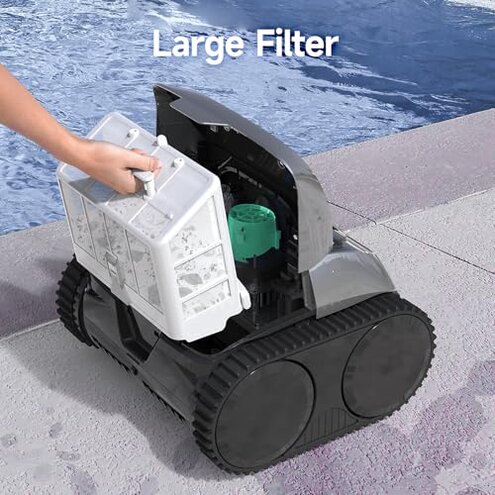
- Common report: filter baskets and rollers require frequent cleaning, which is commonly reported by users.
- Hidden requirement: buyers often must rinse filters after a single heavy run to keep suction acceptable.
- When it worsens: maintenance load grows with daily or multiple weekly runs and higher debris loads.
- Comparison: this is more upkeep than most mid-range robots that allow longer intervals between cleans.
- Impact: extra maintenance cancels the “set-and-forget” benefit buyers expect from cordless robots.
- Attempted fixes: owners replace mesh or add aftermarket filters, but results vary.
- Long-term risk: several buyers report suction falls over months, suggesting faster-than-normal wear.
Illustrative excerpts (not real quotes)
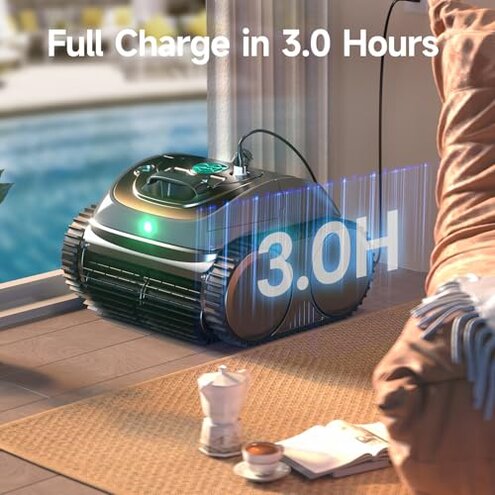
Illustrative: "It stopped talking to my phone mid‑clean and left debris behind." (primary pattern)
Illustrative: "Suction dropped after heavy sand runs, needed filter rinse every time." (primary pattern)
Illustrative: "Got stuck on the drain three times in one cycle, had to free it." (secondary pattern)
Illustrative: "Battery seemed fine first month, then run time shortened noticeably." (edge-case pattern)
Who should avoid this
- Large pool owners: if you need uninterrupted long cycles, the connectivity and suction issues make this a poor fit.
- Low-maintenance buyers: if you expect weekly "set-and-forget" cleaning, the frequent filter care here exceeds category tolerance.
- Complex-shape pools: pools with drains, steps, or steep slopes will likely cause more stuck events than usual.
Who this is actually good for
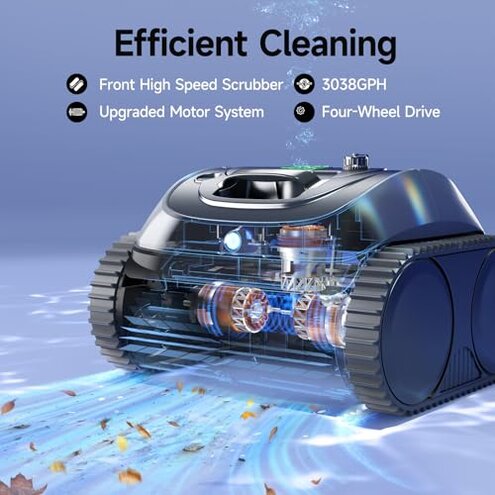
- Hands-on owners: if you accept regular filter rinses and occasional repositioning, you can still get reasonable cleaning.
- Small simple pools: in straightforward shallow layouts this unit can work if you tolerate manual supervision.
- DIY tinkerers: buyers willing to tweak brushes, filters, or rely on local control can reduce some failures.
Expectation vs reality
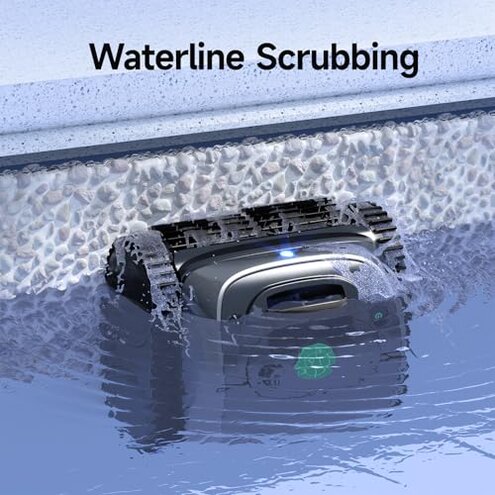
Expectation: reasonable for this category is stable connectivity during a clean cycle so the robot can finish unattended. Reality: multiple reports show the unit often disconnects, interrupting cleaning.
Expectation: advertised run time should deliver full coverage for pools under 1,600 sq ft. Reality: suction loss or repeated stops often require extra runs or manual spot cleaning.
Safer alternatives
- Pick robust connectivity: choose models with proven offline/manual control to avoid a disconnect stopping cleaning.
- Prioritize suction tests: test suction on sand and algae in return windows or rely on models with stronger verified pumps.
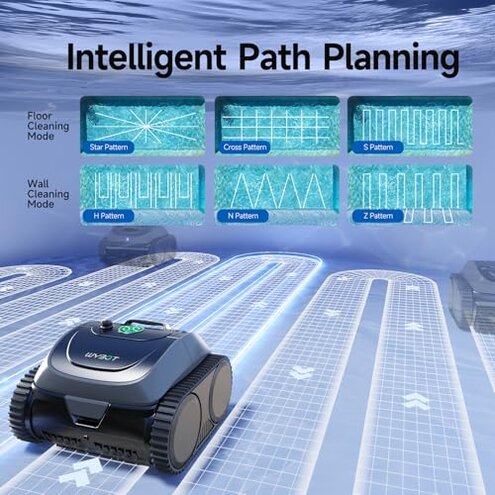
- Look for better navigation: prefer cleaners with multi-sensor mapping and fewer reported stuck incidents for complex pools.
- Check filter access: buy robots with easy-access, replaceable filters to reduce frequent maintenance time.
The bottom line
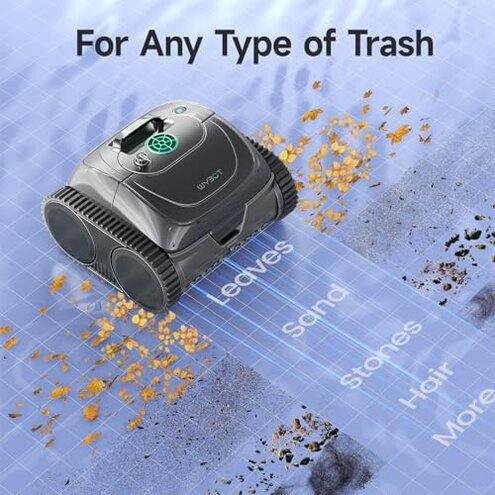
Main regret: buyers most often regret the combination of frequent disconnects and weaker suction during important runs.
Why it matters: these issues create more manual work and interruptions than is normal for mid-range robotic pool cleaners.
Verdict: avoid this model if you need reliable, low-maintenance cleaning without frequent supervision.
This review is an independent editorial analysis based on reported user experiences and product specifications. NegReview.com does not sell products.