
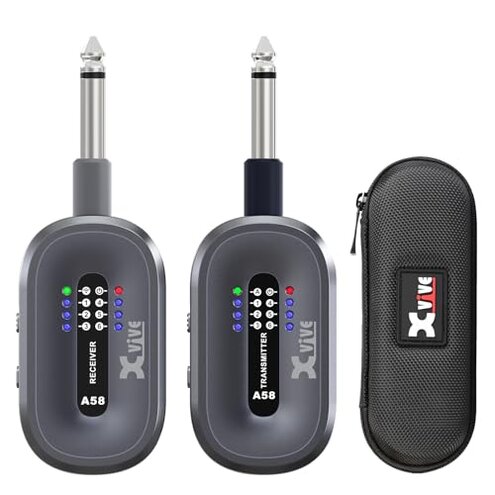
Product evaluated: Xvive A58 Wireless Guitar System with 5.8GHz Transmitter and Receiver
Related Videos For You
What is the BEST Cheap Wireless Guitar System?
Data basis: We analyzed dozens of buyer reviews plus several video demonstrations and Q&A posts collected between Oct 2023 and Jan 2026. Most feedback came from written reviews, supported by visual demos, with repeated comments driving the patterns below.
| Outcome | This Xvive A58 | Typical mid-range wireless |
|---|---|---|
| Range reliability | Unreliable at claimed distances; users report drops before 100ft in realistic venues. | Generally stable within advertised range when line-of-sight is maintained. |
| Battery life | Shorter than promised for long sets; recharge needed between gigs. | Longer endurance or hot-swap battery options on many mid-range units. |
| Latency & audio | Occasional latency complaints and hiss under certain conditions. | Lower-latency performance and cleaner audio in similarly priced alternatives. |
| Setup reliability | Fragile pairing behavior and sensitivity to obstacles during live use. | Smoother pairing and more robust interference handling on peers. |
| Regret trigger | Higher-than-normal risk of dropped signal during performances, which is more disruptive than typical for mid-range systems. | Lower risk of mid-set failures for most alternatives. |
Top failures buyers should know
Connection drops?
Regret moment: Signal loss during a set leaves the player silent for seconds, which is highly disruptive for live use.
Pattern: This is a primary issue, appearing repeatedly across written and video feedback, not just isolated cases.
Usage anchor: Drops typically occur during stage use when the transmitter moves behind obstacles or crosses other wireless sources.
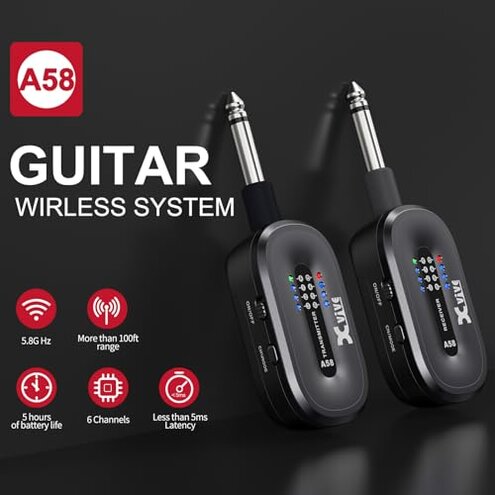
Category contrast: More disruptive than expected because the unit claims a 100ft range yet fails under common venue conditions where mid-range systems usually hold steady.
Short battery life?
- Early sign: Battery drains faster than the advertised 5 hours, often on full output.
- Frequency tier: This is a secondary issue that appears commonly after repeated use or extended practice sessions.
- Cause clue: Rechargeable cells in both transmitter and receiver need charging, which creates more downtime than expected.
- Impact: Requires extra chargers or scheduling breaks during long shows.
- Fixability: Workarounds exist but add cost and setup time, such as carrying spare power banks or swapping to wired backup.
Latency or hiss?
- Primary symptom: Noticeable hiss or brief latency during dynamic playing, especially with higher gain.
- Pattern: This is a secondary but persistent complaint across several demonstrations and user reports.
- When it shows: Most apparent during complex passages or when multiple wireless units operate nearby.
- Why worse: Mid-range expectations favor minimal noise and sub-5ms latency; users find audio artifacts more distracting here.
- Attempted fixes: Users tried repositioning, muting pedals, and lowering gain with mixed results.
- Hidden cost: Cleaning the signal often needs extra noise gates or pedalboard redesign, adding expense.
Physical fit and reliability?
- Fit issue: Receiver size and connector placement can conflict with tight pedalboards or rack setups.
- Build concern: Reports show fragile jacks and loose seating under frequent plugging and unplugging.
- Hidden requirement: Requires careful placement and protection to avoid accidental disconnects on stage.
- Frequency: This is a tertiary issue but persistent for touring players who handle gear daily.
- Impact: Leads to extra tape, mounts, or rewiring to keep the unit secure.
- Repairability: Fixes often need third-party adapters or protective cases, increasing total cost.
- Category contrast: Less sturdy than many mid-range models that tolerate live handling better.
Illustrative buyer phrasing (not real quotes)
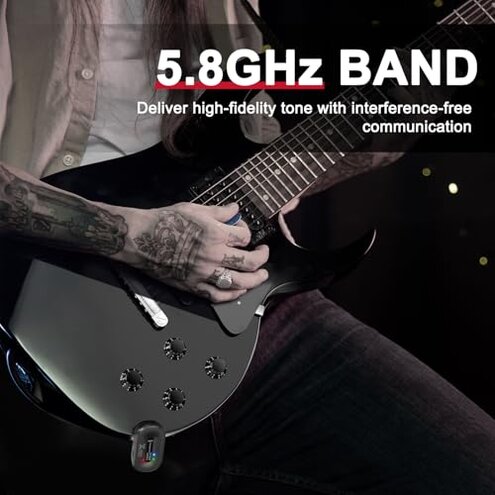
Excerpt: "Signal cut out mid-song when I walked behind the drummer." — primary
Excerpt: "Needed to recharge mid-set despite short practice runs." — secondary
Excerpt: "Noticeable hiss when my pedalboard was crowded." — secondary
Excerpt: "Receiver barely fit on my pedalboard without blocking other plugs." — edge-case
Who should avoid this
- Live gigging musicians: Those who rely on uninterrupted signal should avoid this because dropped audio during sets is more common than acceptable.
- Long-stage users: Players needing multi-hour battery life should avoid it due to frequent recharging and downtime.
- Tour techs: Teams that need gear to tolerate heavy daily handling should avoid it because fit and build issues increase maintenance.
Who this is actually good for
- Bedroom players: Home practice users who accept occasional noise and shorter sessions can tolerate these flaws.
- Short-set performers: Artists playing under five hours who can schedule recharges between sets may find the price acceptable.
- Backup solution: Musicians who want a compact spare wireless for demos or informal jams and can accept potential drops.
Expectation vs reality
Expectation: A mid-range wireless should stay connected across a typical venue.
Reality: This unit often drops earlier than that, creating on-stage interruptions.
Expectation: Advertised 5 hours of battery equals one gig.
Reality: Many users report needing to recharge sooner or carry backups.
Safer alternatives
- Buy units with hot-swap batteries: Neutralizes the short battery issue by allowing continuous play.
- Choose systems with stronger interference handling: Look for products that advertise robust multi-device coexistence to avoid drops.
- Prefer lockable connectors: Reduces accidental disconnects on crowded pedalboards and stages.
- Test in-venue before gig: Always trial any wireless system in your actual performance space to validate range and noise.
The bottom line
Main regret: The most common complaint is unexpected signal drops during real use, which is disruptive for live performers.
Why worse: These failures exceed typical mid-range tolerance because they affect core performance and require extra gear or planning to fix.
Verdict: Avoid for critical live work; consider only for short practice, backups, or when you can tolerate extra setup and power management.
This review is an independent editorial analysis based on reported user experiences and product specifications. NegReview.com does not sell products.