
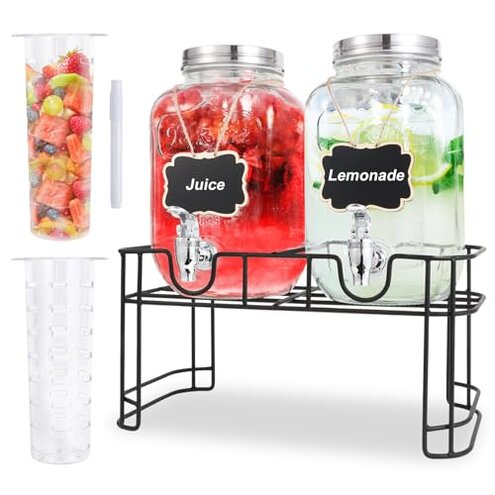
Product evaluated: 1 Gallon Glass Drink Dispensers For Parties-Set of 2,Drink Dispenser with Fruit Infuser & Stand,Juice or Beverage Dispenser for BBQ, Picnic, Party,Laundry Detergent Dispenser
Related Videos For You
How to replace and fix leaky water beverage cooler spigot video #igloo #watercooler #cooler #leak
Bluewave 3 Step Metal Stand for Beverage Dispenser Crock & Water Bottles & Jugs - Setup Instructions
Data basis: This report is based on dozens of aggregated buyer impressions pulled from a mix of written ratings and photo-led feedback, with some short video clips used to confirm setup and pouring behavior. The collection spans a recent multi-month window through early 2026. Most signals came from written comments, supported by repeat themes visible in media uploads.
| Buyer outcome | This set (2× 1 gal) | Typical mid-range alternative |
|---|---|---|
| Leak tolerance | Higher risk during first setup and long serving sessions | Lower risk with more consistent seals out of box |
| Stability on stand | More finicky placement and tipping sensitivity reported | More forgiving for crowded counters and self-serve lines |
| Ease of cleaning | More steps due to spigot and infuser parts | Fewer parts or simpler spigot cleaning routines |
| Arrives intact | Damage risk shows up more often than buyers expect | Less frequent breakage complaints for similar glassware |
| Regret trigger | Sticky leaks that appear mid-party and force a swap | Minor drips that are easier to manage with a towel |
Top failures
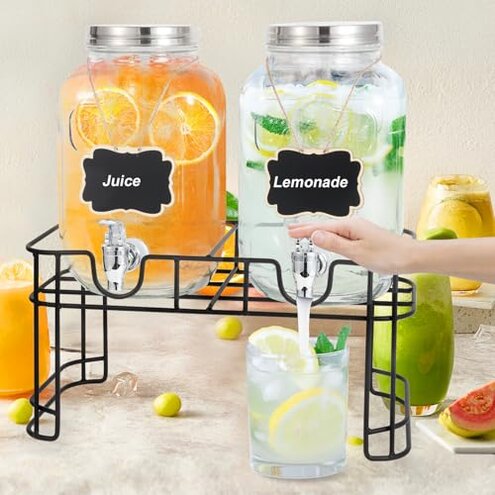
“Why is it dripping even when the tap is ‘off’?”
Regret moment usually hits after setup, when you fill it and see a slow drip forming under the spout. This is more disruptive than it sounds, because it can turn into a sticky ring on counters or the stand during a party.
Pattern shows up repeatedly in aggregated feedback, but it is not universal. It tends to worsen during long serving sessions or when guests press the lever at odd angles.
Category contrast: A little drip can happen with beverage dispensers, but buyers describe this set as less forgiving than most mid-range options if the seal is even slightly off.
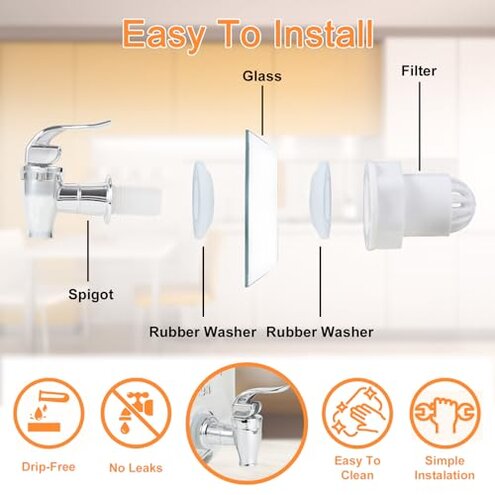
Hidden requirement: Several owners imply you must be willing to re-seat gaskets and re-tighten after the first fill to prevent repeat leaks.
- Early sign: A small bead forms at the spout after the first pour and then returns.
- Primary issue: Leaks appear repeatedly across feedback, especially after initial assembly.
- Worse conditions: Dripping increases when the container is kept fully filled for hours.
- Likely driver: Many notes point to spigot alignment and gasket seating during installation.
- Impact: Buyers report extra cleanup time and needing a tray or towel under the tap.
- Fixability: Some reduce leaks by re-tightening and adjusting the seal, but others still see drips.
- Workaround cost: The included extra spigot helps, yet it still adds a replacement step mid-use.
Illustrative: “I tightened it twice and it still leaves a puddle.” Primary pattern reflecting recurring leak frustration.
“Is the stand stable enough for a self-serve table?”
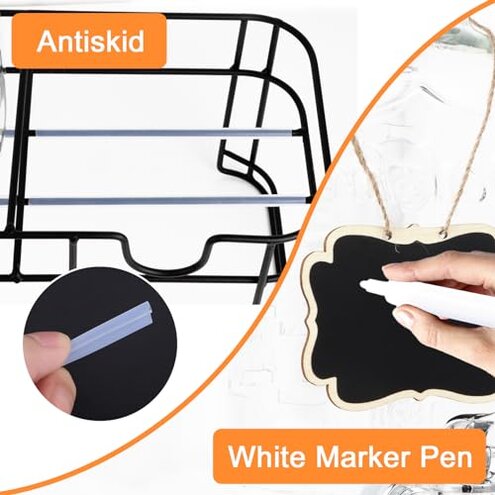
- Regret moment: The worry starts when guests line up and the dispenser shifts during pouring.
- Recurring signal: Stability complaints appear repeatedly, though not every owner reports it.
- When it shows: It shows up during busy gatherings with repeated lever pulls.
- Worse conditions: A lighter table, uneven surface, or crowd bumping makes it feel less secure.
- Category contrast: Many mid-range stands handle casual self-serve better, while this one seems more sensitive to placement.
- Impact: Buyers mention needing a designated corner and supervision to avoid spills.
Illustrative: “Looks cute, but I wouldn’t trust it near kids.” Secondary pattern tied to stability anxiety.
“Why does cleaning take longer than I expected?”
- Time sink: Cleaning feels longer because you have to deal with the spigot and infuser parts.
- Commonly noted: Extra cleaning steps appear often in buyer impressions after the first use.
- When it hits: The annoyance shows up after serving sugary drinks, when residue collects around tight areas.
- Worse conditions: Using fruit, pulp, or herbs increases the need for detail cleaning.
- Category contrast: Dispensers always need cleaning, but buyers describe this set as more fiddly than simpler mid-range jars.
- Impact: People report delaying reuse because it adds extra steps after an event.
- Hidden requirement: You may need a small brush or extra rinse cycles to feel confident it is clean.
- Mitigation: Rinsing immediately after use reduces buildup, but that requires same-day effort.
Illustrative: “The spout area is the part that never feels fully clean.” Secondary pattern about cleanup friction.
“What if one arrives chipped or cracked?”
- Stress point: The disappointment happens before use when you unbox and see damage.
- Persistent edge: Shipping damage shows up less often than leaks, but it is more final when it happens.
- When it occurs: It is reported at delivery or during first wash when flaws become visible.
- Category contrast: Glass can arrive damaged in any brand, but buyers flag this as higher-than-normal for mid-range sets.
- Impact: It can force a return cycle, which ruins party timing.
Illustrative: “Opened the box and one jar was already cracked.” Edge-case pattern with high inconvenience.
Who should avoid this
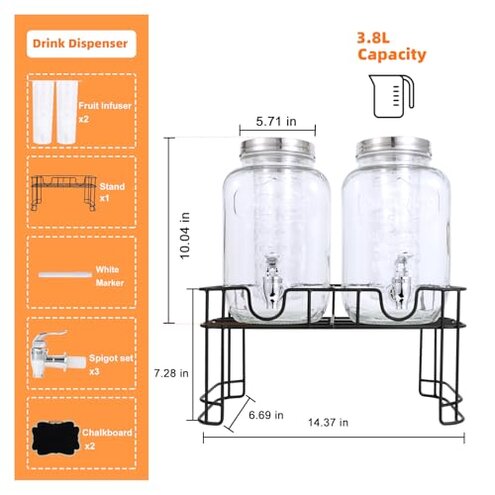
- Party hosts who need no-drama self-serve, because leaks and stand shifting are recurring themes.
- Anyone serving sticky drinks for hours, since drip issues worsen during long sessions and create cleanup.
- Low-maintenance buyers who hate extra parts, because the spigot and infuser increase cleaning steps.
- Time-sensitive planners who cannot risk a return, due to arrival damage being a less frequent but costly failure.
Who this is actually good for
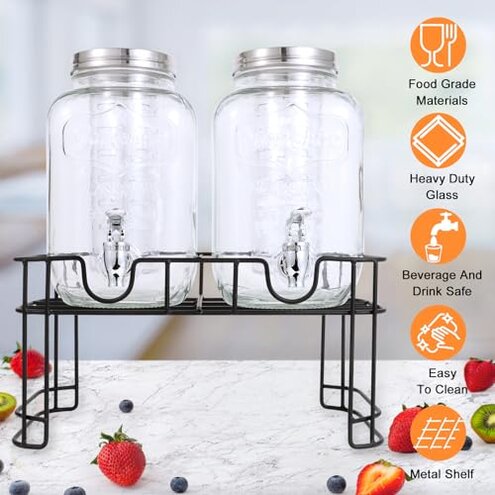
- Light-use families who serve occasionally and can monitor, because they can tolerate minor drips and re-tightening.
- Decor-first setups where it sits in a stable corner, since you can manage stand sensitivity with careful placement.
- DIY-minded buyers willing to re-seat seals, because the hidden requirement is hands-on setup to reduce leaks.
- Laundry-room use where a tray is normal, since small spigot drips are easier to contain.
Expectation vs reality
| Expectation | Reality buyers report |
|---|---|
| Reasonable for this category: a tiny drip once in a while | Worse: recurring dripping after setup that needs re-tightening and monitoring |
| Easy party cleanup with a quick rinse | More steps: spigot and infuser areas add detail cleaning after sugary drinks |
| Stable stand for guest self-serve | Finicky: placement matters more, and busy use can feel less secure |
| Arrives fine like most mid-range glass sets | Higher risk: damage on arrival shows up enough to disrupt event plans |
Safer alternatives
- Prioritize dispensers with a widely praised no-drip spigot to reduce the primary leak regret trigger.
- Choose a model with a wider base or heavier stand to neutralize the self-serve stability complaints.
- Pick simpler designs with fewer parts if you dislike spigot and infuser cleaning time.
- Look for packaging feedback that emphasizes arrival protection to lower the cracked-on-delivery risk.
- Consider a single larger dispenser instead of a set if you want fewer failure points to manage.
The bottom line
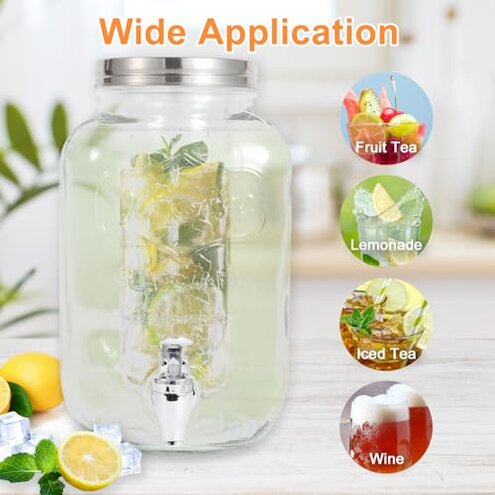
Main regret comes from persistent spigot dripping that shows up after setup and becomes stressful during long events. That risk feels higher than normal for mid-range drink dispensers because it can force constant monitoring and cleanup.
Verdict: If you need reliable, hands-off serving, it is safer to avoid this set and pick a model known for a more consistent seal and sturdier base.
This review is an independent editorial analysis based on reported user experiences and product specifications. NegReview.com does not sell products.