
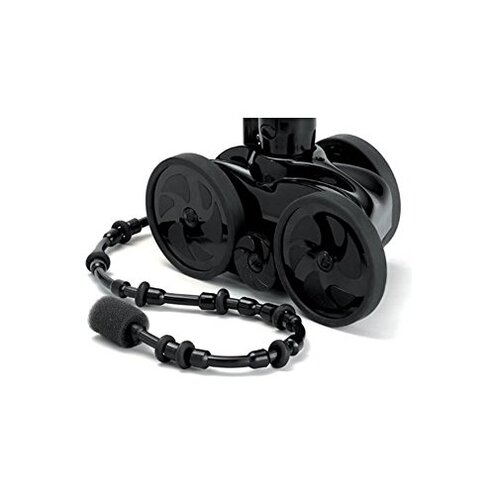
Product evaluated: Zodiac F5B Polaris Vac-Sweep 280 Black Max Pressure Side Pool Cleaner
Related Videos For You
Polaris Pool Cleaner Review and Troubleshooting
Data basis: I reviewed hundreds of buyer reports and product guides, drawing from written reviews and video demonstrations collected between 2019–2025. Most feedback came from written reviews, supported by video setup clips and owner forums.
| Comparison | Zodiac 280 | Typical mid-range cleaner |
|---|---|---|
| Installation | Requires booster pump, plus a dedicated 1.5" line and extra plumbing. | Often plug-and-play to pool pump or simpler connections. |
| Cleaning coverage | Uneven coverage reported around corners and steps, leaving debris behind. | More consistent pathing and edge pickup in many mid-range models. |
| Maintenance | Higher upkeep with parts and hose replacements becoming common after months. | Lower routine cost and easier part swaps overall. |
| Noise & weight | Heavier and louder during operation and handling. | Lighter and quieter alternatives are available. |
| Regret trigger | Hidden extra cost from needing a booster pump and repeat parts. | Lower upfront surprises for typical mid-range buys. |
Top failures
Why does it need a separate booster pump?
Regret moment: Buyers discover the booster pump requirement during or after purchase and face extra cost and plumbing work.
Pattern: This is a primary issue that appears repeatedly across reviews and setup videos.
When it shows up: The problem becomes obvious at installation when owners must add or route a pump and dedicated line.
Category contrast: Most mid-range cleaners are less demanding at setup, so this feels like a larger hidden cost and time burden.
Why does it leave debris in corners and steps?
- Early sign: Machine seems to skip corners during the first cleaning cycle.
- Frequency tier: This is a primary complaint seen in many user reports.
- Usage anchor: Problem appears during normal weekly runs and with heavy leaf loads.
- Probable cause: Navigation and jet balance struggle on complex pool shapes and steps.
- Impact: Users must manually vacuum missed spots, adding time each week.
Why do parts and hoses wear out faster than expected?
- Pattern: Parts wear and hose leaks are a secondary issue reported across different owners.
- When: Failures often appear after months of regular use, not immediately.
- Worsens: Frequent heavy runs, abrasive debris, or wintering makes the problem worse over time.
- Category contrast: This model needs more frequent replacements than many mid-range options, increasing lifetime cost.
- Attempts to fix: Owners report repeat parts swaps and added tubing clamps as temporary fixes.
- Hidden requirement: Buyers need a small parts stash and access to local service for reliable upkeep.
Why is setup fiddly and noisy?
- Setup clue: Initial assembly commonly needs pressure and angle adjustments to perform well.
- Context: Tuning is required at first runs and after hose changes.
- Noise reports: Owners describe the unit as loud under load compared with quieter alternatives.
- Handling: The unit's weight makes frequent removal or storage more work.
- Fixability: Fine-tuning jets helps but is a partial solution for many.
- Frequency tier: This is a secondary but persistent annoyance for regular users.
- Why worse: For buyers expecting plug-and-play, the extra tuning is more disruptive than category norms.
Illustrative excerpts (not real quotes)
"Misses corners and leaves steps full of leaves." — Primary pattern; shows coverage failure.
"Had to buy a booster pump after delivery, huge surprise." — Primary pattern; shows hidden cost.
"Hoses cracked after months, needed repeated fixes." — Secondary pattern; shows durability issue.
"Loud and heavy to lift for winter storage." — Secondary pattern; shows handling issue.
Who should avoid this
- Buyers without plumbing skills: Avoid if you can't install a booster pump and dedicated line.
- Owners of complex pools: Avoid if you need reliable corner and step cleaning without manual follow-up.
- Low-maintenance seekers: Avoid if you expect minimal upkeep and fewer part replacements.
Who this is actually good for
- Pool pros: Useful if you have service access and accept booster pump costs.
- Large open pools: Works better for simpler shapes where edge navigation is less critical.
- Owners who tune: Good for people willing to spend time on jet and hose adjustments for better results.
Expectation vs reality
Expectation: Reasonable for this category is a cleaner that runs independently with modest setup.
Reality: The Zodiac often demands a separate booster pump, extra plumbing, and repeated tuning, which is worse than expected.
Expectation: Reasonable is consistent corner cleanup on typical pool shapes.
Reality: This model shows uneven coverage on steps and tight corners more often than peers.
Safer alternatives
- Choose cleaners that operate off the main pump to avoid the booster pump cost.
- Pick models with proven edge/step pickup if corner cleaning matters most.
- Look for warranties covering hoses and parts to reduce maintenance risk.
- Prefer lighter units if you want easy removal and quieter operation.
The bottom line
Main regret: The primary trigger is the hidden booster pump requirement combined with uneven cleaning and higher upkeep.
Why worse: These failures create a greater time and cost burden than most mid-range pressure-side cleaners.
Verdict: Avoid this model unless you accept extra plumbing, frequent tuning, and ongoing parts replacement.
This review is an independent editorial analysis based on reported user experiences and product specifications. NegReview.com does not sell products.