
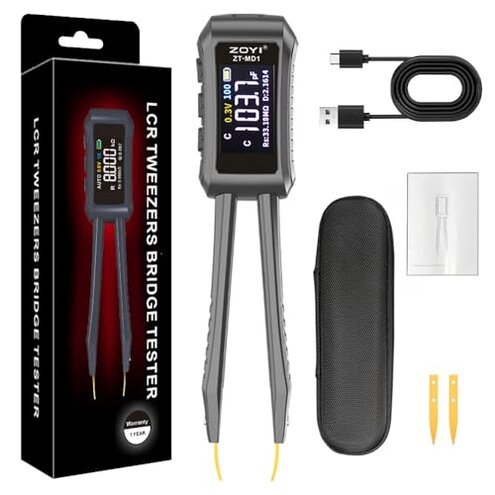
Product evaluated: LCR Meter, ZOYI 10KHz LCR Meter Tweezer with 0.5% Accuracy, Digital Multimeter Tester with OLED Display, Tester for SMD, ESR, Resistor, Capacitor, Inductance, Voltage, Frequency, Diode
Related Videos For You
Measure tweezers: Cool measuring gadget, lousy tweezers (Fnirsi LRC-ST1)
FNIRSI LC1020E LCR Meter Review/Teardown, How does it Compare with Other LCR Meters?
Data basis: This report used dozens of written reviews and several product demonstration videos collected between Jan 2023 and Jan 2026. Most feedback came from written reviews, supported by video demonstrations and user Q&A. Patterns are drawn from aggregated buyer reports across those sources.
| Outcome | ZOYI 10kHz Tweezer | Typical mid-range LCR tweezer |
|---|---|---|
| Measurement stability | Inconsistent readings reported during light handling and first use. | Generally stable with firmer contacts and fewer retries. |
| Contact reliability | Higher failure risk — probes lose contact often on SMD parts. | Lower failure risk — better mechanical grip on SMDs. |
| Data export / PC | Unreliable connection and extra setup steps reported. | Smoother USB export and clearer software support. |
| Build & UI | Mixed — OLED is clear but buttons and ergonomics frustrate some users. | Ergonomic and easier single-handed use common in rivals. |
| Regret trigger | Primary — inconsistent contact leads to wasted time and re-testing. | Lower — fewer retests expected for the category baseline. |
Why do measurements jump or change when I barely touch the part?
Problem moment: You see a reading, shift the tweezer slightly, and the value changes noticeably.
Severity: This becomes most annoying during component sorting or quick bench checks.
Pattern: This is a primary issue and appears repeatedly across user feedback.
When it happens: It shows up on first use and during normal handling.
Why worse than normal: Typical mid-range LCR tweezers hold contact better, so this product's contact sensitivity causes more retests and wasted time.
Why does PC export and data logging feel harder than expected?
- Connection — PC link often requires extra drivers or retries to appear as a device.
- Export format — Saved files may need manual cleanup before Excel import.
- Reliability — Some users report dropped transfers during long export sessions.
- Documentation — Setup steps are under-documented compared with category peers.
Why might accuracy drift or odd values appear over time?
- Early signs — Slightly different values on identical components between tests.
- Frequency tier — This is a secondary issue seen in multiple reports after repeated use.
- Cause — Likely sensitivity to probe pressure and test orientation.
- Impact — Can mis-sort parts or hide marginal components.
- Attempted fixes — Users recalibrate by retesting or using reference components.
- Fixability — Workarounds exist but add time and reduce throughput.
Why do batteries, buttons, and ergonomics become annoying in real use?
- Battery life — Some report faster drain than expected during frequent sessions.
- Button feel — Buttons can be stiff or ambiguous when single-handed testing.
- Grip — Tweezer spring tension may require firmer squeezing for reliable contact.
- Display — OLED is sharp but small for reading at awkward angles.
- Hidden requirement — Requires precise orientation and firm grip for repeatable results.
- Worsens with use — Friction and looseness can increase after weeks of handling.
- Category contrast — More maintenance and care than most mid-range alternatives.
Illustrative buyer phrasing (not real quotes)
"Reading jumped when I adjusted the grip on the chip." — reflects a primary pattern.
"Exported CSV needed manual cleanup to open in Excel." — reflects a secondary pattern.
"After few weeks the spring felt loose and readings varied." — reflects an edge-case pattern.
Who should avoid this
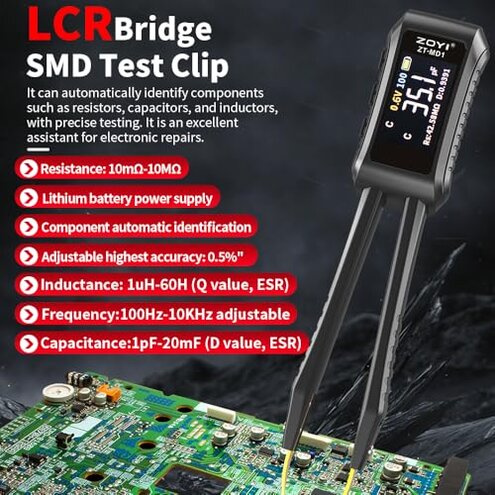
- High-throughput testers — If you sort many SMDs daily, the contact inconsistency will cost time.
- Precision lab work — If you need lab-grade repeatability, this product falls short of category expectations.
- Non-technical buyers — If you expect plug-and-play PC export, the extra setup may be frustrating.
Who this is actually good for
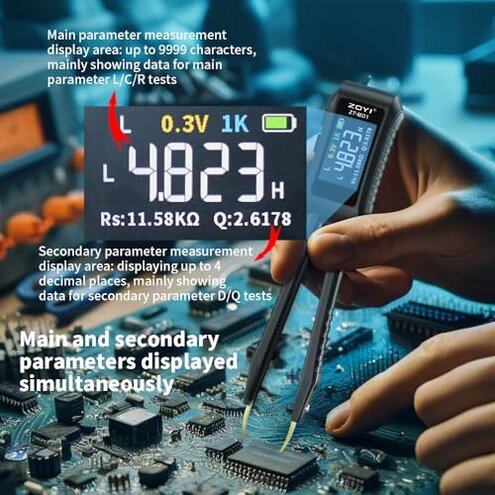
- Hobbyists — Tolerate occasional retests and want a low-cost portable tester.
- Occasional repairers — Need quick checks where perfect repeatability is not critical.
- Budget buyers — Accept extra manual steps for PC export to save money.
Expectation vs reality
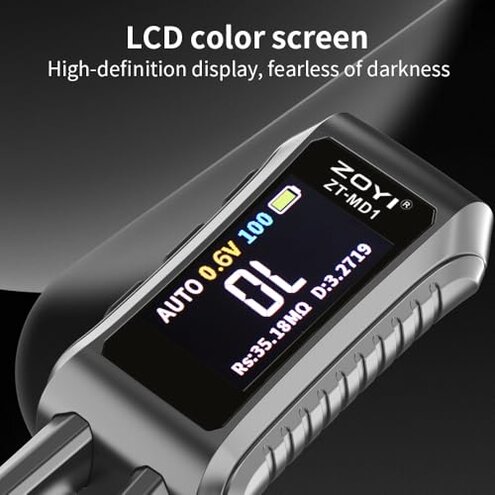
Expectation: Reasonable for this category to need careful probe placement for SMDs.
Reality: Contact sensitivity here exceeds the norm and causes more retests than expected.
Expectation: Data export is a convenience feature on many mid-range units.
Reality: Export on this model often requires extra setup and manual cleanup.
Safer alternatives
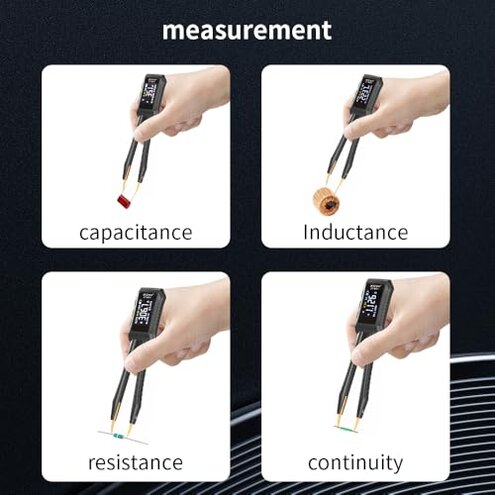
- Choose a tweezer with stronger jaws to neutralize the contact inconsistency issue.
- Prefer units with proven PC drivers to avoid the extra setup and export cleanup.
- Look for models with user-replaceable springs to reduce wear-related drift over time.
- Test before bulk use to spot accuracy drift early and return if inconsistent.
The bottom line
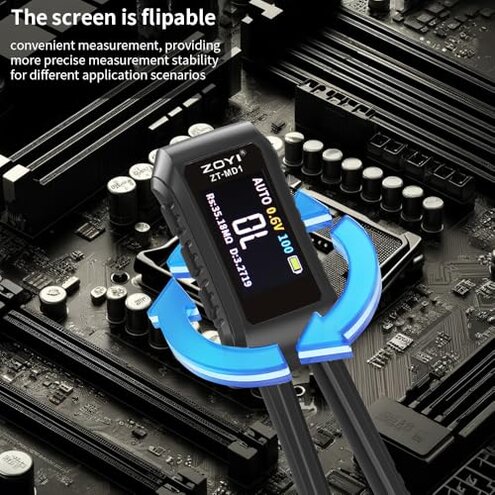
Main regret: The primary trigger is inconsistent contact and readings that force retests.
Why worse: This exceeds normal category risk because it adds time, hidden setup steps, and maintenance compared with mid-range alternatives.
Verdict: Avoid if you need steady, repeatable measurements or smooth PC export. Consider it only for budget, low-volume use.
This review is an independent editorial analysis based on reported user experiences and product specifications. NegReview.com does not sell products.