
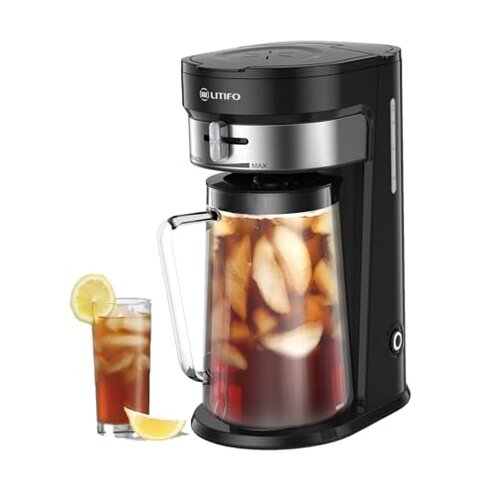
Product evaluated: LITIFO Iced Tea Maker and Iced Coffee Maker Brewing System with 2.5-quart Pitcher, sliding strength selector for Taste Customization, Stainless Steel (Black 2.0)
Related Videos For You
Mr Coffee ICED TEA Maker 2 Quart REVIEW & HOW TO MAKE / BREW ICED TEA $20
How To Descale / Clean Mr Coffee Iced Coffee Maker
Data basis: This report summarizes dozens of buyer feedback entries collected from written reviews and video demonstrations between 2023 and 2026. Most feedback came from written comments, with video-style feedback mainly used to confirm setup, pouring, and cleanup problems during real kitchen use.
| Buyer outcome | LITIFO | Typical mid-range alternative |
| Daily pouring | Higher spill risk if the pitcher and lid are not seated just right | More forgiving during quick pours over ice |
| Cleanup effort | More upkeep than expected when grounds or tea residue stick around | Moderate cleanup with fewer extra rinse steps |
| Strength control | Less predictable in daily use than the slider suggests | Usually steadier once users learn their ratio |
| Longer-term confidence | Higher-than-normal category risk when small fit issues show up after repeated use | Lower concern for routine handling |
| Regret trigger | Kitchen mess plus extra fiddling for a machine meant to be simple | Mild inconvenience rather than repeated annoyance |
Top failures
Does it get annoying when you just want a clean pour?
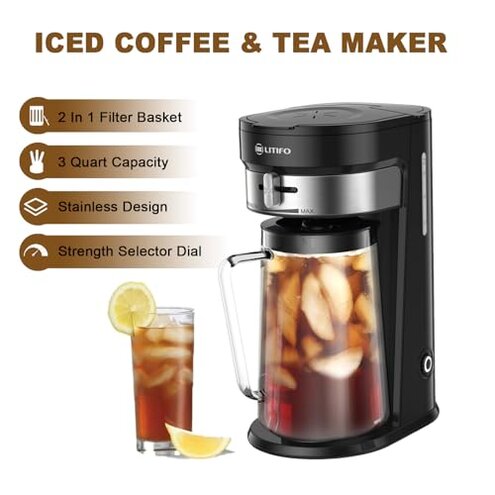
Primary issue: Among the most common complaints, the regret moment is simple: you brew a full batch, then pouring feels messier than it should. That trade-off lands badly because this category is supposed to make iced drinks easier, not add wipe-downs.
Pattern: This appears repeatedly during daily use, especially when serving over ice or pouring quickly. Compared with a typical mid-range iced tea maker, the setup feels less forgiving if the lid or pitcher alignment is even slightly off.
When it shows up: It tends to appear right after brewing, when the pitcher is full and heavier to control. It worsens when users try one-handed pouring or refill multiple glasses back to back.
Why it stings: Minor drips are normal in this category, but buyers commonly describe this as more disruptive than expected because cleanup happens at the exact moment the machine should feel convenient.
- Early sign: Small dribbles around the spout area can show up on first use.
- Frequency tier: This is a primary complaint, not a one-off edge case.
- User impact: The mess adds extra towel time and makes countertop use feel less tidy.
- Hidden requirement: Users may need a slower pour and careful lid placement to avoid spills.
- Fixability: The issue is sometimes manageable, but not always fully solved.
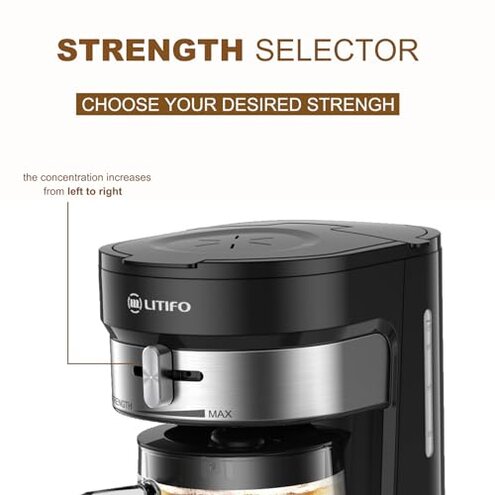
Is the strength slider less useful than it sounds?
- Recurring pattern: A secondary issue is that brew strength can feel inconsistent across batches.
- Usage moment: This usually shows up after setup, when buyers expect the slider to make repeat drinks easy.
- What buyers notice: One batch tastes fine, then the next feels weaker or stronger than expected with similar inputs.
- Why worse here: Most mid-range alternatives still need ratio tuning, but this one can feel less predictable than the control label implies.
- Common cause: The system seems sensitive to brew choices and user technique, so the slider does not remove much guesswork.
- Real frustration: That means extra trial-and-error instead of simple morning or afternoon brewing.
- Mitigation: Careful repeat habits can help, but buyers wanting set-and-forget convenience may still feel let down.
Does cleanup take more effort than a simple brewer should?
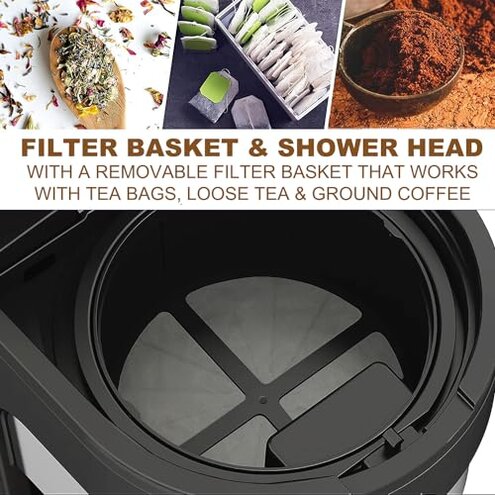
Secondary issue: Cleanup complaints appear less often than pouring complaints, but they stay persistent. The regret is not one huge failure. It is the repeated feeling that each batch leaves more cleanup than expected.
When it happens: This shows up right after brewing and becomes more noticeable with frequent use. Compared with a reasonable category baseline, the machine can feel higher effort because the removable parts do not always translate into quick cleanup.
- Residue problem: Grounds or tea bits can leave extra rinse work after normal use.
- Daily context: This matters most for buyers making multiple batches each week.
- Why buyers care: The product promises easy cleaning, so any lingering mess feels more disappointing.
- Category contrast: Most similar brewers need rinsing, but this can feel more hands-on than expected for the convenience class.
Do small fit quirks make it feel cheaper over time?
- Edge-case to secondary: Fit and handling complaints are not universal, but they appear across multiple feedback sources.
- When it appears: These issues tend to matter after repeated use, not just during first setup.
- What buyers notice: Parts can feel a bit fussy to seat correctly, especially during quick kitchen routines.
- Why it matters: Even when nothing fully breaks, small alignment quirks reduce confidence.
- Higher category risk: That is more frustrating than normal because a simple brewer should feel routine-safe after a few uses.
- Trade-off: Buyers who value easy handling over features may see this as a deal-breaker sooner.
Illustrative excerpts
- Illustrative: “I only wanted iced tea, not a countertop cleanup every time.” — Primary pattern tied to pouring mess.
- Illustrative: “The strength setting looked simple, but my results kept moving around.” — Secondary pattern tied to brew inconsistency.
- Illustrative: “It works, but it asks for more careful handling than I expected.” — Secondary pattern tied to fit and use friction.
- Illustrative: “Cleaning wasn’t terrible, just more annoying than a basic brewer should be.” — Secondary pattern tied to residue and rinse effort.
Who should avoid this
- Skip it if you want fast, one-handed pouring over ice without spill babysitting.
- Avoid it if you expect the strength control to give highly repeatable results with little tweaking.
- Pass if your main goal is the lowest-cleanup iced drink maker in this price range.
- Look elsewhere if small alignment quirks quickly ruin trust in a countertop appliance.
Who this is actually good for
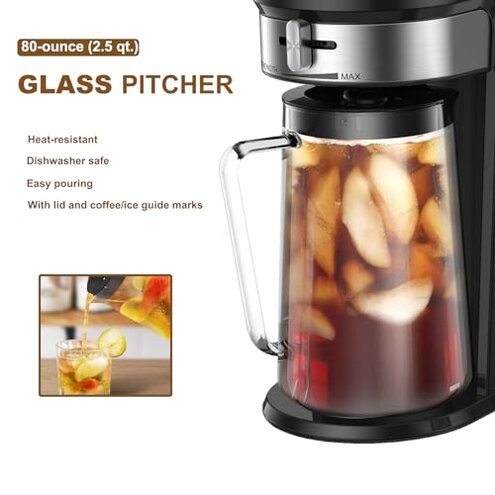
- It fits buyers who do not mind a slower, more careful pour to reduce mess.
- It suits people willing to experiment with brew habits until the strength lands where they want it.
- It works for occasional users who make batches less often, so the cleanup burden stays manageable.
- It may suit buyers who care more about having hot or cold beverage flexibility than perfect convenience.
Expectation vs reality
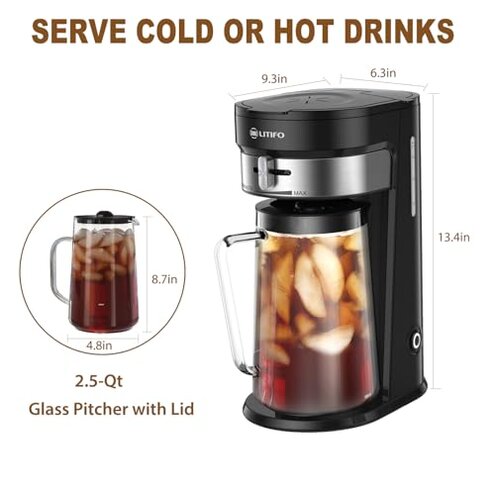
- Expected: A one-button iced drink maker should feel easy at serving time. Reality: The most common regret starts when pouring gets messy.
- Expected: The slider should reduce guesswork. Reality: It can still take repeated tweaking during normal use.
- Reasonable for this category: Some rinsing after brewing is normal. Reality: This can feel worse than expected because cleanup keeps interrupting the convenience promise.
- Expected: A simple appliance should become second nature after setup. Reality: Small fit quirks can keep it feeling fussy over time.
Safer alternatives
- Choose a brewer with a stronger reputation for clean pouring if spill avoidance is your top concern.
- Prioritize models known for repeatable strength if you want less trial-and-error between batches.
- Look for wide-access parts and simpler rinsing paths if cleanup effort frustrates you quickly.
- Favor designs with fewer alignment-sensitive parts if you dislike fussy handling during daily use.
The bottom line
Main regret: The biggest risk is not that it fails to brew. It is that messy pouring, extra fiddling, and more cleanup can make a simple iced drink machine feel less convenient than expected.
Why avoid: That exceeds normal category risk because many mid-range alternatives are more forgiving in the exact moments buyers use most. Verdict: Avoid it if your priority is clean serving, easy repetition, and low-effort daily use.
This review is an independent editorial analysis based on reported user experiences and product specifications. NegReview.com does not sell products.