
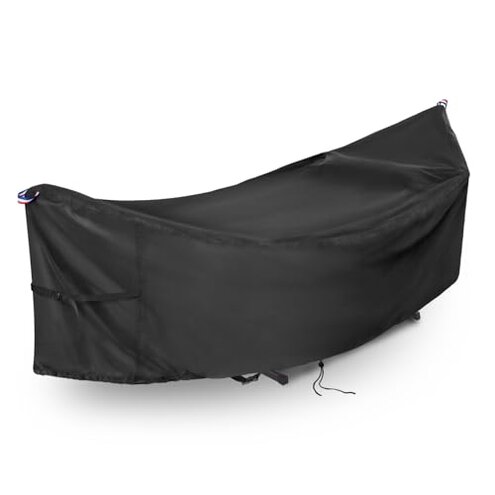
Product evaluated: Loenel Waterproof Hammock Cover for 11-12FT Hammock Stand (151" L x 56" W x 37" H)
Related Videos For You
Hanging a Hammock - Complete Setup in 2 minutes
How To Clean Your Hammock
Data basis: This report uses dozens of buyer comments collected from written feedback and short video-style demonstrations between 2024 and 2025. Most input came from written reviews, with smaller support from image-backed posts and usage clips, so the strongest patterns center on setup, fit, and weather exposure during normal outdoor use.
| Buyer outcome | Loenel cover | Typical mid-range alternative |
|---|---|---|
| First-time fit | Higher risk of trial-and-error if your hammock shape differs from the stated size. | Moderate risk, but usually more forgiving around spreader-bar and stand shape changes. |
| Rain protection | Mixed results if water pools or seams stay stressed after setup. | More predictable basic protection in light to normal weather. |
| Wind security | Depends heavily on careful tightening and buckle use. | Usually easier to secure without extra readjustment. |
| Upkeep burden | More upkeep than expected if you need frequent removal, drying, and re-seating. | Average upkeep for a cover in this price tier. |
| Regret trigger | Buying by size alone and finding daily use takes more effort than expected. | Less often a problem if dimensions and shape tolerances are clearer. |
Will it fit your hammock without a fight?
Fit trouble is among the most common complaints because the listed size sounds straightforward, but real hammock shapes vary more than buyers expect. The regret moment usually happens on first setup, when a cover technically reaches but does not sit cleanly.
Pattern: This appears repeatedly in feedback tied to 11-12 foot setups, especially when the spreader bar or stand curve differs from the stated shape. Compared with a typical mid-range cover, this feels less forgiving than normal because buyers often expect some stretch in real-world sizing.
- Early sign: The cover goes on, but corners pull tight or leave exposed spots around the ends during first installation.
- Frequency tier: This is a primary issue, not universal, but recurring enough to matter before purchase.
- When it shows up: The mismatch is most noticeable after setup when you try to center it evenly over the hammock and stand.
- Hidden requirement: You need to measure more than length alone, because width, stand curve, and spreader-bar shape affect the result.
- Impact: A cover that is too exact in size adds extra time each use and can reduce weather protection at the edges.
Does the waterproof claim hold up in real rain?
- Main concern: Water control is the second big complaint, especially during steady rain rather than quick showers.
- Pattern: Reports describe mixed performance, with some buyers satisfied and others seeing moisture get through or collect.
- Usage moment: Problems usually appear after rainfall when the cover sits for hours and water has time to pool.
- Why worse than normal: Most mid-range hammock covers are expected to handle routine rain without much babysitting, so extra checking feels more frustrating than category-normal.
- Likely trigger: Tight seams, low spots, or uneven positioning can make water sit instead of run off during outdoor storage.
- Real effect: Even limited seepage defeats the point of covering a hammock, because buyers then need to dry both the cover and the furniture.
- Fixability: Careful repositioning may help, but that adds ongoing maintenance rather than solving the root problem for every setup.
Will it stay put once the weather turns?
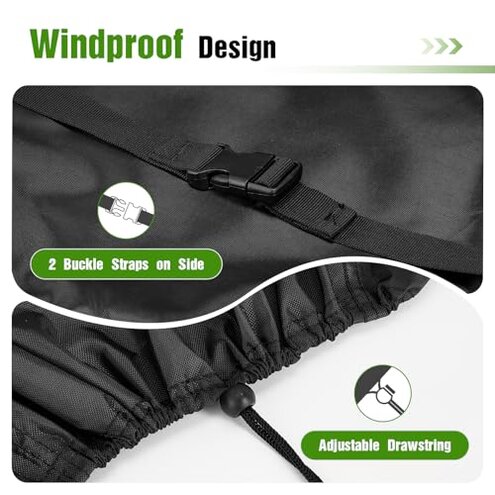
Wind movement is a secondary issue, but it becomes more frustrating when the cover already fits tightly or awkwardly. The problem tends to show up after installation, during breezy weather, when buyers assume the buckle system will be enough on its own.
Pattern: This is less frequent than fit complaints, but more disruptive when it happens because a shifted cover can expose the hammock fast. That is worse than the category baseline, where a basic outdoor cover should stay put with minimal readjustment.
Trade-off: The included buckle and elastic hem help, but they also create a setup that can depend heavily on careful tensioning. If you want a cover you can throw on quickly, this adds more effort than expected.
- Early sign: You notice the hem needs readjustment after the first windy day.
- Worsens when: It gets more annoying in open yards or exposed patios where wind hits from multiple sides.
- Impact: A loose shift can turn into pooled water, rubbing, or partial exposure of the hammock fabric.
- Workaround: Extra care with strap placement helps, but it adds a repeated step every time you cover it.
Are you buying a cover or another chore?
- Primary frustration: The cover can create extra steps in daily use if you remove and replace it often.
- Pattern: This is a persistent secondary issue that shows up during normal ownership rather than only at unboxing.
- When it hits: The burden grows over time if your hammock is used often and needs frequent covering.
- Why it feels worse: In this category, buyers usually accept some maintenance, but not constant repositioning, drying, and fit-checking.
- Visible cause: A large cover with a precise shape can be less convenient when you want fast on-off handling.
- User impact: What should be a simple weather barrier can become a small routine you start skipping.
- Resulting regret: Once buyers stop using the cover consistently, the purchase loses value even if the material itself seems durable.
Illustrative excerpt: “It covers it, but only if I line it up just right.” Primary pattern tied to fit sensitivity.
Illustrative excerpt: “After rain, I still had to check underneath.” Secondary pattern tied to mixed waterproof confidence.
Illustrative excerpt: “Wind did not remove it, but it definitely shifted.” Secondary pattern tied to security under breezy conditions.
Illustrative excerpt: “I expected quick protection, not another setup routine.” Primary pattern tied to upkeep burden.
Who should avoid this
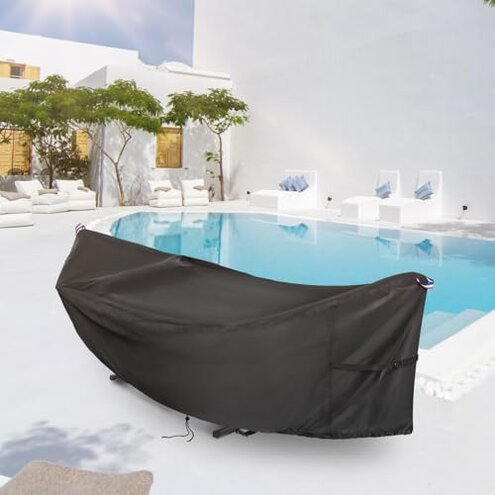
- Avoid it if your hammock stand has an unusual curve, because fit sensitivity seems higher than normal for this category.
- Avoid it if you want true set-and-forget rain coverage, since water management appears less predictable during longer wet weather.
- Avoid it if your yard gets frequent wind, because secure use may require more tensioning and follow-up checks.
- Avoid it if you uncover your hammock often, since repeated handling can turn this into more of a chore than expected.
Who this is actually good for
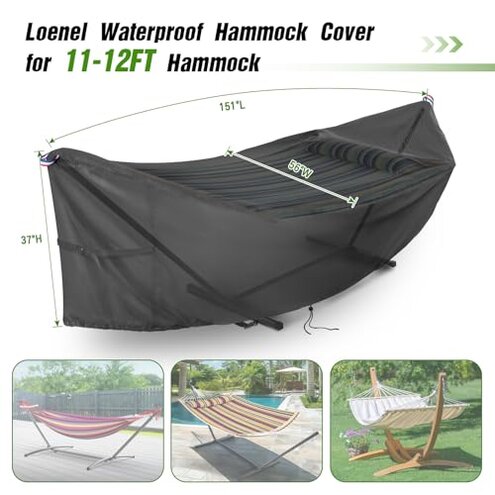
- Good fit for buyers with a closely matching 11-12 foot setup who are willing to measure carefully before ordering.
- Good fit for mild-weather storage where the goal is dust and light weather protection, not maximum storm confidence.
- Good fit for owners who leave the hammock covered for longer periods, so the setup effort happens less often.
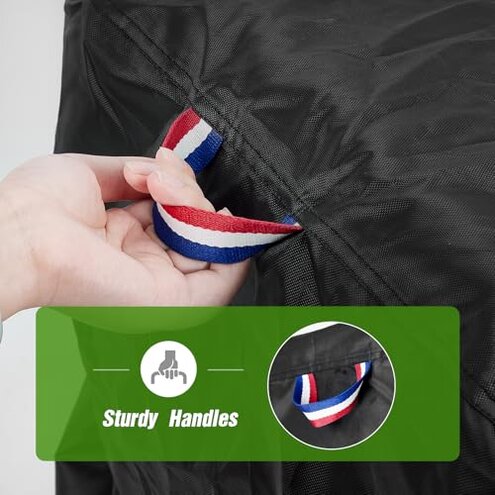
- Good fit for buyers comfortable making small adjustments if the trade-off is getting a full-size cover with handles and tie-down features.
Expectation vs reality
Expectation: A listed size should make buying simple.
Reality: Shape matching matters enough that length alone may not prevent setup frustration.
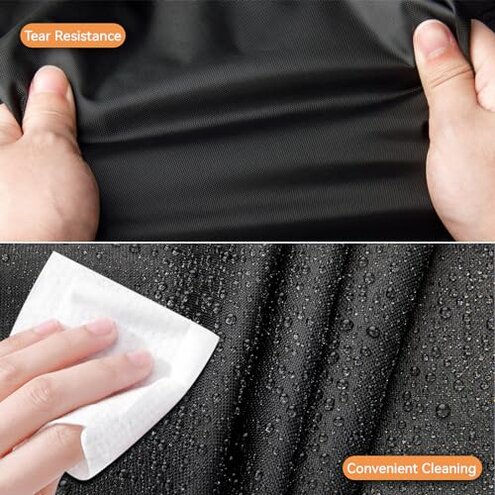
Expectation: A waterproof hammock cover should handle ordinary rain with little attention.
Reality: Pooling risk and seam stress can make performance less dependable than buyers reasonably expect for this category.
Expectation: Buckles and elastic should mean easy wind security.
Reality: Proper tension still matters, so quick install does not always mean stable install.
Safer alternatives
- Choose shape margin over exact sizing, especially if your stand has curved ends or a nonstandard spreader-bar profile.
- Look for vents or a more tented cover shape if your main concern is pooled water after longer rain exposure.
- Prioritize simpler tie-downs if your patio gets wind and you want fewer readjustments between uses.
- Pick easier on-off designs if you use the hammock often, because convenience matters as much as raw cover size.
- Measure the full setup, including width and highest points, to avoid the hidden requirement that causes many fit regrets.
The bottom line
Main regret comes from buying by the stated dimensions and expecting a forgiving fit, then discovering setup and protection depend on your exact hammock shape. That makes the risk higher than normal for a mid-range cover, because the effort can continue long after first use. If you want low-maintenance coverage, this is one to skip unless your measurements match very closely and your weather exposure is mild.
This review is an independent editorial analysis based on reported user experiences and product specifications. NegReview.com does not sell products.