
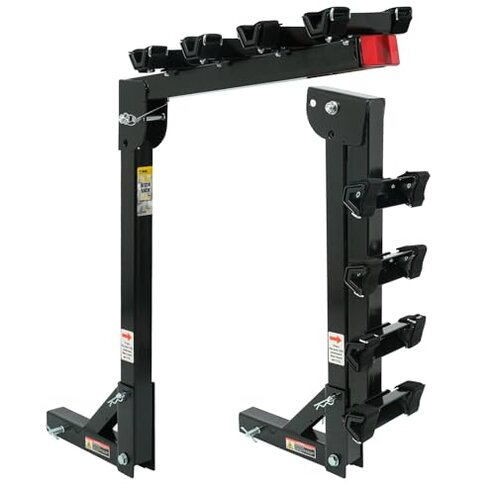
Product evaluated: MaxxHaul 70210 Hitch Mount Bike Rack 4-Bike Rack, Black For Cars Trucks SUV's Minivans, Large
Related Videos For You
BUZZ RACK - Buzz Quattro - Tilting 4 bike carrier - HOW TO FIT
How to STOP Your Bike Rack from WOBBLING!
Data basis: This report uses hundreds of buyer feedback points gathered from written comments and video-based demonstrations collected from 2012 to 2026. Most feedback came from written reviews, with video examples helping confirm how the rack behaves during setup and road use.
| Buyer outcome | MaxxHaul 70210 | Typical mid-range 4-bike hitch rack |
|---|---|---|
| Setup effort | Higher; often simple at first, but extra adjustment commonly follows once bikes are loaded. | Moderate; usually needs basic assembly and less trial-and-error after loading. |
| Fit flexibility | Lower; hidden need for bikes with a horizontal top bar adds extra steps. | Better; usually more forgiving with mixed bike shapes. |
| On-road stability | Riskier; movement complaints appear repeatedly during normal driving and get worse with four bikes. | More controlled; some sway is normal, but usually less disruptive than this. |
| Rear access | Mixed; swing-down helps, but loaded access still adds effort. | Mixed; similar category limit, often with slightly easier handling. |
| Regret trigger | Primary; buyers expect a budget rack, but not this much wobble and fit compromise. | Lower; buyers still expect compromise, but usually not as much bike-to-bike hassle. |
Why does it feel shaky once the bikes are actually on?
This is the primary issue and among the most common complaints. The regret moment usually happens after setup, when the rack seems acceptable empty but starts moving more than expected once loaded for a real drive.
The pattern appears repeatedly across different vehicle types, and it tends to worsen during highway driving, rough pavement, or when carrying more bikes. Some motion is normal in this category, but buyers commonly describe this one as less controlled than typical mid-range alternatives.
Illustrative: “It looked fine parked, then bounced way more once we got moving.”
Pattern: This reflects a primary complaint seen during normal road use.
Illustrative: “I spent the whole trip checking the mirror instead of relaxing.”
Pattern: This reflects a primary complaint because movement changes the whole driving experience.
Why are some bikes harder to mount than expected?
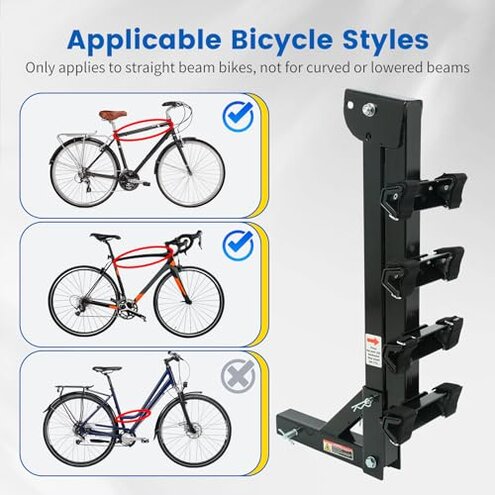
- Hidden requirement: A repeated frustration is that bikes usually need a horizontal top bar, which is stated in the product details but still catches buyers off guard.
- When it shows up: The problem appears on first setup, especially with step-through, sloped-frame, or non-standard bike shapes.
- Frequency tier: This is a primary issue for mixed-bike households, even if it is not universal for traditional frame bikes.
- Why it stings: Buyers often expect a 4-bike rack to handle family bike variety, but this one is less forgiving than typical options in the same price band.
- Real impact: The fix can mean buying an extra crossbar, changing which bikes travel, or spending extra time testing positions.
- Stacked hassle: Fit problems become more frustrating when combined with rack movement, because awkward bikes are harder to secure confidently.
Why does loading four bikes turn into a puzzle?
- Primary frustration: Buyers commonly report that the advertised 4-bike capacity feels more practical on paper than in everyday family use.
- Usage moment: This shows up during loading, when handlebars, pedals, and frame shapes start competing for space.
- Category contrast: Tight fit is normal for hanging racks, but this appears more frustrating than expected because the rack is sold around carrying four bikes with ease.
- Early sign: If two bikes already need repositioning, the third and fourth commonly add extra trial-and-error.
- Scope signal: The pattern appears across multiple feedback sources, not just one type of buyer setup.
- Driving effect: Crowded loading can increase bike-to-bike contact, which makes the trip feel riskier and noisier.
- Fixability: Careful bike order and extra straps can help, but they also add setup time that many buyers did not expect.
- Illustrative: “It says four bikes, but four normal bikes felt like Tetris.”
Pattern: This reflects a primary pattern tied to real family loading.
Why does rear access still feel inconvenient?
- Secondary issue: The swing-down feature helps, but it does not remove the hassle buyers feel once bikes are mounted.
- When it happens: This shows up during trips when you need cargo access after the rack is already loaded.
- What buyers notice: The feature can reduce effort, but loaded bikes still make rear access awkward and slower than expected.
- Category baseline: Limited rear access is normal here, but this setup can feel more cumbersome than expected because the rack already requires careful loading.
- Who feels it most: Families using trunks often, or travelers packing coolers and bags, report this as a persistent annoyance.
- Illustrative: “Yes, it tilts, but getting into the back still became a chore.”
Pattern: This reflects a secondary complaint linked to mid-trip convenience.
Who should avoid this
- Avoid it if you carry bikes with step-through or sloped frames, because the hidden crossbar requirement adds cost and setup friction.
- Avoid it if you plan frequent highway trips, because movement concerns are a primary issue and feel higher than normal for the category.
- Avoid it if you truly need four bikes often, because tight spacing and loading order become a recurring hassle.
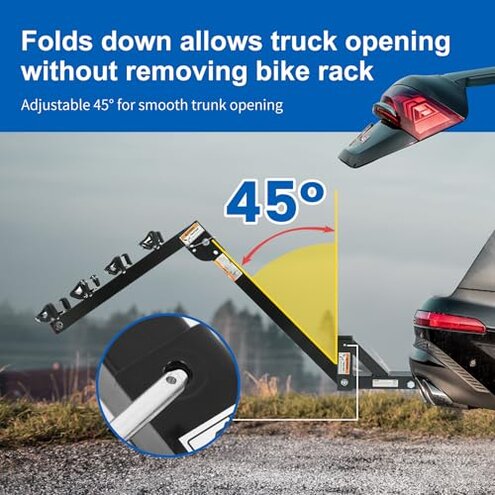
- Avoid it if you open the rear cargo area a lot during trips, because the swing-down function does not fully solve loaded-access inconvenience.
Who this is actually good for
- Better fit for buyers carrying one or two standard-frame bikes who accept some movement in exchange for a lower upfront price.
- Better fit for occasional users who drive shorter local trips and are willing to add straps and spend more time securing bikes.
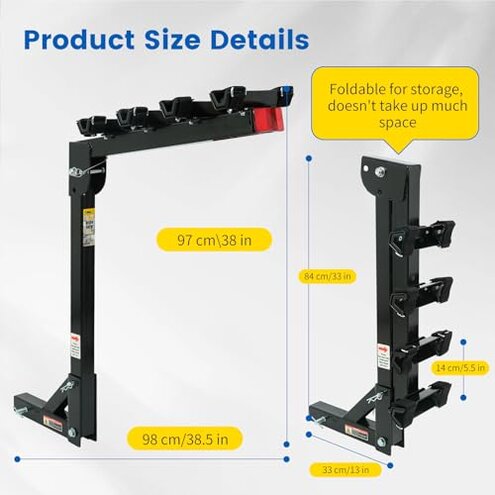
- Better fit for owners of vehicles with a 2-inch hitch who understand this is a basic hanging rack, not a more polished family-hauler.
- Better fit for shoppers comfortable with workarounds, such as buying an adapter bar for non-standard bike frames.
Expectation vs reality
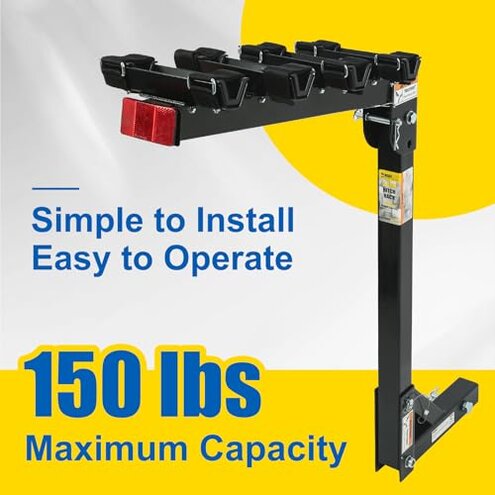
Expectation: A 4-bike hitch rack should make family loading reasonably straightforward.
Reality: Buyers commonly report that fitting four bikes takes more shuffling and extra strapping than expected.
Expectation: Some rack motion is reasonable for this category.
Reality: The movement here is commonly described as more noticeable and more stressful than a typical mid-range alternative.
Expectation: A swing-down feature should make rear access simple.
Reality: It helps, but loaded access still adds time and awkward handling.
Expectation: A 4-bike rack should work for a family mix of bikes.
Reality: The need for a horizontal top bar is a real limitation that can force extra purchases.
Safer alternatives
- Look for racks with stronger anti-wobble control if highway stability matters more than saving upfront money.
- Choose a model with better support for non-standard frames if your household uses step-through or angled-top-tube bikes.
- Prioritize wider spacing or tray-style designs if you regularly carry three or four bikes and want less bike-to-bike contact.
- Check for realistic loaded rear-access behavior, not just a tilt feature, if you use the trunk often during trips.
- Budget for extra straps or frame adapters only if you accept the rack as a low-cost compromise, not a ready-for-anything solution.
The bottom line
Main regret centers on movement under load, followed closely by tricky bike fit and crowded four-bike loading. Those problems go beyond normal budget-rack compromise because they show up during the exact moments buyers care about most: loading fast and driving confidently.
Verdict: Skip this if you need true four-bike convenience or mixed-bike compatibility. It makes more sense only for lighter-duty use where buyers knowingly accept extra setup effort and higher wobble risk.
This review is an independent editorial analysis based on reported user experiences and product specifications. NegReview.com does not sell products.