
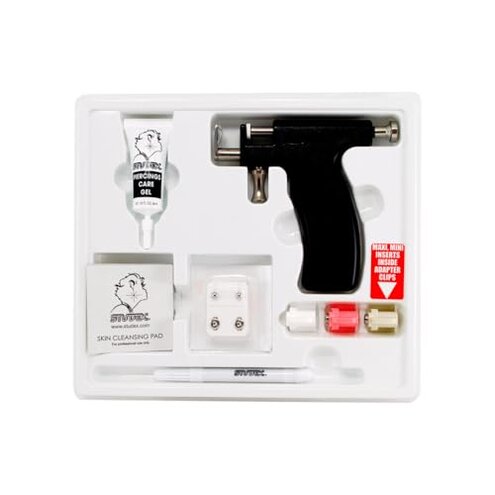
Product evaluated: STUDEX Universal Ear Piercing Gun Kit, Surgical Stainless Steel, White, Professional Instrument Set with Training Studs, Adaptors, Care Gel for Women, Men
Related Videos For You
Ear Piercing Gun technique..💯☑️ at Pranshi Makeover & Academy..💗 #earpiercing #viral #earrings
HOW TO PIERCE YOUR EAR SAFELY - at home
Data basis: This report is based on dozens of buyer comments collected from written feedback and video demonstrations between late 2025 and early 2026. Most feedback came from short written impressions, with smaller but useful support from hands-on setup clips and follow-up comments after first use.
| Buyer outcome | STUDEX kit | Typical mid-range alternative |
|---|---|---|
| First-use confidence | Lower; setup steps and adaptor choices add pressure before piercing. | Moderate; still technique-sensitive, but usually simpler to understand fast. |
| Learning curve | Higher; hidden prep details matter more during the first attempt. | Average; most buyers expect a short learning period. |
| Consistency | Less forgiving; placement and stud loading errors are more disruptive than expected for this category. | More forgiving; small setup mistakes are less likely to ruin the session. |
| Aftercare burden | Normal to high; poor first placement can add extra cleanup and stress. | Normal; aftercare is still needed, but fewer setup mistakes carry into recovery. |
| Regret trigger | One-shot risk; a shaky first use can waste time and confidence immediately. | Lower-risk; still not foolproof, but usually easier to recover from minor errors. |
Worried the first try will go wrong fast?
This is a primary issue. The most common regret moment shows up during first setup, when buyers realize the kit asks for more precise loading and positioning than the listing suggests.
The trade-off is control versus ease. In repeated feedback, it feels more disruptive than expected because piercing tools are already unforgiving, and this one appears less forgiving than many mid-range options.
Pattern: This looks recurring, not universal. It tends to worsen when the user is nervous, rushing, or trying to pierce evenly on both sides in one sitting.
Category contrast: A reasonable expectation for this category is basic first-use clarity. Here, the need to get orientation, stud size, and placement right at once creates a higher-than-normal mistake cost.
Do the adaptors create more hassle than help?
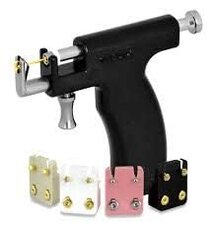
- Hidden requirement: A recurring complaint is that adaptor choice matters more than buyers expect after opening the kit.
- When it shows up: The friction appears before piercing, especially when switching between large, regular, and mini stud setups.
- Why it frustrates: This is a secondary issue, but it becomes more frustrating when it delays a one-time procedure that already feels high pressure.
- Early sign: If the loading process feels unclear on the tray, buyers commonly report losing confidence before they even start.
- Impact: Wrong adaptor matching can lead to extra steps, repeated checking, or stopping entirely to avoid a bad placement.
- Fixability: The issue is partly fixable with slow dry runs, but that adds time that many buyers did not expect from a “universal” kit.
Is the tool harder to control than it looks?
- Control gap: A persistent pattern is that hand positioning matters a lot during the actual press.
- Usage moment: The problem appears at the exact piercing moment, when buyers need alignment and steady pressure at once.
- Frequency tier: This is another primary issue because it directly affects the result, not just convenience.
- Why worse than normal: Most tools in this category need care, but this one appears less forgiving than typical when hands are shaky or ears are hard to angle.
- User-visible effect: Buyers describe uneven placement risk, hesitation, or needing someone else to help hold things steady.
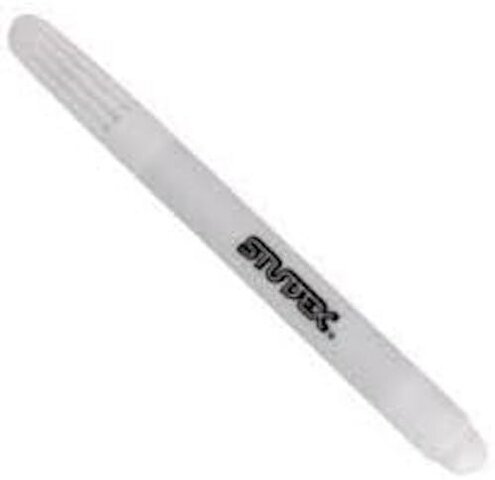
- Attempted workaround: Common mitigation is to practice positioning with the pen first, but that still does not remove the one-shot nature.
- Regret point: When alignment slips, the frustration is higher than average because the mistake is visible and not easy to undo.
Does “professional” set the wrong expectation?
- Expectation gap: A less frequent but persistent complaint is that the professional wording can make first-timers expect an easier experience than they get.
- When it hits: This usually shows up after unboxing, once buyers see that the kit still depends heavily on user skill.
- Pattern strength: This is a secondary issue, not the most common complaint, but it amplifies disappointment when other problems appear.
- Why it matters: In this category, buyers reasonably expect some learning curve, but not a setup that feels closer to a procedure than a simple beauty tool.
- Real-world impact: The mismatch can cause false confidence, which is more risky here than in categories where mistakes are easy to correct.
- Hidden effort: Buyers may need extra prep time, careful marking, and possibly a second person, which is not always obvious from the quick-read features.
- Fixability: Better expectations help, but they do not change the high consequence of first-use errors.
- Why avoid: If you wanted a simple at-home process, this can feel more demanding than advertised.
Illustrative: “I thought it would be quick, but setup took longer than the piercing.”
Pattern: This reflects a secondary setup-friction pattern.
Illustrative: “Once I started, I realized there was no room for a shaky hand.”
Pattern: This reflects a primary control and alignment pattern.
Illustrative: “The adaptor part was the step I didn’t expect to overthink.”
Pattern: This reflects a secondary hidden-requirement pattern.
Illustrative: “It feels professional only if you already know exactly what you’re doing.”
Pattern: This reflects a secondary expectation-gap pattern.
Who should avoid this
- First-timers who want a simple beauty-tool experience should avoid it because the setup burden exceeds normal category tolerance.
- Nervous users who know their hands get shaky under pressure should avoid it because the control issue appears at the worst possible moment.
- Solo users who do not have help with positioning may want to skip it, since alignment regret is among the most disruptive complaints.
- Low-prep buyers who dislike reading instructions twice should avoid it because adaptor matching and loading can become hidden friction.
Who this is actually good for
- Experienced users who already understand marking, loading, and ear positioning may tolerate the steeper learning curve.
- Patient buyers who are willing to do a slow dry run before first use may handle the setup issue better.
- Two-person setups make more sense here because one person can steady and check alignment while the other focuses on the press.
- Shoppers prioritizing kit completeness may accept the extra complexity in exchange for having multiple sizes and prep items included.
Expectation vs reality
Expectation: A complete kit should mean less hassle before first use.
Reality: The included options can create more decision steps, especially around adaptor choice and loading.
Expectation: “Universal” sounds like easy fit for different users.
Reality: The tool still depends on user technique, ear angle, and steady positioning more than many buyers expect.
Expectation: It is reasonable for this category to need careful use.
Reality: The one-shot consequences feel worse than expected because minor setup mistakes can affect visible placement right away.
Safer alternatives
- Choose simpler loading if you want less first-use stress; fewer interchangeable parts directly reduce adaptor-related mistakes.
- Prioritize alignment aids when shopping, because visible positioning help can neutralize the control problem during the press.
- Look for beginner-focused instructions if this is your first time; that reduces the expectation gap created by professional-style wording.
- Use two-person assistance for any similar tool if you still buy one, since that directly lowers uneven placement risk.
- Consider professional piercing service if your main concern is a one-shot mistake, because that avoids the hidden skill requirement entirely.
The bottom line
Main regret trigger: The biggest problem is first-use precision. Setup, adaptor choice, and hand control carry more risk than many buyers expect.
Why it exceeds normal risk: Ear piercing tools are never casual, but this one appears less forgiving than a typical mid-range option when the user is inexperienced or alone.
Verdict: If you want a low-stress at-home experience, this is a skip. It fits only buyers who accept the extra prep and the higher consequence of setup mistakes.
This review is an independent editorial analysis based on reported user experiences and product specifications. NegReview.com does not sell products.