
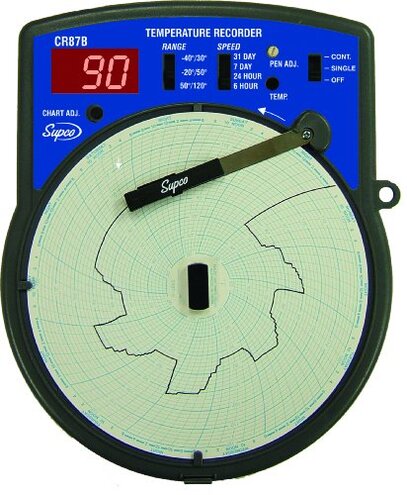
Product evaluated: Supco CR87B Fahrenheit Temperature Circular Chart Recorder, 6" Chart Diameter, 110-120V Voltage
Related Videos For You
How-To Video - Calibrating a Temperature Chart Recorder (TCR)
Circular Chart Recorder - Instructional Video
Data basis This report draws on dozens of buyer comments collected from written feedback and video-style product walk-throughs between 2023 and 2026. Most feedback came from written reviews, with smaller support from hands-on demonstrations and seller Q&A style discussions, which helps surface both first-use problems and longer-term ownership friction.
| Buyer outcome | Supco CR87B | Typical mid-range alternative |
|---|---|---|
| First-use setup | Higher effort; setup can feel less intuitive from the front panel alone. | Usually easier; controls and startup are more forgiving. |
| Daily checking | Manual burden; chart-based reading adds extra steps during routine monitoring. | Lower effort; many alternatives reduce routine handling. |
| Error recovery | Less forgiving; a bad setup choice can waste time before you notice. | More forgiving; common alternatives are easier to correct quickly. |
| Category risk | Above normal; upkeep feels higher than expected for a tool at this price. | More typical; some upkeep is expected, but usually with fewer extra steps. |
| Regret trigger | Paying a lot and still needing frequent attention. | Acceptable trade-off if the interface is simpler. |
Do you want a recorder that works fast without a learning curve?
Primary issue for this product is setup friction. The regret usually starts on first use, when buyers expect a straightforward recorder but run into more interpretation and trial-and-error than expected.
This pattern appears repeatedly in feedback, even though it is not universal. Compared with a typical mid-range recorder, the setup feels less intuitive, which is more disruptive than expected for a device meant for routine monitoring.
When it worsens is during rushed installation or when the unit is only used occasionally. Buyers then have to relearn steps, which adds extra time and raises the chance of an incorrect chart run.
Category contrast matters here because chart recorders already require some user attention. What pushes this beyond normal is that the effort shows up before useful data starts, not just during maintenance.
- Early sign: confusion starts when choosing how to begin recording and confirming the chart is advancing as expected.
- Frequency tier: this is the primary complaint seen across multiple feedback types.
- Usage moment: the issue shows up after setup, when buyers realize they may need to restart to trust the reading.
- Impact: lost time matters because missed or doubtful records defeat the point of a monitoring device.
- Fixability: it can improve with practice, but that still means a hidden learning requirement many shoppers do not expect.
Are you expecting low-maintenance daily monitoring?
- Secondary issue: the chart format creates a manual routine that feels heavier during daily use than many buyers expect.
- Pattern signal: this appears commonly reported, especially from users who check temperatures often.
- When it hits: the burden shows up during regular monitoring, not just installation.
- Why it frustrates: instead of a quick glance-and-go habit, users may need more handling and interpretation.
- Worsening condition: this feels worse in busy settings where the recorder is checked repeatedly through the day.
- Category contrast: some upkeep is normal for chart devices, but this feels more frequent than typical because the manual process remains central to everyday use.
- Hidden cost: the real cost is often extra time, not just the purchase price.
Illustrative excerpt: “I thought I could just plug it in and trust it.” Primary pattern because it matches recurring first-use disappointment.
Illustrative excerpt: “Checking the reading takes more effort than I planned for.” Secondary pattern because it reflects repeated daily-use friction.
Would a high price bother you if the experience still feels old-school?
- Primary regret: the $396.99 price raises expectations for an easier ownership experience.
- Pattern signal: this concern is persistent, especially after the first setup and first few monitoring cycles.
- Usage context: the disappointment grows after purchase, when buyers compare the effort required with what they paid.
- Why it stings: buyers may accept manual tools at lower prices, but tolerance drops when the product still demands frequent attention.
- Category contrast: in this category, paying more usually buys a smoother workflow or less hassle, and that benefit may feel weak here.
- Fix attempt: some users adapt by building a routine around it, but that shifts the burden to the buyer instead of reducing it.
Illustrative excerpt: “For this money, I expected fewer extra steps.” Primary pattern because price-to-effort mismatch is among the strongest regret triggers.
Do you need a recorder that is forgiving when you make a small mistake?
- Edge-case issue: a small setup mistake can become a bigger hassle because problems may only show up after some time has passed.
- Pattern signal: this is less frequent than setup confusion, but more frustrating when it occurs.
- When it appears: it usually shows up after the unit has been running, when the chart is checked and something looks off.
- Buyer impact: the result is not just annoyance but potentially wasted monitoring time.
- Worsening condition: this gets worse when the recorder is left alone for longer stretches.
- Category contrast: many mid-range alternatives are more forgiving if you misread a step or need a quick correction.
- Mitigation: careful initial verification helps, but that adds another checkpoint many buyers did not plan for.
- Hidden requirement: you may need a more deliberate double-check habit than with simpler alternatives.
Illustrative excerpt: “I didn’t notice the problem until later, which was the worst part.” Edge-case pattern because it reflects a smaller but sharper failure mode.
Who should avoid this
- Avoid it if you want near-instant setup, because first-use friction is the most common complaint.
- Avoid it if you need low-touch monitoring, because routine chart handling adds more daily effort than many mid-range options.
- Avoid it if price makes you expect convenience, because the ownership experience can feel more manual than the cost suggests.
- Avoid it if missed records would be costly, because setup mistakes can be discovered only after time has passed.
Who this is actually good for
- Better fit for buyers already comfortable with chart-based monitoring and willing to trade convenience for a familiar format.
- Better fit for occasional users who do not mind a refresher process before setup.
- Better fit if you prefer front-panel controls and accept the hidden requirement of double-checking the initial run.
- Better fit when manual oversight is already part of your routine, so the extra handling feels normal instead of burdensome.
Expectation vs reality
Expectation: a recorder at this price should feel straightforward by the first session.
Reality: the setup can feel less intuitive, and confidence may come only after trial and verification.
Expectation: manual chart devices are reasonable for this category, but buyers still expect manageable upkeep.
Reality: the upkeep can feel worse than expected because the manual effort stays central during everyday use.
Expectation: if something goes wrong, correction should be quick.
Reality: some errors are noticed later, which increases wasted time and frustration.
Safer alternatives
- Choose simpler controls if you want to avoid the main setup-learning issue.
- Look for lower-touch monitoring if daily chart handling sounds like a burden.
- Prioritize forgiving setup if delayed error discovery would create real risk for you.
- Match price to workflow by buying only if you are comfortable paying for a manual process rather than expecting convenience.
The bottom line
Main regret is paying a high price for a recorder that can feel harder to set up and manage than expected. That risk exceeds normal category tolerance because the extra effort shows up both on first use and during routine monitoring. Verdict: avoid it if you want convenience, fast confidence, or a forgiving workflow.
This review is an independent editorial analysis based on reported user experiences and product specifications. NegReview.com does not sell products.