
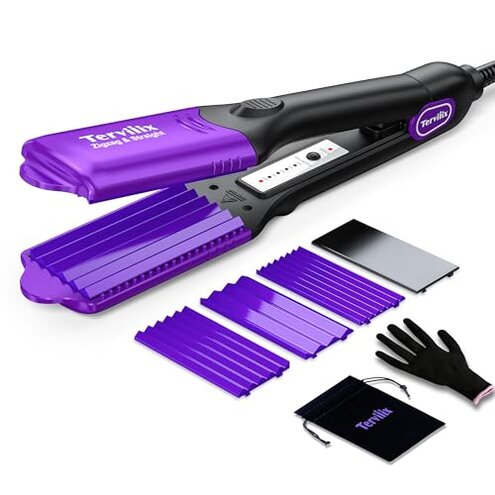
Product evaluated: Terviiix Crimper Hair Iron with 4 Interchangeable Plates, Keratin & Argan Oil Infused Hair Crimper for Women, Volumizing Crimping Iron for Thin Fine Hair, 5 Heat Settings & 60 Mins Auto Off, Purple
Related Videos For You
Do You Ever Use Crimping? #asmr #crimpedhair #crimping #haircare
How To... Volume & Root Lift with a Crimper
Data basis: This report is based on dozens of buyer comments collected from product-page feedback, short video demonstrations, and follow-up written impressions from recent months. Most feedback came from written reviews, with video clips mainly used to confirm real styling results, ease of plate changes, and how the tool behaves during first use and longer sessions.
| Buyer outcome | Terviiix crimper | Typical mid-range alternative |
| Learning curve | Higher setup friction because plate swapping adds extra steps before styling. | Lower because most single-pattern crimpers are ready with fewer choices. |
| Result consistency | Less steady because volume and crimp depth can vary by plate choice and section size. | More predictable once you learn one plate and one heat range. |
| Daily styling speed | Slower than normal when changing plates or redoing sections that look uneven. | Usually faster for repeat use with one fixed pattern. |
| Hair forgiveness | Higher-than-normal risk of looking too textured if you miss the right heat and timing. | Moderate risk, but many mid-range tools are easier to control visually. |
| Regret trigger | Buying for easy volume and getting a tool that can need practice to avoid obvious crimp marks. | Buying for one look and getting fewer styling options. |
Wanted quick volume, but got obvious crimp marks instead?
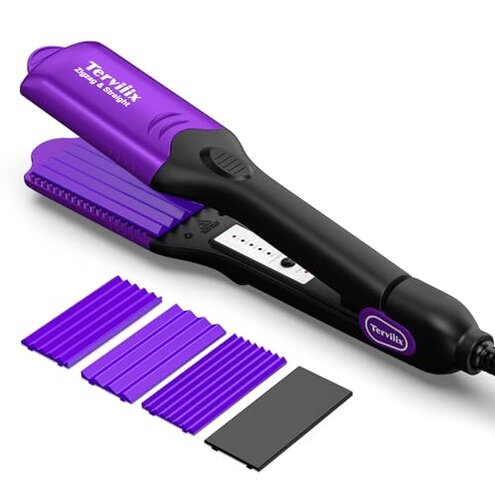
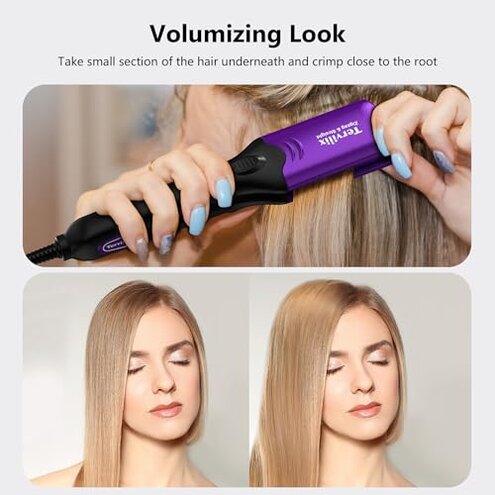
This is a primary issue. A recurring pattern is that the tool can add lift, but the finish may look more crimped than naturally volumized during early uses.
The regret moment usually happens on first use or during rushed morning styling, when buyers expect subtle root lift and instead get visible texture that needs brushing out or redoing.
Worse than baseline: Crimpers always need some technique, but this feels less forgiving than many mid-range alternatives because interchangeable plates increase the chance of picking the wrong texture for your goal.
Illustrative: “I wanted body at the roots, not a full zigzag look.” Primary pattern because it reflects the most disruptive expectation gap.
Don’t want plate changes turning styling into a project?
- Pattern: This is a primary issue that appears repeatedly when buyers use more than one plate rather than sticking with a single setup.
- When it hits: The friction shows up after setup, especially during trial-and-error sessions where users compare narrow and wide textures on the same hairstyle.
- Why it matters: Extra choices sound helpful, but they can create decision fatigue and slow down a tool many people bought for fast styling.
- Hidden requirement: You need practice time to learn which plate and heat combo gives lift without making the pattern too visible.
- Buyer impact: The result is often longer styling time, plus more passes on sections that did not match the rest of the head.
- Category contrast: A normal mid-range crimper asks you to learn one pattern, while this one can demand more experimentation than expected before it feels convenient.
- Fixability: It becomes easier if you commit to one favorite plate, but that also reduces the value of paying for multiple attachments.
Illustrative: “Changing plates sounded useful, but it made getting ready take longer.” Primary pattern because the time cost affects daily use.
Need consistent results across your whole head?
- Frequency tier: This is a secondary issue, less common than the learning curve complaint but more frustrating when it happens.
- Use moment: It tends to appear during full styling when hair sections differ in thickness or when one side is done faster than the other.
- Early sign: Buyers notice uneven texture between top layers and underneath sections before they finish the style.
- Cause: Different plate widths and heat choices can make the outcome less uniform unless section size stays very consistent.
- Visible impact: One area may look voluminous while another looks sharply crimped, which can read more costume-like than everyday.
- Attempted workaround: Users often try brushing out the pattern or lowering heat, but that can also reduce the lift they bought it for.
- Category contrast: Some inconsistency is normal with crimpers, but this can feel more disruptive than expected because the product is marketed as a flexible all-in-one option.
- Persistence: The issue is not universal, yet it persists for buyers with fine hair who wanted natural-looking fullness rather than a statement texture.
Illustrative: “One side looked fluffy, the other looked like 90s crimping.” Secondary pattern because it shows uneven full-head results.
Buying it for fine hair and worried about overdoing it?
- Intensity: This is a secondary issue and among the more stressful complaints because fine hair shows texture quickly.
- When it happens: It usually appears during daily use when buyers try to build volume fast before work or events.
- What worsens it: Longer holds and higher heat settings can make the effect too noticeable, especially near the top layer.
- Real regret: Instead of soft lift, the hair can look overworked and require extra smoothing steps.
- Effort cost: That means more styling correction, not less, which undercuts the tool’s convenience.
- Category contrast: A reasonable expectation for this category is visible texture, but this can be less subtle than buyers expect from a volume-focused tool.
Illustrative: “Fine hair makes every pass show, so subtle volume was hard.” Secondary pattern because it depends on hair type and styling goal.
Who should avoid this
- Avoid it if you want one-step root lift with little practice, because the plate system adds a learning curve that exceeds normal mid-range convenience.
- Skip it if you dislike visible texture, since the most common regret is getting crimp marks when you wanted softer volume.
- Pass on it if your mornings are rushed, because setup choices and redo risk can make styling slower than expected.
- Look elsewhere if you need highly uniform full-head results, since consistency can be harder to maintain across sections.
Who this is actually good for
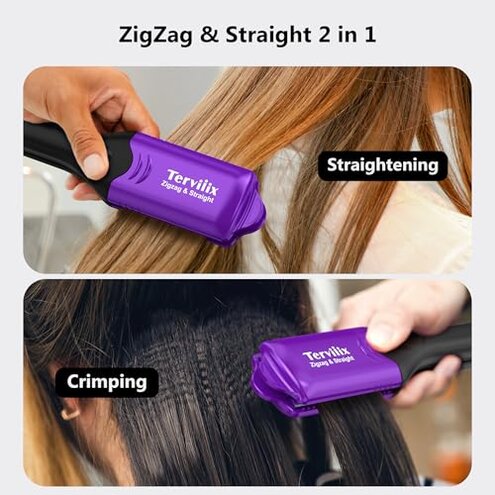
- It fits buyers who enjoy testing different looks and are willing to tolerate extra setup in exchange for multiple texture options.
- It suits people who only plan to use one plate most of the time and can ignore the less useful attachments.
- It works better for occasional styling rather than rushed daily use, because practice reduces the main frustration.
- It can make sense for users who actually want noticeable crimp texture, not just hidden root volume.
Expectation vs reality
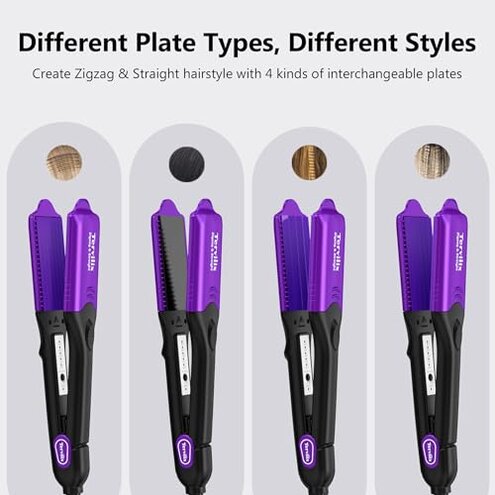
Expectation: A 4-in-1 tool should mean more convenience.
Reality: The extra plates can mean more choices, more testing, and more time before you get a repeatable result.
Expectation: A volume-focused crimper should create subtle lift on fine hair.
Reality: A recurring complaint is that the finish can look more obviously crimped than expected, especially during first uses.
Expectation: It is reasonable for this category to need some technique.
Reality: The technique burden feels worse than expected here because plate swapping increases inconsistency risk compared with many single-pattern mid-range options.
Safer alternatives
- Choose a single-pattern crimper if your main goal is quick repeatable volume, because it removes the plate-selection problem.
- Look for narrower root-focused tools if you want hidden lift, since they can reduce the obvious all-over crimp effect.
- Prioritize simple controls if you style before work, because fewer decisions usually means fewer uneven sections.
- Pick tools known for subtle texture if you have fine hair, which directly lowers the risk of a too-visible pattern.
The bottom line
Main regret trigger: Buyers often expect easy volume and get a tool that needs more trial and error to avoid obvious crimping. That exceeds normal category risk because the interchangeable design adds complexity instead of reducing it for many users.
Verdict: Avoid this if you want fast, natural-looking lift with little practice. It makes more sense only if you are comfortable trading speed and consistency for styling variety.
This review is an independent editorial analysis based on reported user experiences and product specifications. NegReview.com does not sell products.