
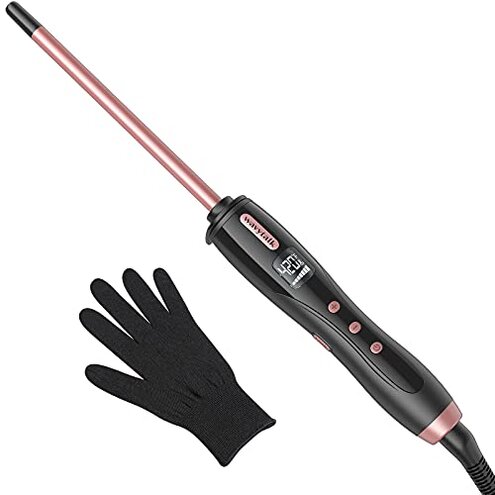
Product evaluated: Wavytalk 3/8 Inch Small Curling Iron Wand for Short & Long Hair, Ceramic Barrel with Adjustable Temperature, Heat Resistant Glove Included (Rose Pink)
Related Videos For You
Curling my hair with the smallest curling wand✨ #curlingwand#curlyhairstyles
How to Use a Curling Wand for Beginners! (In depth)
Data basis: This report draws on dozens of buyer comments collected from written feedback and video-style demonstrations between 2023 and 2026. Most input came from short written experiences, with supporting visual feedback helping confirm how this wand behaves during real styling and first-use learning.
| Buyer outcome | Wavytalk 3/8" wand | Typical mid-range alternative |
|---|---|---|
| Learning curve | Higher risk of awkward first uses because the barrel is very small and less forgiving. | Moderate learning curve with more flexible curl size for casual users. |
| Burn risk | Higher-than-normal category risk during close-to-scalp styling, even with a glove included. | Typical risk for hot tools, but usually easier to position on short sessions. |
| Curl result | Tighter curls than some buyers expect, which can look too ringlet-heavy at first. | More balanced results that need less technique adjustment. |
| Daily convenience | Less forgiving if you want quick, loose styling before work. | Easier for fast touch-ups and softer waves. |
| Regret trigger | Mismatch between expected soft curls and the extra effort needed for tiny-barrel styling. | Usually lower regret if your goal is a general-use curling tool. |
Why do the curls look tighter than expected?
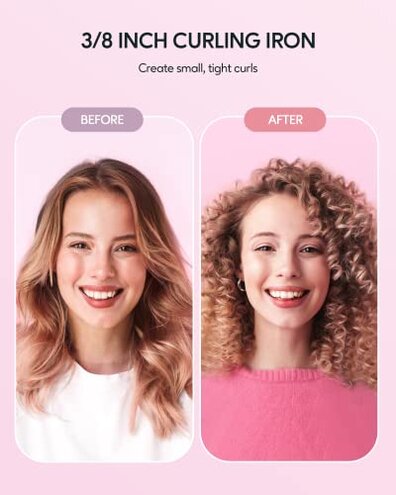
This is the primary issue. The regret usually appears on the first few uses, when buyers expect a normal curling wand look and get very tight ringlets instead.
The pattern appears repeatedly. That is not unusual for a 3/8-inch barrel, but this feels worse than expected because many mid-range alternatives are bought for more flexible everyday styling.
- Early sign: During first styling, the finished look can appear much curlier than the product photos suggest to casual buyers.
- Frequency tier: This is a primary complaint and one of the most common mismatch points in buyer feedback.
- When it worsens: It gets more frustrating on longer hair or when you wanted loose curls without extra brushing or separating.
- Buyer impact: The result can add extra time because you may need to loosen curls afterward to make them look natural.
- Hidden requirement: You need to want tiny curls or be comfortable styling them down after heat use.
Is it harder to use safely than a normal curling wand?
- Pattern: A recurring frustration is how close your fingers and scalp can get to the hot barrel during wrapping.
- Usage moment: This shows up during short-hair styling or when trying to curl near the roots for volume.
- Category contrast: All hot tools can burn, but this one feels more disruptive than expected because the narrow barrel needs tighter hand control.
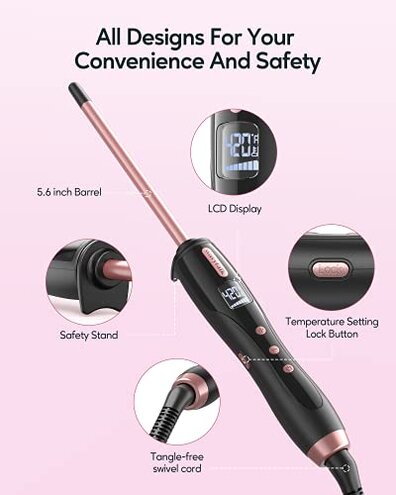
- Included help: The glove reduces hand contact risk, but it does not fully solve awkward angles near the face and scalp.
- Worsening condition: The issue gets more noticeable in rushed mornings when precise sectioning and wrapping are harder.
- Fixability: It becomes more manageable with practice, but it is not as beginner-friendly as many standard curling irons.
- Regret point: Buyers wanting an easy everyday tool can find the extra caution tiring over repeated use.
Does the fast heat help, or just make mistakes happen faster?
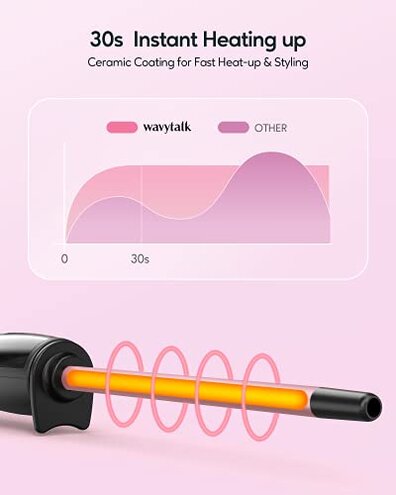
This is a secondary issue. The fast heat-up is convenient, but the downside shows up during daily use when buyers overshoot the right technique before they learn the wand.
The pattern is persistent, not universal. Compared with a typical mid-range alternative, this wand is less forgiving because small mistakes on a tiny barrel show up quickly in the final curl.
When it worsens: It becomes more frustrating if you style in a hurry or switch between hair sections with different thickness.
Trade-off: You save setup time, but you may spend that time back fixing curls that came out tighter or hotter than planned.
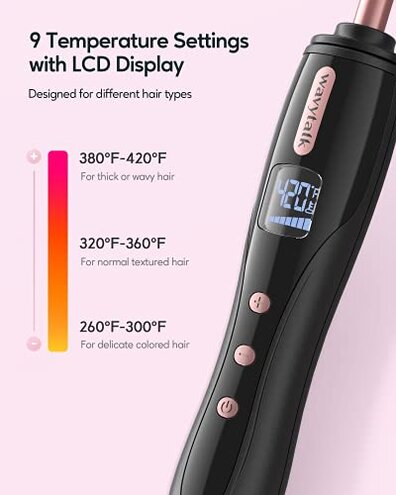
- Temperature range: The 9 settings help on paper, but buyers still need trial and error to match heat with hair type.
- Real-world effect: On first use, the tool can feel fast before the user feels fully in control.
- Category baseline: Adjustable heat is normal, but this barrel shape makes precision more important than on wider wands.
- Who notices it most: This hits beginners harder than experienced users who already know section size and wrap time.
Will it feel too specialized for an everyday tool?
- Pattern: This is a secondary but persistent complaint among buyers who wanted one tool for many looks.
- Usage context: The limitation shows up after repeated use, once the novelty wears off and daily convenience matters more.
- Main problem: The wand is specialized toward tight curls, so it does fewer styles well than a more standard barrel.
- Category contrast: That is more limiting than a reasonable category baseline, where mid-range curling tools usually aim for broader everyday use.
- Time cost: Getting softer results often needs extra steps like smaller heat adjustments, separating, or waiting for curls to drop.
- Who regrets it: Buyers with a one-tool routine can feel boxed in faster than people buying it for a specific tight-curl purpose.
- Fixability: You can work around it, but the workaround is usually more effort, not a simple setting change.
Illustrative excerpt: “I wanted soft curls, but it made little spirals right away.” Primary pattern reflecting curl-size mismatch.
Illustrative excerpt: “It works, but I have to be very careful near my scalp.” Primary pattern reflecting handling and burn-risk frustration.
Illustrative excerpt: “Fast to heat, slow to master.” Secondary pattern reflecting setup convenience versus control difficulty.
Illustrative excerpt: “Good for a specific look, not my everyday look.” Secondary pattern reflecting specialization limits.
Who should avoid this
- Avoid it if you want loose curls with minimal effort, because the tight barrel creates a stronger curl pattern than many casual users expect.
- Skip it if you are a beginner with hot tools, since the handling feels less forgiving than a typical mid-range curling wand.
- Look elsewhere if you style in a rush, because the fast heat can turn small technique mistakes into extra redo time.
- Pass on it if you need a one-tool routine for multiple curl types, since this is more specialized than general-use options.
Who this is actually good for
- It fits buyers who specifically want tight curls or ringlets and already know that tiny-barrel tools need more control.
- It suits people willing to trade ease for a more defined curl pattern that wider wands cannot create as directly.
- It works for users comfortable with a glove, sectioning, and slower wrapping near the scalp.
- It makes sense as a second tool for a specific look, not necessarily as the only curling tool you own.
Expectation vs reality
Expectation: A small wand should just give a slightly tighter version of normal curls.
Reality: This tiny barrel often creates a much more dramatic ringlet effect, especially before you learn how to style it down.
Expectation: Fast heat should mean faster mornings.
Reality: The speed trade-off can disappear if you need to redo sections or relax curls after styling.
Expectation: For this category, adjustable heat should make it easy to adapt to your hair.
Reality: The control challenge is still higher than expected because barrel size matters as much as temperature here.
Safer alternatives
- Choose a wider barrel if your main goal is soft everyday curls, which directly avoids the tight-ringlet mismatch.
- Pick a clamp model if you struggle with wrapping control, which can reduce the close-hand positioning issue.
- Prioritize beginner-friendly tools with a more general-use barrel size if you style during rushed mornings.
- Buy a second specialized wand only if you already own a versatile curler, which avoids the one-tool regret trigger.
The bottom line
The main regret trigger is simple: many buyers expect a flexible daily curling wand and get a very specialized tight-curl tool instead. That exceeds normal category risk because the small barrel also raises the learning curve and handling demands more than typical mid-range alternatives. Avoid it if you want easy, loose curls or beginner-friendly styling.
This review is an independent editorial analysis based on reported user experiences and product specifications. NegReview.com does not sell products.